
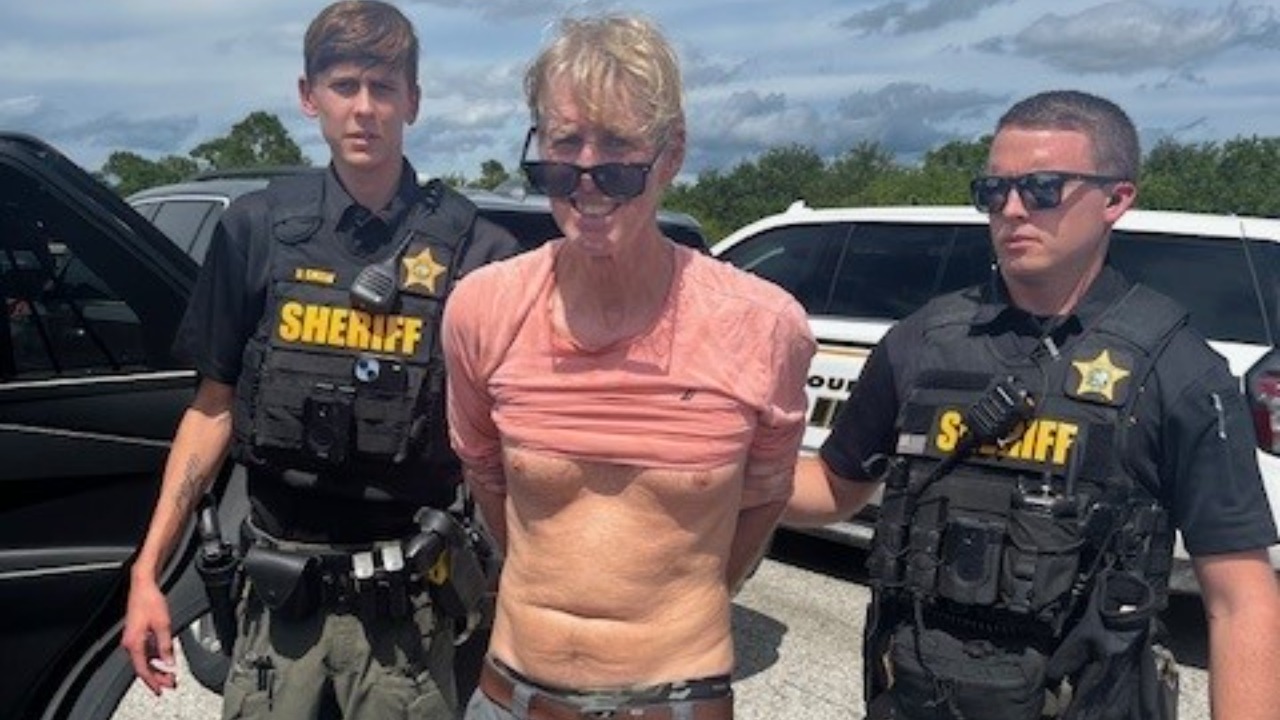
Ryan Routh will spend the rest of his life behind bars after a federal judge imposed the maximum sentence for his attempt to assassinate President Trump at a Florida golf course. The punishment caps a case that tested the limits of political rage, security preparedness, and the justice system’s response to violence aimed at the sitting president. It also sends a pointed message that, regardless of motive, plotting to kill a national leader is treated as an attack on the constitutional order itself.
Prosecutors argued that Routh’s conduct went far beyond protest or heated rhetoric, describing a calculated plan to ambush the president on a familiar stretch of fairway. Jurors agreed, convicting him on charges that carried a potential life term, and the court ultimately concluded that nothing short of permanent incapacitation could protect the public or the presidency.
The life sentence and how the court reached it
At sentencing, the court confronted a stark record: Ryan Routh had already been convicted of attempting to assassinate Trump, and the statute under which he was charged allowed for life in prison. The judge, sitting in federal court after a trial that scrutinized every step of the plot, determined that the gravity of targeting President Trump justified the harshest available penalty. According to detailed accounts, Ryan Routh was formally sentenced to life in prison after jurors found that he had moved beyond rhetoric into concrete, lethal preparation.
Prosecutors had urged the court to impose that life term, arguing that Routh’s actions were not a spontaneous outburst but a deliberate attempt to kill the president. In their telling, the defendant’s planning, travel, and choice of vantage point on the course showed a sustained intent to end Trump’s life, not to stage a symbolic gesture. The judge agreed that the evidence supported a conclusion that Routh intended to kill, and that no lesser sentence could adequately reflect the seriousness of trying to assassinate a sitting president or deter similar plots in the future.
The plot on the golf course and the Secret Service response
The case turned on what unfolded at a golf course in Florida, where President Trump was playing a routine round when Routh allegedly put his plan into motion. Investigators said he positioned himself near a series of holes, using the predictable rhythm of a presidential golf outing to time his movements. Reporting on the case notes that Ryan Routh was ultimately spotted by Secret Service agents before he could fire, a reminder that the protective detail’s layered surveillance is designed precisely for such low‑visibility threats.
Accounts from the scene describe Routh lying in wait along the course, close enough to track the president’s progress from one green to the next. One narrative recounts how agents monitoring the area near the fifth and sixth holes noticed suspicious movement and intervened before the situation escalated, an intervention that likely prevented bloodshed. Coverage of the sentencing emphasizes that the Secret Service response was swift enough that the president was never physically harmed, even as the government later treated the incident as a fully realized assassination attempt.
Inside the trial: evidence, self‑representation, and the jury’s verdict
Once in court, the government’s case focused on showing that Routh’s actions met the legal threshold for an attempted assassination, not merely a threat. Prosecutors presented evidence that he had scoped out the West Palm Beach area and selected the golf course as the most vulnerable setting for an attack on President Trump. They argued that his conduct, including the way he moved into position and the equipment he brought, demonstrated a clear intent to kill. One detailed account notes that Routh was found of planning an attack at the West Palm Beach golf course, with jurors persuaded that his preparations showed he intended to kill.
Routh chose to represent himself, a decision that added a volatile edge to the proceedings. Observers reported that he sometimes veered into topics unrelated to his crimes, even as the court tried to keep the focus on the evidence. One account notes that Routh was convicted of attempting to assassinate Trump on a golf course after a trial in which he occasionally digressed into broader political commentary. Another report underscores that the jury heard how the plot unfolded at a golf course in September 2024 and that the panel ultimately agreed with the government’s characterization of him as an attempted assassin, a conclusion reflected in the description of attempted Trump assassin Ryan Routh.
Political violence, legal precedent, and the message to would‑be imitators
The Routh case lands in a political climate already strained by threats against public officials, and the life sentence is being read as a deliberate effort to draw a bright line around violence in electoral politics. Federal prosecutors framed the matter in those terms, stressing that opposition to a candidate, even one as polarizing as Trump, must remain within lawful bounds. One prosecutor captured that view with a blunt formulation, stating that there are legitimate ways to oppose a presidential candidate and that murder is not one of them, a line that resonated in a courtroom located in FORT PIE and echoed far beyond it.
Legal analysts note that the outcome reinforces a long‑standing pattern in which plots against presidents are punished at the highest levels available under federal law. The life term for Routh, who targeted President Trump during a period of intense national division, fits that tradition and may serve as a reference point for future cases involving threats to top officials. Coverage of the sentencing has highlighted that Trump’s would‑be assassin will never walk free, a fact that underscores how seriously the justice system treats such crimes. Other national reporting has framed the case in similar terms, noting that Ryan Routh was sentenced to life in prison for attempting to assassinate President Trump, while additional coverage has emphasized that the decision came after a high‑profile federal case that drew national attention to the risks facing the presidency and the institutions charged with protecting it.