
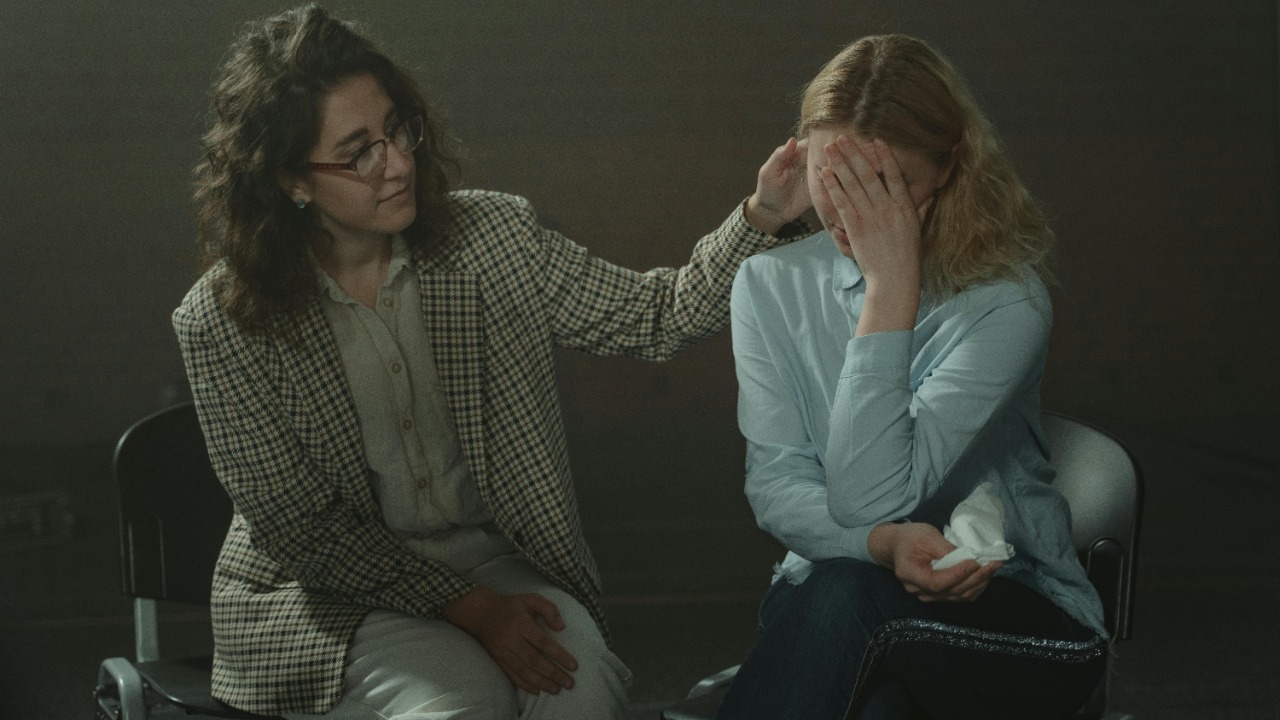
The phrase “eldest daughter syndrome” has moved rapidly from social media shorthand to a cultural flashpoint, capturing the sense that firstborn girls are drafted into unpaid emotional and practical labor long before adulthood. Psychologists are now parsing where the meme ends and the measurable impact begins, asking whether this pattern reflects individual personality, family dynamics, or broader gender expectations. Their emerging consensus is nuanced: there is no formal diagnosis, but there is a recognizable cluster of pressures that can shape health, relationships, and identity for years.
At its core, the idea points to a simple imbalance of responsibility. When parents lean on the oldest girl as a third caregiver, she may gain competence and leadership skills, yet also absorb stress, anxiety, and a persistent belief that her own needs come last. Understanding how that trade-off works in real families is key to separating internet myth from psychological reality.
How a viral label captured a familiar family script
Psychologists describe eldest daughter dynamics as less a new condition and more a long-standing script that has finally been named. In many households, the oldest girl is treated as a junior adult, expected to soothe conflict, organize siblings, and anticipate what others need before anyone asks. Clinical descriptions of eldest daughter experiences emphasize that this is not about birth order alone, but about how gendered expectations intersect with being first in line.
That script has resonated so strongly online that therapists now field clients who arrive already fluent in the term. A widely shared video discussed in a cultural analysis noted how a licensed marriage and family therapist in the United States framed these patterns as a form of invisible labor, helping the phrase spread beyond TikTok into broader conversations about burnout and care work. As the meme has circulated, mental health professionals have been careful to validate the underlying experiences without turning a social media label into a rigid identity.
What psychologists mean by “eldest daughter syndrome”
Clinicians tend to use the term as shorthand for a cluster of traits and pressures rather than a discrete illness. One intensive treatment provider describes it as a pattern in which the oldest girl is held to higher standards and given more responsibility than her siblings, often with fewer allowances for mistakes or rest. In practice, that can look like managing younger children’s homework, mediating disputes, or tracking household logistics that adults have quietly delegated.
Therapists who work with families describe a consistent emotional profile that grows out of these roles. A detailed guide for parents lists signs of eldest daughter syndrome, drawing on licensed marriage and family therapist Kati Morton to highlight patterns such as chronic people-pleasing, difficulty relaxing, and a tendency to equate worth with productivity. Another overview aimed at adults notes that these daughters often feel they must be “the strong one,” which can make it hard to ask for help or even recognize their own exhaustion.
Is it “real” if it is not in the DSM?
On the question of legitimacy, psychologists draw a clear line between formal diagnoses and lived patterns. Experts point out that “eldest daughter syndrome” does not appear in the DSM, the manual clinicians use to classify mental disorders, yet they stress that this absence does not make the distress any less real for those who experience it. One psychologist writing for a general audience notes that the label functions more like a metaphor for chronic overfunctioning than a diagnosis, capturing how family roles can shape anxiety, perfectionism, and difficulty setting boundaries key.
Research on birth order and gender adds another layer of evidence. A summary of psychology findings cited by online therapy clinicians explains that eldest children are often expected to grow up quickly, an expectation that can be especially intense for girls socialized to be caretakers from an early age. Another clinical explainer describes how these daughters are seen as dependable and responsible, which leads families to lean on them for emotional support and practical help, often with little room for independence or rest seen as dependable. In that sense, the “syndrome” is real as a social pattern, even if it is not a medical category.
The emerging science, from mental health to hormones
Beyond clinical observation, a growing body of research is probing how these family roles show up in data. One widely discussed study of women’s mental health used a depression assessment that asked participants to rate statements such as “I felt lonely,” alongside an anxiety questionnaire that measured symptoms like restlessness and worry assessment. The findings suggested that firstborn daughters reported higher levels of internalizing symptoms, even as they were also more likely to hold leadership roles, a combination that mirrors the mix of competence and strain therapists describe.
Another analysis, highlighted by writer Brittany Wong, drew on work by anthropologist Molly Fox of UCLA, who called the results “a first-of-its-kind finding” and argued that they are fascinating to view through an evolutionary lens. Coverage of the same research noted that adrenal puberty processes, which foster social and cognitive changes, may interact with early social responsibilities and hormonal development. Clinicians at a major medical center have suggested that chronic stress in heavily burdened eldest daughters could contribute to earlier adrenal puberty, a shift that may carry long-term health implications.
Psychologists are also careful to note that the picture is not uniformly negative. A detailed explainer on family roles points out that eldest daughters often develop strong organizational skills and a capacity for empathy that can serve them well in adulthood key takeaways. Another feature on personality and relationships observes that it is usually easy to sense when someone is the oldest child, describing how she is part neurotic and part anxious, yet also the first to send meticulous calendar invites and check in on friends’ wellbeing usually. In that light, the same forces that heighten risk for anxiety and loneliness can also cultivate reliability and leadership.
From family expectations to social change
For many psychologists, the most urgent question is not whether eldest daughter patterns exist, but what families and societies choose to do with that knowledge. A clinical overview of “eldest daughter syndrome” stresses that the oldest girl in a family often experiences a unique set of expectations that can be adjusted when parents become more aware of them Eldest Daughter Syndrome. Another therapist-focused resource encourages parents to redistribute chores, check in about emotional burdens, and avoid assuming that the most competent child needs the least support Eldest Daughter Syndrome. These are small shifts, but they can prevent a pattern of over-responsibility from hardening into a lifelong identity.
At the cultural level, researchers are connecting eldest daughter experiences to broader questions of gender and power. Work on the “Mighty girl effect,” also called the eldest daughter effect, has found that fathers whose eldest child is a girl tend to support more progressive views on gender equality than fathers whose eldest child is a boy Mighty. Social media has amplified this conversation, with viral posts noting that eldest daughters are frequently given the heaviest emotional load in families rather than special privilege. Psychologists who speak publicly about these issues, including those whose commentary has circulated widely on TikTok and in follow up reporting, describe a childhood of responsibility, not rest, in which eldest daughters are pushed into adult roles from a young age. As the science develops, their message is less about pathologizing firstborn girls and more about inviting families to share the load.