
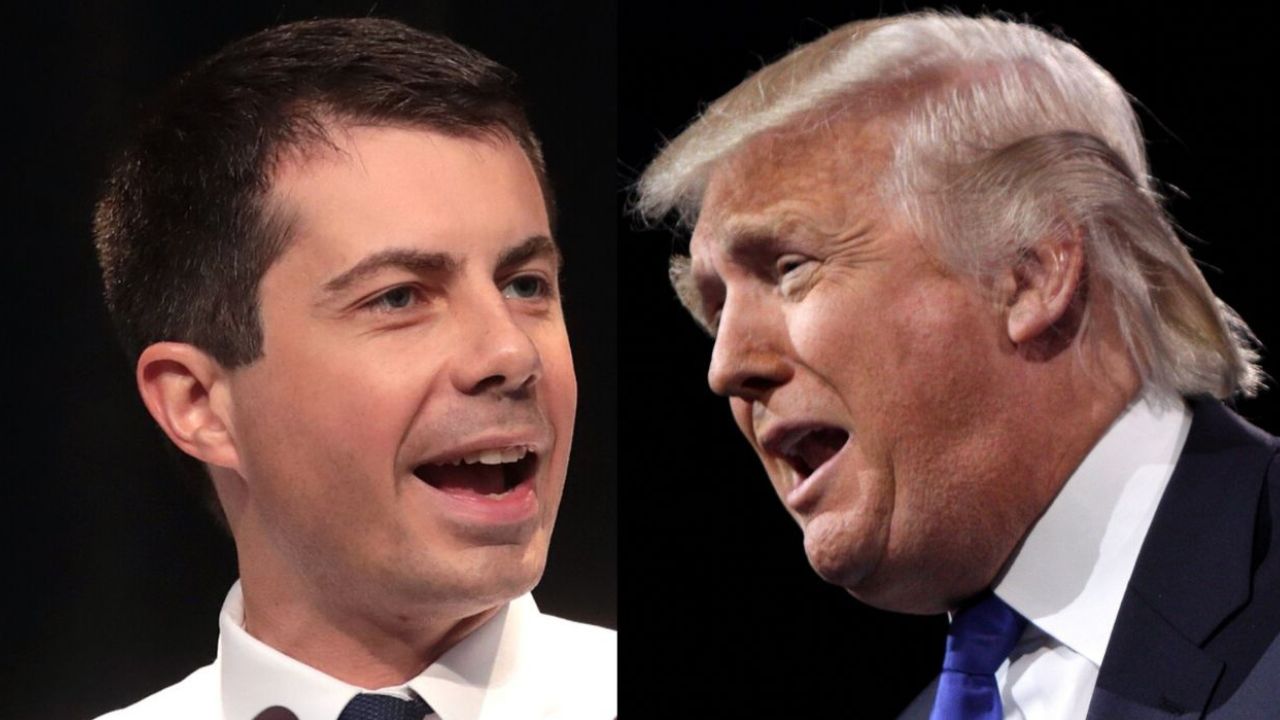
Former U.S. Secretary of Transportation Pete Buttigieg used a Friday morning post on X to directly blame President Donald Trump, the war with Iran, and Republican economic policy for inflation that remains stubbornly above pre-Trump levels, framing the newly released August inflation report as proof that “it’s time for a change” less than two months before the 2026 midterm elections.
Buttigieg’s post, published at 9:44 a.m. on September 11, 2026, came less than an hour after CBS News reported that the Consumer Price Index rose 3.4% year-over-year in August, a figure that matched July’s pace but came in hotter than the 3.3% economists had forecast. His statement in full read:
“Today’s numbers show inflation remains objectively worse than it was when Republicans took over. This is a direct result of Trump and the GOP’s decisions – the Iran War, the tariffs, the corporate tax giveaways. Time for a change.”
The timing of the post placed Buttigieg, widely seen as a potential 2028 Democratic presidential contender, squarely in the middle of one of the most closely watched economic news cycles of the year — a Friday CPI release that landed just five days before the Federal Reserve’s next interest rate decision.
The Inflation Report That Triggered the Post
According to the CBS News report Buttigieg was responding to, the Bureau of Labor Statistics found that consumer prices climbed 3.4% over the twelve months ending in August, matching July’s annual pace but exceeding the 3.3% median forecast from economists polled by FactSet. Core CPI, which strips out food and energy costs, rose 2.4% annually, in line with expectations, but jumped 0.3% on a monthly basis — a pickup from July’s 0.2% monthly pace.
The report singled out gasoline as the primary driver of the monthly increase, noting that fuel costs accounted for more than a third of August’s rise in the CPI and were up 27.4% from a year earlier. Diesel, which powers the freight trucks and trains that move goods across the country, hit a record national average of $6.06 a gallon on Friday, more than 60% higher than the $3.71 average recorded a year prior, according to AAA data cited in the report.
Alexandra Wilson-Elizondo, global head and co-chief investment officer of multi-asset solutions at Goldman Sachs Asset Management, told CBS News in a Friday email that “the survey period predates the latest move higher in energy prices, with Brent crude climbing above $100 as tensions around the Strait of Hormuz persist,” suggesting the August data may understate the true inflationary pressure now building in the economy.
The hotter-than-expected reading also raised the odds of a Federal Reserve rate hike at its September 16 meeting to 90%, up sharply from 70% the day before, according to CME FedWatch data. Fed Chairman Kevin Warsh had signaled last month at the Jackson Hole summit that taming inflation remains the central bank’s top priority.
A Consistent Message Tying Prices to the Iran War
Buttigieg’s Friday statement was not an isolated jab. It extended a message he has repeated with increasing frequency since the United States entered its war with Iran in late February 2026, consistently framing rising costs as a direct consequence of the administration’s decision to go to war rather than an unavoidable economic headwind.
In an earlier X post this year, Buttigieg wrote that “we now know the Iran war price tag is more like $50 billion — hundreds of dollars per household — and counting,” adding that the sum was “enough to cover all the health insurance premium credits that the Republicans got rid of for this year, and next,” and suggesting it “could save rural hospitals, pay teachers” and fund other domestic priorities instead.
He struck a similar tone in an April appearance on MS NOW’s “Morning Joe,” telling the network that “we have an administration doing everything they can to drive costs up, and it’s across every category of the economy,” a contrast he drew with past administrations that he said worked to bring inflation down during periods of economic pain.
Economists Back Up the Underlying Claim
Independent economic analysts have echoed the substance of Buttigieg’s argument in recent days, even as his framing remains a Democratic political message. Mark Zandi, chief economist at Moody’s, told CNBC that “you’ve got a lot of shocks that are pushing up inflation and making it uncomfortably high,” specifically naming the Iran war, tariffs, and artificial intelligence-related costs as contributing factors. “The shocks, we keep hoping they fade away into the background,” Zandi said, “but they’re not going away. They’re still plaguing us with these big increases.”
Zandi also said tariffs imposed under the Trump administration “feel like they’re still bleeding through” into consumer prices, though he noted tariffs are no longer the dominant driver of inflation following a February Supreme Court ruling that struck down a central piece of Trump’s tariff policy. The administration has since pursued alternative legal authorities to reimpose similar duties, according to the CNBC report.
Federal Reserve Chairman Jerome Powell offered a comparable assessment earlier this year, telling reporters that “if you look at total core inflation, it’s about 3%, and some big chunk of that — between a half and three quarters — is actually tariffs,” while also citing the war’s disruption of oil markets in the Middle East as a factor pushing near-term inflation expectations higher.
Inflation’s Trajectory Since Republicans Took Office
Buttigieg’s claim that inflation “remains objectively worse than it was when Republicans took over” reflects a broader trend documented by outside forecasters. According to a report from the Organization for Economic Co-operation and Development cited by financial outlets, the United States is now projected to record the highest inflation rate among G7 nations in 2026, at 4.2%, up from 2.6% in 2025. That would place the U.S. ahead of the United Kingdom’s projected 4% and well above Germany, Canada, Italy, Japan and France.
When Trump left office in January 2025, inflation stood at 2.4% year-over-year, a figure he touted at the World Economic Forum in Davos, telling attendees that “grocery prices, energy prices, airfares, mortgage rates, rent and car payments are all coming down, and they’re coming down fast.” By contrast, inflation stood at 3% when President Biden left office, down from a post-pandemic peak of 9.1% in June 2022.
Republicans Increasingly Divided Over the Economic Toll
The economic strain from the war and tariffs has not gone unnoticed within the GOP itself. Rep. Brian Fitzpatrick, R-Pa., offered what CNBC described as a rare rebuke of Trump’s priorities from within his own party, which has largely stood behind the administration through months of tariff turbulence and the ongoing conflict with Iran.
House Natural Resources Committee Chairman Bruce Westerman, R-Ark., acknowledged that resolving high gasoline prices “comes down to getting energy costs back where they need to be, which is going to involve getting some resolution in Iran,” adding that “there are still some things we could do through reconciliation, but this is just a fundamental supply and demand issue right here.”
Analysts at Wood Mackenzie found that a swift resolution to the Iran conflict could bring Brent crude down to roughly $80 per barrel by year’s end, while a continued closure of the Strait of Hormuz — which carries roughly a fifth of the world’s oil supply — could push crude toward $200 per barrel, according to the CNBC report.
Buttigieg’s Broader Midterm Push
Friday’s post fits into a pattern of increasingly aggressive economic messaging from Buttigieg as the midterms approach. Speaking at a rally in Iowa this summer, he told supporters that “our economy is unfair because our politics is unfair,” pointing to what he called a “carnival of corruption” in Washington, and warning that the odds of the next generation outperforming their parents economically have fallen from roughly 90% for those born after World War II to a “coin flip” for those born in the early 1980s.
At the same time, Buttigieg has cautioned fellow Democrats against making Trump the sole focus of their 2026 campaign message. Speaking in South Carolina last month, he argued that the party’s messaging should center on the future rather than solely on “everything that this president and this administration are doing wrong,” while cautioning that Democrats risk “doing well in 2026” only to squander the opportunity that follows.
Buttigieg’s Win the Era political action committee has meanwhile ramped up its involvement in down-ballot races ahead of November, cutting $5,000 checks to all 50 state Democratic parties and Puerto Rico’s party organization in June and issuing a slate of endorsements for state legislative candidates in his home state of Indiana, according to reporting on his political operation.
What Comes Next
The Federal Reserve is scheduled to announce its next interest rate decision on Wednesday, September 16, a decision now widely expected to result in the central bank’s first rate hike in more than three years. Adam Crisafulli, head of the investment advisory firm Vital Knowledge, wrote in a note that the August CPI report was “still hot” and “more than enough to justify” such a move, while cautioning that inflation is likely to remain elevated into September given the recent surge in energy prices.
With gasoline already averaging $4.30 a gallon nationally on Friday — a figure that does not yet reflect the latest spike tied to tensions around the Strait of Hormuz — the economic and political stakes of the Iran war’s fallout appear likely to remain a central fault line between the two parties as voters head toward the November midterms.