
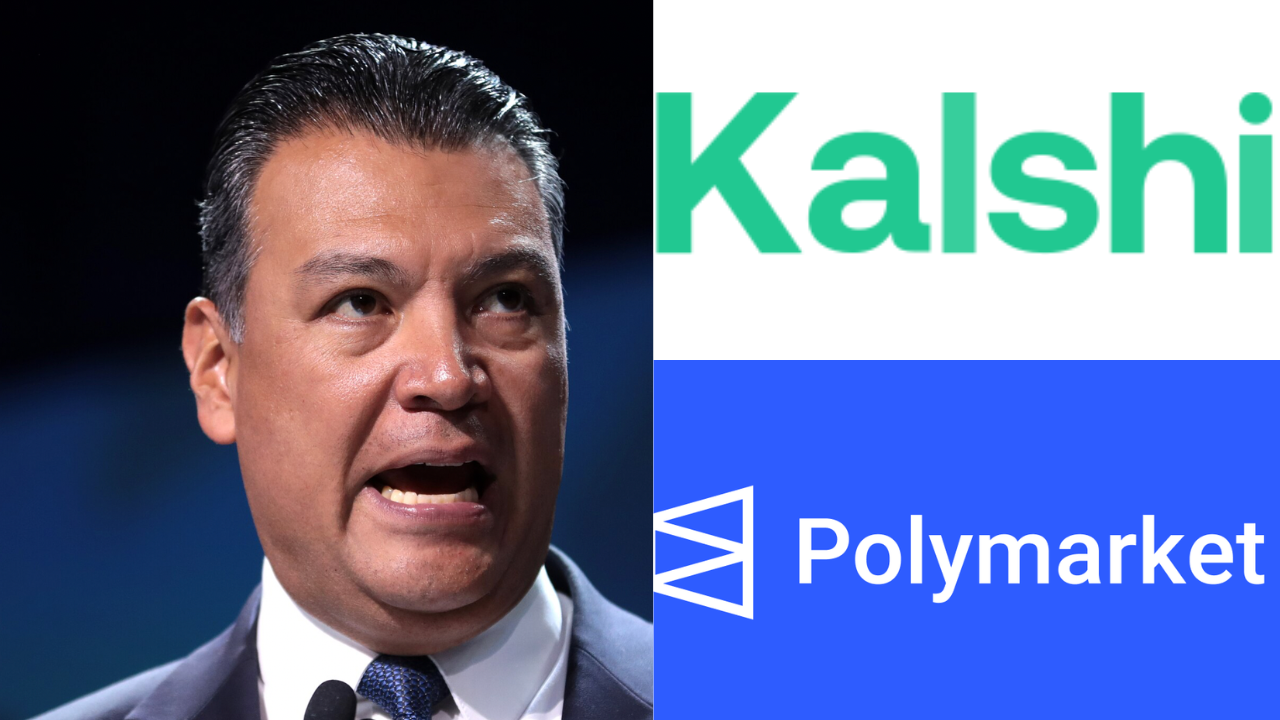
U.S. Senator Alex Padilla (D-CA), Ranking Member of the Senate Rules and Administration Committee, publicly called out prediction market platforms Kalshi and Polymarket on Wednesday, accusing the companies of paying social media influencers who spread false claims about American elections. Padilla’s statement, posted to X on Wednesday, August 26, 2026, at 10:00 PM, came hours after he and Senator Mark Warner (D-VA) sent a formal letter to the two companies demanding detailed answers about their paid influencer practices.
“Nobody should be paying influencers who spread misinformation about our American elections,” Padilla wrote. “I’m calling on Kalshi and Polymarket to stop subsidizing and amplifying social media influencers who echo President Trump’s baseless attacks on our democracy.”
The Letter to Kalshi and Polymarket
Padilla’s post followed a formal letter sent earlier Wednesday to Polymarket CEO Shayne Coplan and Kalshi CEO Tarek Mansour. The letter, co-signed by Warner, who serves as Vice Chairman of the Senate Select Committee on Intelligence, was addressed to both executives at their respective New York headquarters and demanded written answers by September 4, 2026.
“In operating prediction markets tied to American elections, your platforms have a responsibility not to undermine the confidence in those elections as well as an obligation to protect the integrity of the trading activities on the platforms,” the senators wrote, noting that the 2026 midterm elections were 69 days away at the time of the letter.
Senators Cite Falling Public Confidence in Elections
The senators pointed to declining public trust in the electoral process as part of the backdrop for their concerns. “Recent surveys show that Americans’ confidence in our elections has been falling in the wake of years of baseless attacks on the integrity of our elections, including those led by President Trump and his election denier allies,” they wrote, citing Pew Research Center polling published August 5, 2026.
They also referenced findings from the Brennan Center for Justice indicating that nonpartisan and bipartisan election workers “have endured verbal abuse and threats of physical violence for doing their jobs, causing many experienced personnel to leave the field.”
“Subsidizing — and Amplifying” Trump’s Claims
The core of the senators’ concern centers on Kalshi and Polymarket’s practice of paying influencers to promote betting markets tied to elections and government actions. “By creating and aggressively promoting markets on elections, your platforms now play a significant role in shaping Americans’ perceptions of their elections,” the letter states.
“We are seriously alarmed that your marketing strategy includes paying numerous social media influencers willing to espouse unreliable information on elections,” the senators continued. “In doing so, we are concerned that your prediction market platforms may be subsidizing — and amplifying — social media influencers who echo President Trump’s baseless attacks and sow distrust in American elections.”
The SAVE Act and Matt Gaetz
The letter specifically connects the influencer controversy to lobbying efforts around the SAVE Act, legislation aimed at voter eligibility requirements that Republicans have pushed amid claims of election fraud. “In July, a series of major social media influencers, including former Congressman Matt Gaetz, all posted similar ‘paid partnership’ posts linking to Polymarket and Kalshi charts showing the odds of enactment of the SAVE Act dropping to all-time lows,” the senators wrote.
They also cited Senate Majority Leader John Thune’s own comments on the source of pressure surrounding the legislation. “As Majority Leader Thune has noted, much of the pressure on the Senate to pass the SAVE Act, rooted in false claims of widespread election fraud, comes from ‘paid influencers,'” the letter states, referencing reporting from the Washington Examiner published March 9, 2026.
June Incident Involving California Election Claims
The senators pointed to a specific prior episode as evidence the concern is not hypothetical. “In June, influencers under contract with both Kalshi and Polymarket spread false conspiracy theories about recent California elections,” they wrote, referencing coverage of the Los Angeles mayoral race. “These posts appeared on X, formerly Twitter, marked as ‘paid partnership,’ using prediction market election odds to support baseless claims of election fraud.”
According to the letter, “these posts were only taken down when reported on by the news media, and after they were viewed by millions of Americans,” and some of the same influencer accounts have continued posting election-related content as paid partners despite the earlier violations.
Platform Rules the Senators Say Are Being Ignored
The letter notes that both companies maintain policies that, in the senators’ view, are inconsistent with the influencer conduct they describe. Polymarket has publicly committed to keep its “markets free from deceptive, manipulative, and unfair trading practices,” while Kalshi’s community guidelines forbid users from “intentionally provid[ing] misleading, erroneous, or fraudulent information.”
The senators also cited specific rulebook language from both companies. Kalshi’s Rule 5.17(h) states that “No Person shall engage in any activity that presents a risk of harm to Kalshi, its Participants, or the public,” while Polymarket’s Rule 7.2(b) states that “No Participant shall engage in fraudulent or deceitful conduct” or “make any untrue or misleading statement or omit a material fact.”
Ten Questions Demanding Written Answers
The letter lays out ten detailed questions the senators are requiring both companies to answer in writing by September 4. These include requests for a standard paid influencer contract and sample payment ranges, the vetting criteria used before signing influencers, and copies of any existing policies governing election-related content.
The senators also asked whether each platform’s leadership considers the spreading of election misinformation to constitute “a risk of harm” or “fraudulent or deceitful conduct” under their own rulebooks, and whether paid influencers are permitted to place bets on the very markets they are being compensated to promote — a practice the letter describes as a potential form of front-running.
Regulatory Obligations Under the Commodity Exchange Act
Beyond the platforms’ internal rules, the senators argued that Kalshi and Polymarket carry independent legal obligations. “Your companies also have independent obligations under the Commodity Exchange Act to police fraud, enforce compliance with their rules, and guard against prohibited trading practices,” the letter states, adding that these obligations “raise additional concerns when platforms are paying individuals to promote contracts while those same individuals may be spreading false information about the events underlying those contracts.”
Senators’ Closing Demand
The letter concludes with a direct call to action for both companies. “As your platforms work to respond to these questions, we urge you to act now to reevaluate all paid influencer relationships regarding elections, thoroughly vet all existing and future paid influencer arrangements, and immediately terminate any existing relationships with those who spread election misinformation, disinformation, or undermine the integrity of U.S. elections,” the senators wrote.
Padilla and Warner closed by tying the request directly to the upcoming midterms: “Thank you for your continued engagement on these issues, and we urge you to take all necessary actions to prepare for the 2026 election so that prediction markets do not cause additional harms to American election security.” The letter was signed by both senators in their committee capacities — Padilla as Ranking Member of the Committee on Rules and Administration, and Warner as Vice Chairman of the Select Committee on Intelligence.
Padilla’s Broader Election-Integrity Record
Wednesday’s letter is part of a broader pattern of election-security legislation Padilla has pursued in 2026. Last month, he introduced the Stop Harassment and Intimidation in Elections through Legal Defenses (SHIELD) Our Elections Act, which would give states and voters legal tools to enforce federal election protections. In June, Padilla and Senator Jeff Merkley (D-OR) introduced the Fraudulent Artificial Intelligence Regulations (FAIR) Elections Act, aimed at addressing the use of artificial intelligence to suppress voting and purge voter rolls.
Wider Scrutiny of Prediction Markets
The Padilla-Warner letter arrives amid a broader wave of regulatory and legislative scrutiny of prediction markets. Earlier in August, New York City Council Speaker Julie Menin sent letters to Kalshi, Polymarket, Coinbase, and Gemini’s Titan platform demanding answers within two weeks on more than three dozen questions about advertising tactics and potential targeting of young users, following a Wall Street Journal investigation that found Polymarket had paid college-aged influencers to film fabricated trades on lookalike websites. Separately, Senators John Curtis and Adam Schiff have called for a federal Commodity Futures Trading Commission investigation into whether prediction markets’ social media promotion functions as unregulated gambling.