
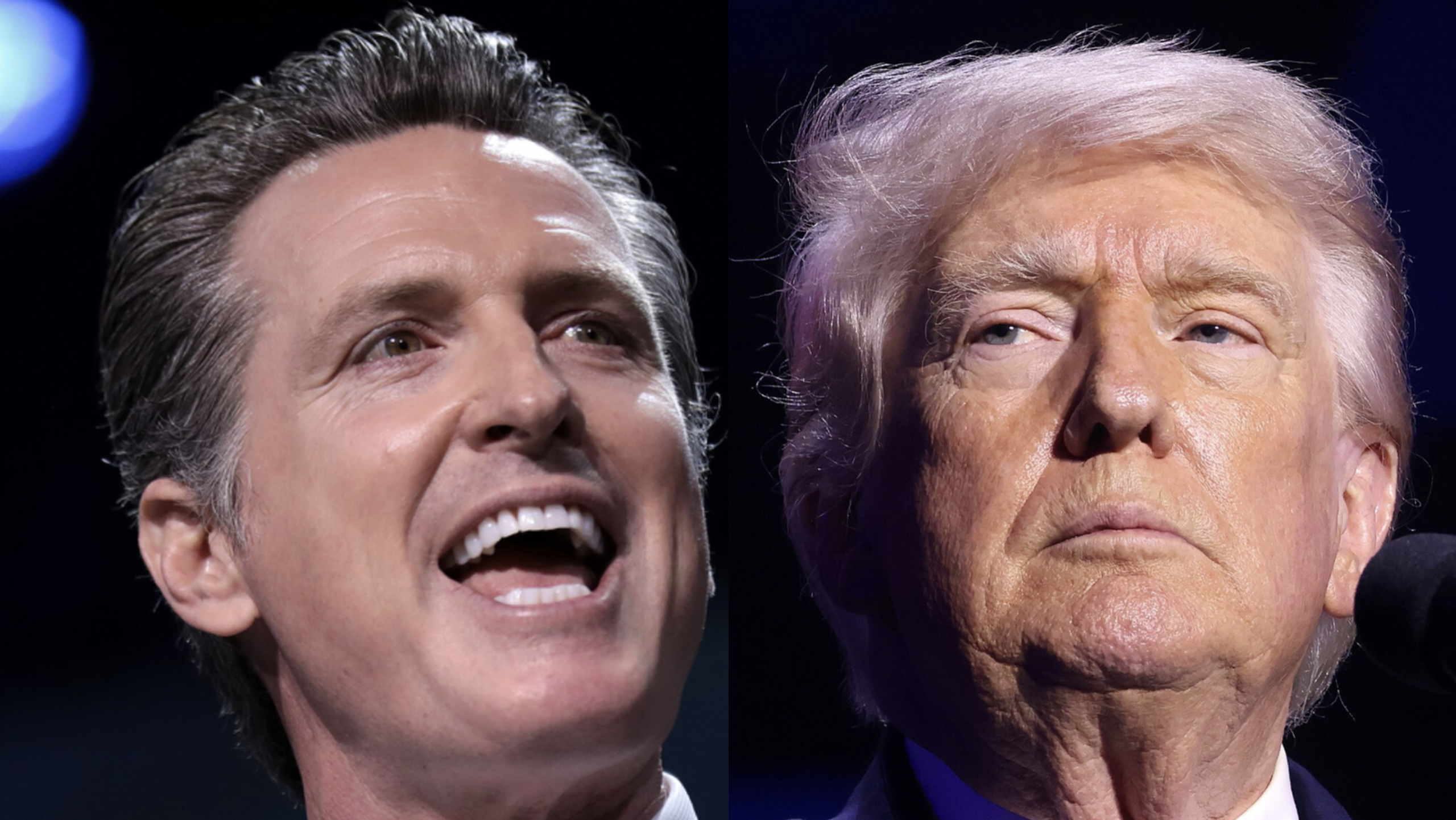
California Gov. Gavin Newsom escalated his monthslong campaign against President Donald Trump’s handling of the Iran war on Monday, posting a new attack on X that puts a fresh, staggering price tag on the conflict’s toll at the gas pump: $75 billion. The claim, posted from the Governor’s official press office account at 10:01 a.m. on July 27, 2026, argues that Trump’s “war without a plan” in Iran has left Americans paying roughly $1 more per gallon than they were before the fighting began — and that the cumulative cost to consumers has now blown past the $75 billion mark.
The post read in full: “Thanks to Trump’s war without a plan in Iran, Americans are still paying an extra $1 per gallon above what they were prior to the war! That’s $75 billion more you’ve been paying Big Oil thanks to Trump. END TRUMP’S IRAN WAR GAS TAX!”
A Governor Positioning Himself as Trump’s Chief Antagonist on the War
The post is the latest entry in a running feud Newsom has waged with the White House since the early days of the U.S. and Israeli strikes on Iran, one that has increasingly folded gas prices, oil company profits, and the broader economic fallout of the conflict into a single line of attack. It also lands at a moment when Newsom is widely regarded as one of the most closely watched Democrats eyeing the 2028 presidential race, with prediction markets such as Polymarket and Kalshi consistently ranking him among the top contenders for the party’s nomination, even as recent polling has shown him trading the lead with other potential candidates. That national profile has turned nearly every one of his statements on the war and the economy into material scrutinized well beyond California.
How the Iran War Became a Gas-Price Fight
The dispute traces back to March 2026, when Trump ordered U.S. military strikes on Iran alongside Israel. Newsom moved quickly to tie the strikes to fuel costs, telling reporters at a press briefing that every $10 increase in the price of a barrel of oil translates to roughly 24 cents more per gallon at the pump “because of Trump’s war.” Days later, in a formal statement released through the Governor’s office, Newsom said crude oil prices had spiked more than $100 per barrel for the first time since Russia’s invasion of Ukraine, and that national average gas prices had climbed 56 cents per gallon in just the first nine days of the conflict.
The Dollar Figures Have Climbed for Months
Newsom’s dollar estimates for the war’s cost to American drivers have steadily grown as the conflict has dragged on. In March, he pegged the toll at $1.5 billion a week. By early June, as the war passed the 100-day mark, his office said Americans had been “saddled with an extra $55.6 billion (and growing) in fuel costs,” blaming Trump for launching “a war on Iran with no plan.” Weeks later, that figure had grown again, with Newsom’s office attributing $63 billion in higher fuel costs to what it called the “GOP-enabled Iran war” while separately defending California’s own gas tax against Republican criticism. Monday’s post pushes the running total to $75 billion, the highest figure Newsom’s office has cited to date.
A Parallel Campaign Against Big Oil
Alongside his attacks on Trump, Newsom has repeatedly turned his fire on the oil industry itself, accusing companies of using the war as cover to pad profits. In late June, his press office urged Californians to boycott brand-name stations, specifically naming Chevron, ahead of the Fourth of July travel weekend, arguing that “unbranded gas” offered the same quality for less money and telling drivers to keep “the extra cash for your holiday, not Big Oil’s pocket.” Chevron has pushed back publicly on Newsom’s energy policies, warning they pose risks to California jobs and the state’s economy.
Trump’s “In Control” Comments Became a Recurring Target
Newsom has also repeatedly seized on public comments from Trump downplaying the war’s economic impact. In one post, the Governor’s office pointed to gas prices exceeding $4 a gallon in several states as direct rebuttal to Trump’s claim that he was “in control” of the situation, writing that the price data made clear “that’s not true.” In another, Newsom’s office highlighted a Trump comment from earlier in the year stating that rising oil prices meant the country would “make a lot of money,” using the remark to argue the administration saw upside in the very price spikes hurting consumers.
Diesel, Groceries, and the “Cascading Effect”
Newsom has framed the fight as reaching beyond the price at the pump. In a televised interview in late May, he warned that surging diesel costs would ripple into grocery prices as trucking costs rose, describing a “cascading effect” on the broader economy that he said would persist “even if the Iran conflict ended tomorrow.” At the time, California drivers were paying more than $6 a gallon, and Newsom used the moment to criticize Transportation Secretary Sean Duffy for encouraging Americans to take road trips despite the elevated prices.
Republican Pushback on Newsom’s Own Record
Newsom’s attacks have not gone unanswered. Republican Rep. Vince Fong of California has argued that state-level taxes and mandates, not the war, are the larger driver of pain at the pump for Californians, noting that more than half the cost of gas in the state already comes from state-imposed taxes. Critics, including commentary from Fox News, have also pointed to California’s gas prices running well above the national average and questioned whether the state’s own climate and energy policies bear some responsibility, even as Newsom’s office continues to frame the war as the primary culprit.
The Market Backdrop to Monday’s Post
Monday’s renewed attack comes as oil markets show signs of cooling, at least for now. Brent crude fell sharply on Monday, dropping as low as $87.60 a barrel before paring losses to trade around $89.70, as the United States paused its strikes on Iran and Tehran said it had halted retaliatory attacks while engaging in talks with Oman over the Strait of Hormuz. Supply conditions also eased after crude loadings resumed at the Caspian Pipeline Consortium terminal on Russia’s Black Sea coast, a key export route for Kazakh oil that had been disrupted by Ukrainian drone strikes. Even with Monday’s pullback, Brent remains up nearly 25% for the month, as disruptions spread from the Strait of Hormuz to the Red Sea, with Yemen’s Iran-backed Houthi militants claiming attacks on Saudi Aramco-linked facilities in Jizan and Yanbu — claims neither Saudi Arabia nor Aramco has confirmed.
A Fragile De-Escalation
That partial de-escalation gives Monday’s post an added layer of significance: Newsom’s $75 billion figure and his call to “END TRUMP’S IRAN WAR GAS TAX” arrive at the very moment prices might otherwise be expected to ease, suggesting his office intends to keep pressure on the administration over the cumulative cost of the war even as the immediate military crisis appears to be cooling. Whether prices at U.S. pumps follow crude’s Monday drop, or whether the ceasefire in strikes holds at all, remains to be seen.
The Bigger Political Picture
For Newsom, the post fits a broader pattern of using the Iran war’s economic fallout as a central plank of his ongoing critique of the Trump administration, one that has run in parallel with his national political rise. Prediction markets have repeatedly listed him among the top-polling Democrats for the party’s 2028 presidential nomination, alongside figures such as Kamala Harris, Alexandria Ocasio-Cortez, and Jon Ossoff, even as polling on the broader field has shifted in recent weeks. Whether Monday’s post moves that conversation further remains to be seen, but it continues a strategy in which Newsom has consistently paired attacks on Trump’s foreign policy with pocketbook arguments aimed squarely at American drivers.
What Comes Next
The Trump administration had not issued a public response to Newsom’s Monday post as of this writing. Given the pattern of the past several months, further statements from either side, along with fresh economic data on gas and diesel prices, are likely as the fragile halt in U.S.-Iran hostilities is tested in the days ahead.