
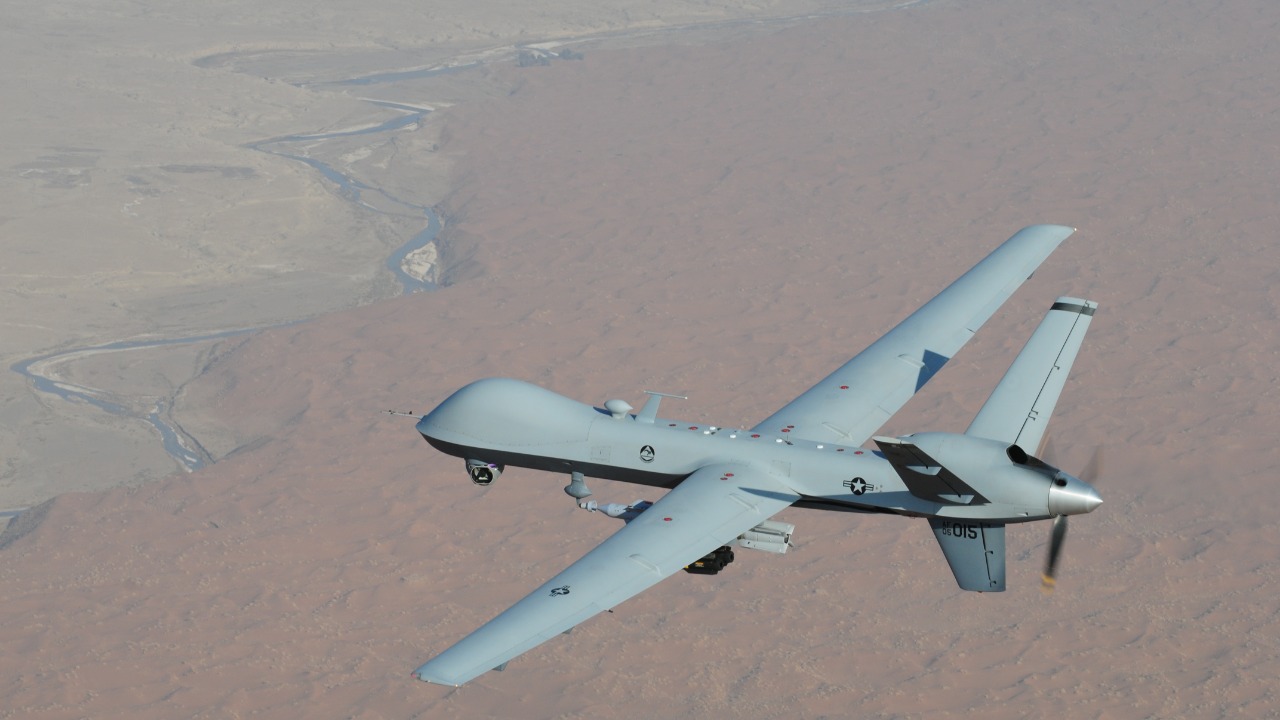
The MQ-9 Reaper turned unmanned aircraft from niche surveillance tools into front-line combat systems that can watch, find, and strike targets from thousands of miles away. By combining long endurance, advanced sensors, and precision weapons, it reshaped how militaries think about airpower, risk, and the pace of modern operations. I want to unpack how this remotely piloted aircraft works, what missions it actually flies, and why its mix of sensors and weapons changed drone warfare far beyond the battlefield where it first saw combat.
From Predator successor to “hunter-killer” workhorse
The Reaper was designed from the start as a step change from the earlier MQ-1 Predator, trading a light surveillance role for a true “hunter-killer” profile with far more power and payload. The aircraft’s turboprop engine gives it significantly greater speed and the ability to carry roughly fifteen times more ordnance than its predecessor, which turns a once modest drone into a platform that can loiter for more than 27 hours and still deliver a heavy strike package when needed. According to detailed technical descriptions of the Reaper, that extra power is central to its role as a persistent, armed overwatch asset rather than a simple camera in the sky.
At its core, the MQ-9 is a remotely piloted aircraft system, not an autonomous robot, and it relies on a crew that typically includes a pilot and a sensor operator. The pilot manages the aircraft’s flight profile while the sensor operator controls cameras, radar, and weapons, a division of labor that lets the crew exploit the full capability of the Multi-Spectral Targeting System and other payloads. Official fact sheets describe the MQ-9 baseline system as carrying a robust suite of visual sensors for targeting, and that crewed control of those sensors is what turns raw imagery into actionable intelligence and precise strikes.
What the Reaper actually does on mission
Despite its reputation as a missile carrier, the Reaper’s primary mission is intelligence collection, with strike duties coming second. Official mission statements describe the Mission of The Reaper as being employed first as an intelligence-collection asset and only then against dynamic execution targets, which reflects how commanders use its long endurance to build a detailed picture of the battlefield before committing weapons. Combatant Commanders rely on units equipped with the MQ-9 to conduct armed reconnaissance and pre-planned strikes, and when properly equipped, the aircraft can also support close air support, convoy overwatch, and battle damage assessment, according to the MQ‑9 UAS operational test reporting.
The Reaper’s alternate mission is to act as a dedicated intelligence, surveillance, and reconnaissance asset, feeding real-time imagery and data to commanders and intelligence specialists at all levels. Government documentation notes that the MQ9’s alternate mission is to employ sensors to provide real-time data, which aligns with broader intelligence doctrine that stresses how airborne surveillance contributes directly to situational awareness in real time. Reporting on Intelligence surveillance and reconnaissance emphasizes that this constant flow of information shapes decisions from the tactical edge to national leadership, and the Reaper’s ability to stay on station for extended periods is what makes that possible.
The sensor suite that makes the Reaper so effective
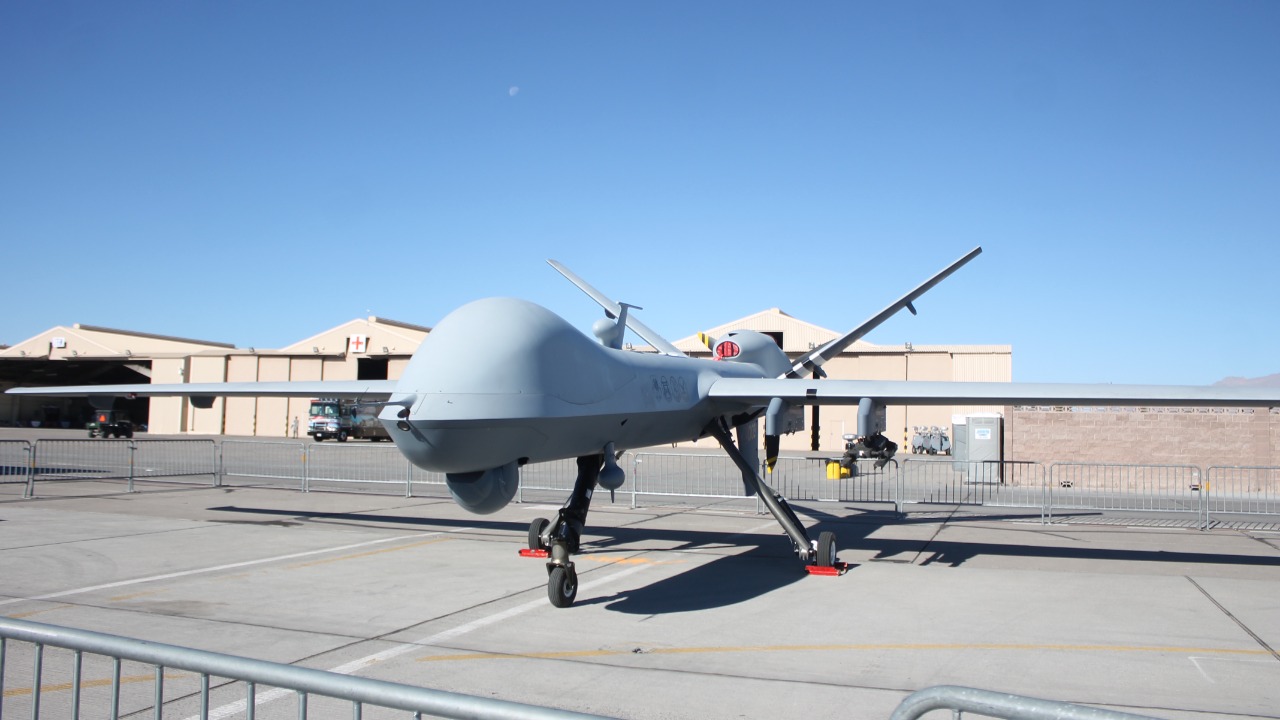
The Reaper’s impact on modern warfare rests less on its airframe and more on the sophistication of its sensors and data links. The MQ baseline system carries the Multi-Spectral Targeting System, a turret that combines electro-optical and infrared cameras with a laser designator and rangefinder, giving crews the ability to track targets day or night and hand off precise coordinates to weapons or other aircraft. Official descriptions of the Multi Spectral Targeting System highlight that it can provide multiple video streams or fused imagery, which lets analysts and operators see both wide-area context and fine detail without swapping hardware.
Beyond electro-optical sensors, the Reaper can carry synthetic aperture radar for ground mapping and moving target indication, which is crucial when weather or smoke obscures the view of traditional cameras. Industry analysis of Reaper Drones notes that its baseline configuration includes this multi-sensor approach, and that additional systems can be added for enhanced takeoff performance or specialized missions. The aircraft’s communications backbone is just as important: the Primary Predator Satellite Link, often referred to as The PPSL, provides over-the-horizon communications for the aircraft and its sensors, enabling remote split operations in which the aircraft launches from a forward base but is flown by crews thousands of miles away. Fact sheets from both the 132d Wing and Creech Air Force Base describe how The PPSL provides that beyond-line-of-sight link, while also introducing latency and bandwidth challenges that crews must manage.
Precision weapons and laser-guided targeting
What truly sets the Reaper apart is its ability to move from watching a target to striking it in a matter of seconds, using the same sensors that collected the initial intelligence. The aircraft typically carries a mix of AGM-114 Hellfire missiles and laser-guided bombs, giving commanders options for both pinpoint strikes and larger effects. Technical overviews of the Reaper’s armament explain that the greater engine power allows it to carry up to 3,800 pounds of ordnance, and that this payload can include multiple Hellfire missiles and guided bombs without sacrificing endurance, as detailed in the Reaper specifications.
The Multi-Spectral Targeting System’s laser rangefinder and designator are central to this precision strike role. Reporting on Reaper Drones notes that this powerful unit can precisely determine targets when using laser-guided munitions, including up to eight laser-guided missiles such as the Air-to-Ground Missile-114 Hellfire. Similar laser technology is now common across unmanned systems, with newer payloads like the HD80 Series for FTUAS integrating a Laser Pointer for precise target marking and coordination, as described in analysis of Pioneering Innovation with that Series for FTUAS Laser Pointer. The Reaper’s use of similar laser tools shows how unmanned aircraft have become integral to the broader ecosystem of precision-guided weapons, not just as launch platforms but as the eyes and designators that make those weapons effective.
How the Reaper changed drone warfare and ISR
The Reaper’s combination of endurance, sensors, and weapons did more than upgrade a single aircraft type, it shifted expectations for what unmanned systems should deliver in modern conflicts. With the ability to stay aloft for more than a day, cruise at higher speeds than earlier drones, and carry a large payload, it gave commanders a persistent hunter-killer that could both find and finish targets without handing off to a separate strike platform. Descriptions of Reapers emphasize that they provide the joint forc commander a persistent hunter-killer able to strike emerging targets, while also acting as an intelligence, surveillance, and reconnaissance asset for commanders and intelligence specialists at all levels. That dual role, backed by remote split operations and satellite links, reduced the need for large forward-deployed aircrews and allowed the United States and allies to project airpower with a smaller physical footprint.
The Reaper also plugged directly into a growing digital infrastructure that collects, processes, and distributes sensor data across the force. Contracts for ISR mission support highlight how systems now collect, process, analyze, and disseminate data from sensors aboard platforms like the MQ-9 Reaper, the RQ-4 Global Hawk, and other aircraft, as noted in Air Force documentation on Air Force ISR systems. That networked approach means a Reaper orbit is not just a single aircraft watching a single target, it is a node in a larger information web that feeds everything from ground units to national decision makers. As other services adapt similar concepts, including new electronic warfare pods and advanced radar payloads, the MQ-9’s legacy is clear: it turned unmanned aircraft into indispensable tools for both surveillance and precision strike, and it forced militaries to rethink how they manage information, risk, and accountability in the age of remote warfare.