
“Ahead of their time” is often shorthand for a system that worked in a limited way, but arrived before the supporting ecosystem—sensors, computing, materials, batteries, data links, training, and doctrine—was ready to make it reliable and scalable. In recent conflicts, where drones, electronic warfare, and layered air defenses punish slow adaptation, older concepts are being revisited and put to work with modern enablers. The story is less about miracle platforms than about maturity: ideas that once looked niche now fit the way forces operate and sustain themselves.
This matters because timing can create temporary asymmetry. A capability that is merely “good enough” can be decisive if the other side lacks counters, production capacity, or the organizational ability to respond quickly. The reverse is also true: early leads can fade if systems are costly, fragile, difficult to integrate, or hard for operational units to keep ready.
What “ahead of its time” really means in military tech
In defense, technological readiness and operational readiness rise together—or not at all. A concept can be demonstrated early and still underdeliver in real units if it depends on missing enablers: resilient communications, timely targeting, reliable components, robust maintenance, or logistics that can support sustained operations. Many capabilities now treated as foundational—stealth, precision strike, and networked targeting—went through long periods where the idea was proven, but the broader force could not exploit it consistently.
Timelines are also easy to misread. Development rarely moves in a straight line, and public narratives often compress long arcs into a single “breakthrough” moment. The unglamorous work—testing, software updates, tactics development, training pipelines, and building stockpiles—often determines whether a capability becomes routine. Claims of who was “first” can be disputed, and performance in exercises may not match combat conditions shaped by dense defenses, jamming, concealment, and deception.
Stealth and the slow build of modern strike
Early stealth aircraft illustrate how a breakthrough can arrive before the broader force is ready to capitalize on it. Low observability can enable penetration and surprise, but it becomes far more useful when paired with dependable intelligence, surveillance, and reconnaissance (ISR), precision-guided munitions, and mission planning tools that can turn access into effects. As sensors, computing, and integration improved, stealth shifted from a specialized solution to a core element of airpower planning.
Stealth also shows the sustainment side of being “early.” Signature management, specialized maintenance, and upgrade paths can be demanding, which can affect sortie generation and fleet availability. That reality pushes militaries to balance high-end platforms with stand-off weapons, distributed sensors, and other options that can be fielded in greater numbers.
Precision-guided munitions and cruise missiles: from selective to routine
Precision-guided munitions and cruise missiles were conceived and fielded early enough that, for years, their most transformative impact was intermittent rather than everyday. As targeting, navigation, and networking improved, precision shifted from a special capability to a baseline expectation. That change also reframed what “advantage” means: stockpiles, production capacity, and the ability to replenish under wartime demand can matter as much as advertised performance.
Precision weapons also shorten the “sensor-to-shooter” chain—find, confirm, strike, and assess faster than an adversary can move or hide. But they introduce dependencies. When GPS is degraded, communications are jammed, or ISR access is limited, forces built around precision need fallback methods, alternative guidance options, and enough diversity in their arsenal to keep pressure on targets.
Network-centric warfare and the real-world kill chain
Network-centric warfare—connecting sensors, decision-makers, and shooters—was discussed long before it became routine. Only with more reliable data links, cheaper computing, and more distributed ISR did the concept become usable at operational tempo. Today, versions of it underpin coordinated air and missile defense, joint fires, maritime targeting, and counter-drone efforts.
The advantage is speed: faster decision cycles can deter or disrupt an adversary by making exposure immediately costly. The tradeoff is vulnerability. Networking expands the attack surface, and electronic warfare and cyber operations can disrupt links, confuse data, or force units back to slower processes. Resilience—redundant paths, degraded-mode procedures, and training for contested communications—matters as much as connectivity.
Unmanned aerial systems: from idea to everyday tool
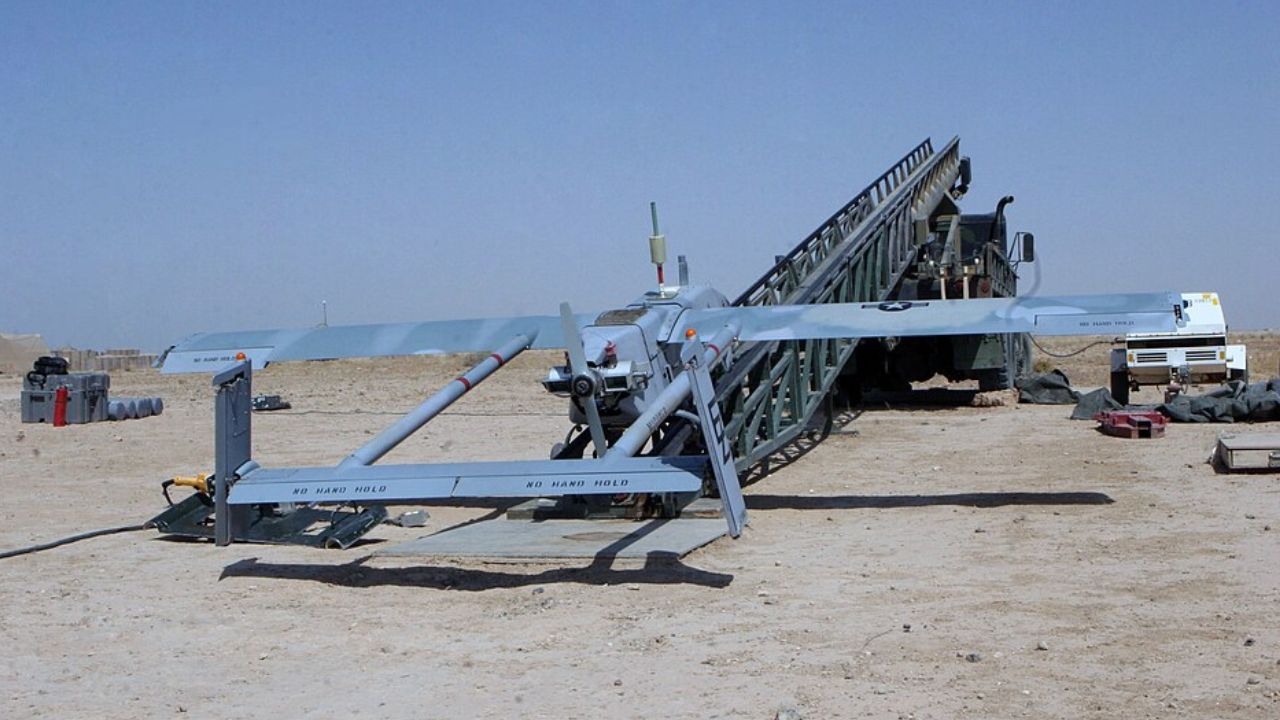
Unmanned aerial systems (UAVs) are often framed as a recent revolution, but the “ahead of its time” story is how long the concept waited for enabling technology. Miniaturized sensors, lighter materials, improved batteries, and more dependable communications turned UAVs from limited-use platforms into widely deployed tools for ISR, targeting support, and, in some cases, strike. In artillery- and rocket-heavy fights, drones have become a practical way to see the battlefield, correct fires, and pressure logistics.
Once drones become cheap enough to field broadly, the bottleneck shifts to sustainment: replacement rates, operator training, spare parts, and electronic protection. Counter-UAS measures and jamming also evolve quickly, which makes adaptability—software updates, modular payloads, and updated tactics—more important than any single airframe.
Active protection systems: armor’s late-arriving upgrade
Active protection systems (APS) for armored vehicles—designed to detect and defeat incoming threats—fit the “too early” pattern because they rely on dependable sensors, fast processing, and careful integration with vehicle power and crew procedures. When those pieces are immature, APS can be difficult to field broadly even if the underlying concept is sound. As sensors and computing improved, APS became a more practical response to the spread of modern anti-armor weapons and top-attack threats.
APS can change how ground forces manage risk by reducing vulnerability in some engagements and enabling maneuver under threat. It also brings costs in installation, maintenance, and supply. Adversaries may adapt with salvo tactics, mixed munitions, and reconnaissance-driven ambushes, so APS tends to be most valuable as part of a broader combined-arms approach rather than a standalone fix.
Hypersonic research lineages—and the limits of hype
Hypersonic research has deep roots, but converting research lineages into routine operational capability is a separate challenge. The “ahead of its time” theme applies because extreme-speed flight stresses guidance, materials, sensing, and manufacturing—areas that only recently benefited from wider advances in computing and materials science. Even so, expectations can outpace what can be produced, tested, and fielded in meaningful numbers.
The appeal is straightforward: speed can reduce reaction time and complicate defense. But speed alone does not settle outcomes. Reliability, targeting quality, stockpiles, and integration into real command-and-control processes determine whether hypersonics become sustained combat power or remain a limited capability.
Space-based ISR and the push for resilience
Space-based ISR has long promised global awareness, but its impact increasingly depends on how well data can be processed, shared, and used by tactical units, not just strategic planners. Improvements in sensors, processing, and communications have made space-derived information more actionable across more of the force. At the same time, growing contestation has pushed attention toward resilience: redundancy, disaggregation, and the ability to operate through disruption.
Where commercial space and cheaper access to orbit are available, they can help expand sensor coverage and shorten refresh cycles. The operational implication cuts both ways: hiding becomes harder, but so does staying connected if links are degraded or key nodes are targeted. Resilient architectures and rapid replacement capacity become strategic considerations, not just technical preferences.
Electronic warfare and cyber: older contests, bigger stakes
Electronic warfare (EW) and cyber effects have existed in many forms for decades, but they have gained influence as forces depend more heavily on connectivity, GPS, and software-defined systems. That dependence creates leverage: jamming, spoofing, and network disruption can slow kill chains, reduce accuracy, and push opponents into less efficient tactics. The “ahead of its time” element is that earlier approaches often lacked the pervasive digitization that makes these effects more consequential today.
EW and cyber also demand continuous iteration rather than one-time procurement. Software updates, threat libraries, operator training, and intelligence feedback loops are recurring requirements. Forces that treat EW and cyber as ongoing campaign disciplines—planned, rehearsed, and sustained—tend to get more consistent results than those that chase a single breakthrough tool.
Who drives “ahead of its time” ideas—and what comes next
Innovation comes from many directions. Public discussions often point to U.S. concept development, Soviet/Russian legacies in areas such as air defense and rocketry, rapid integration efforts associated with China, and Israeli emphasis on practical battlefield systems such as UAVs and active protection. European programs also contribute in specific niches, often shaped by industrial specialization and coalition interoperability. Across all of them, the separator between impact and trivia is the same: the ability to integrate, industrialize, train, and adapt under pressure.
Looking ahead, the same maturity cycle is likely to repeat around autonomy, swarming, directed energy, and more resilient networking. The advantage will not go to the force that collects the most impressive prototypes, but to the one that turns concepts into repeatable combat power: stocked munitions, maintainable systems, trained operators, and kill chains that still function when sensors are contested and communications are disrupted. In that environment, being “ahead of your time” is less about invention than about readiness—having the ecosystem prepared when the battlefield finally demands what you built.