
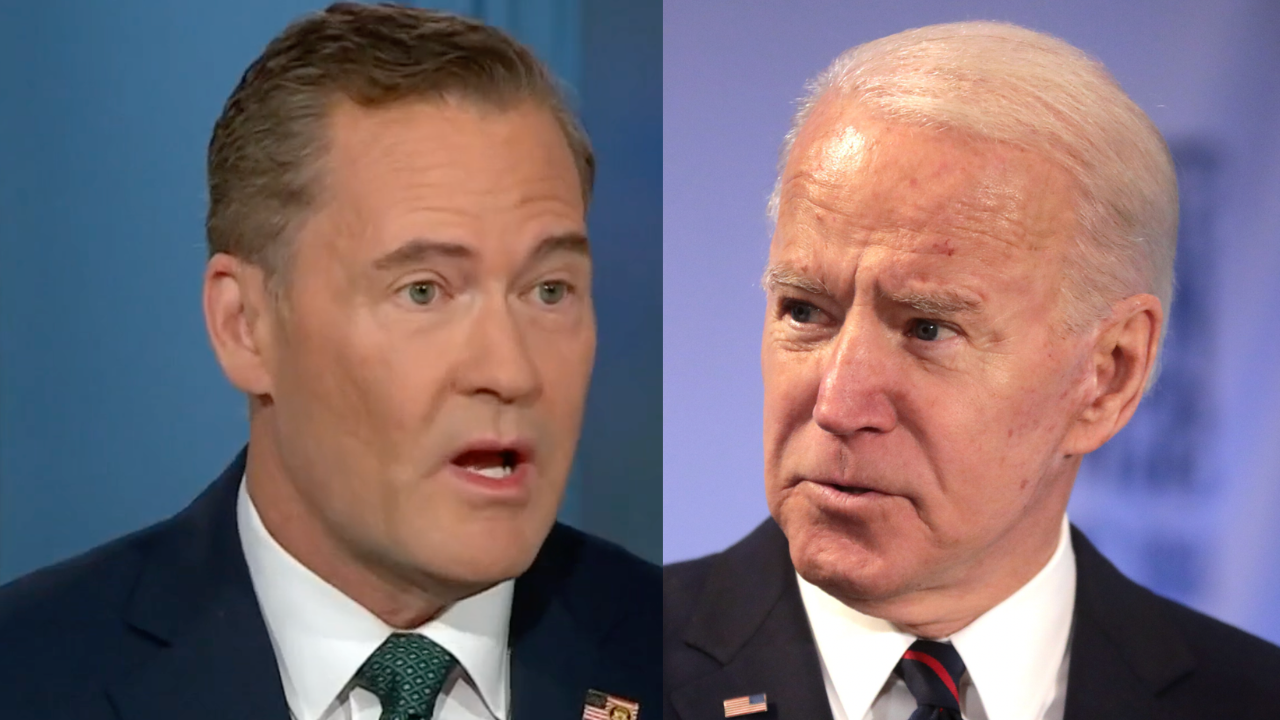
U.S. Ambassador to the United Nations Mike Waltz attributed the Pentagon’s strained munitions stockpiles to the Biden administration, even as he denied that the shortage was affecting the current war with Iran.
Waltz made the comments on NBC’s Meet the Press, responding to questions from host Kristen Welker about NBC News reporting that U.S. military commanders have been selectively intercepting some Iranian attacks to conserve a diminishing supply of interceptor missiles. “We have to take a step back here in that a lot of stockpiles were depleted not only from what we gave Ukraine over the last however many years, four or five years,” Waltz said. “And the administration inherited, the secretary, Secretary Hegseth inherited a depleted situation from not only Ukraine but also the ongoing fight with the Houthis under the Biden administration and the depleted military under the Biden administration. So they have decided, one, they’re going to new types of munitions, cheaper munitions, new technologies, but also with these new defense budgets, rebuilding our great military.”
The State Department’s own record of Ukraine assistance under Biden shows the scale of the drawdowns Waltz referenced. The department directed 55 separate drawdowns of defense articles and services from Pentagon stockpiles for Ukraine between August 2021 and January 2025, totaling approximately $31.7 billion, according to an official State Department release. Those packages included Patriot missile batteries and interceptors sent starting in December 2022, the same system now central to concerns about U.S. readiness in the Middle East, according to a Congressional Research Service report on the transfers.
Independent defense analysts have said Waltz and Trump’s framing of the shortage is only partly accurate. Jennifer Kavanagh, a senior fellow and director of military analysis at the think tank Defense Priorities, told FactCheck.org that “it is true that U.S. stockpiles are badly depleted by aid to Ukraine,” but that it would be “misleading” to suggest Ukraine aid was responsible for most current munitions concerns tied to Iran. “With the exception of Patriot interceptors, most of the munitions in use in the Middle East were not given to Ukraine at any point,” Kavanagh said. Mark Cancian of the Center for Strategic and International Studies told the outlet that most munitions used in the Iran campaign were never provided to Ukraine either.
Both analysts also disputed the claim that the Biden administration did nothing to rebuild the stockpile. “The Biden administration invested heavily in the U.S. defense industrial base and began a massive ramp-up in the production of many types of munitions that Trump continues,” Kavanagh told FactCheck.org.
Waltz insisted the current military campaign against Iran remained unaffected regardless of the stockpile’s origins. “I want to be crystal clear: the U.S. military, and I’ve verified this every which way, has everything that it needs to conduct this campaign as effectively as it needs to be,” Waltz said. He added that “the people that are leaking this nonsense deserve to be in jail,” a comment he made in response to the NBC reporting on selective interception.
Trump offered a similar defense in a statement to The Wall Street Journal published the same weekend. “We have far more munitions than anyone in the world, and far more than we need,” Trump said, directly disputing reporting that stockpile concerns had factored into his decision to hold off on a larger escalation against Iran.
That reporting, from The New York Times, said Joint Chiefs of Staff Chairman Gen. Dan Caine had privately warned that a broader campaign could dangerously deplete Patriot interceptor stocks needed to protect U.S. forces and Gulf allies. The Times reported the U.S. had already fired more than 1,200 Patriot interceptors during the war by late April, at a cost of more than $4 million apiece, with inventories considered worryingly low at that point and having deteriorated further since.
Caine has offered public reassurances even while acknowledging strain on the supply chain, telling the House Appropriations defense subcommittee that the U.S. has “sufficient munitions for what we’re tasked to do right now.”
Waltz’s framing echoes similar comments Trump made in March, when he wrote on Truth Social that U.S. munitions stockpiles “at the medium and upper medium grade” had “never been higher or better,” adding “we have a virtually unlimited supply of these weapons” and that “wars can be fought ‘forever,’ and very successfully, using just these supplies.”
The dispute comes as Defense Secretary Pete Hegseth has sought $87.6 billion in supplemental funding from Congress, including provisions for munitions replenishment, while the fiscal year 2027 National Defense Authorization Act, which would unlock multiyear procurement contracts for Patriot, THAAD and Tomahawk production, remains stalled in the Senate following a blocked procedural vote on July 14.
Neither the White House nor the Pentagon has issued additional public comment beyond Waltz’s and Trump’s remarks disputing the stockpile reporting.