
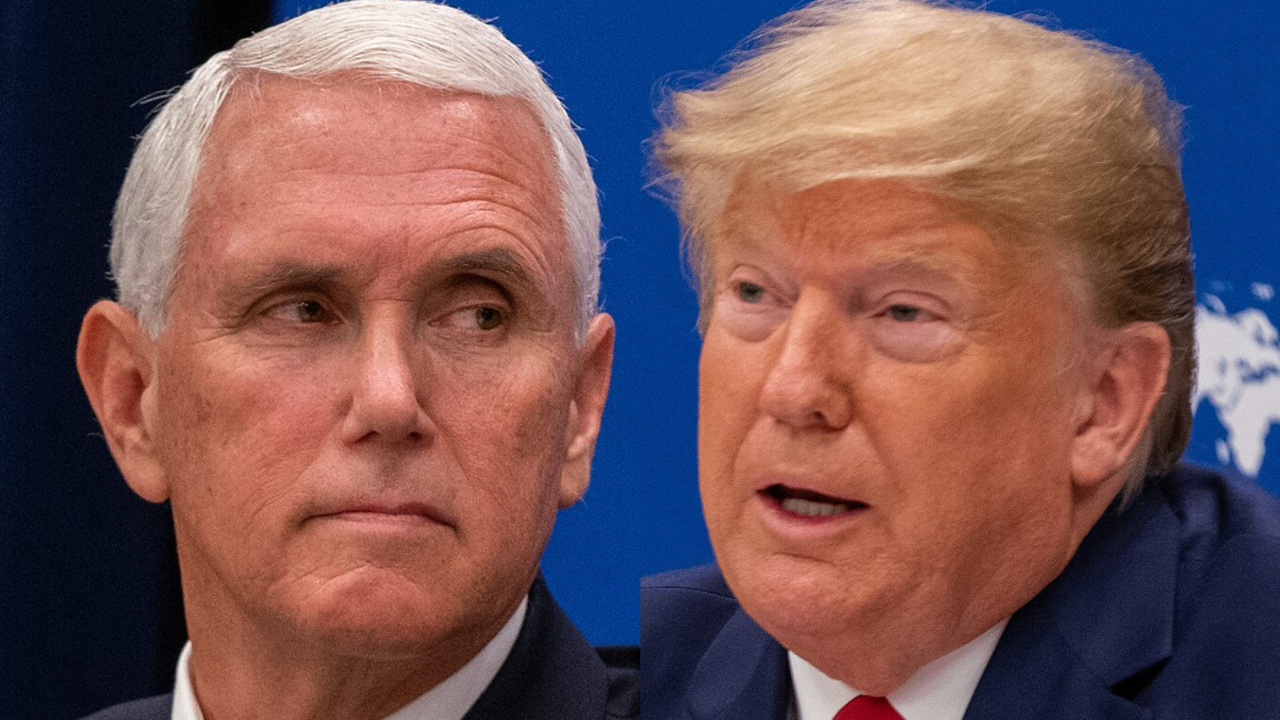
Former Vice President Mike Pence publicly urged President Trump not to lift sanctions on Turkey or sell it F-35 stealth fighter jets Monday, calling the moves a strategic mistake that would undermine the security of the United States, Israel and NATO — hours before Trump announced at the NATO summit in Ankara that he intends to do exactly that.
“Lifting U.S. sanctions imposed after Turkey acquired the Russian S-400 missile system in 2017 and clearing the way to provide Turkey F-35 fighter jets would be a strategic mistake, undermining the security of the United States, Israel and NATO,” Pence wrote on X. “Mr. President, Please Don’t.”
Trump announced Tuesday at the NATO summit in Ankara alongside Turkish President Recep Tayyip Erdogan that the U.S. would lift the CAATSA sanctions and signaled openness to resuming F-35 sales — a dramatic reversal of a policy his own administration put in place during his first term.
What Trump Said in Ankara
“We’re going to be taking the sanctions off, OK?” Trump told reporters just before his bilateral meeting with Erdogan. “I don’t want him to waste his time answering that question. It’s time. We don’t sanction friends.” Asked about the F-35s, Trump said Turkey had been “in many ways much more loyal than other countries that we think would be loyal” and called the potential sale “certainly something we will consider.”
When asked directly whether he had concerns about Turkey’s continued possession of the Russian S-400 missile defense system — the core legal basis for the sanctions and the F-35 ban — Trump said, “I have no concerns about anything.” Erdogan said Turkey had previously been promised five F-35 jets and that he believed a deal was close.
How the Sanctions Were Imposed — in Trump’s First Term
Turkey was removed from the multinational F-35 program in July 2019 after taking delivery of the Russian-made S-400 air defense system. The Trump White House said at the time that “the F-35 cannot coexist with a Russian intelligence collection platform that will be used to learn about its advanced capabilities,” according to the official White House press statement from July 17, 2019. The statement noted the administration had made “multiple offers to move Turkey to the front of the line to receive the U.S. PATRIOT air defense system” but that Turkey “nevertheless decided to move ahead.”
On December 14, 2020, Secretary of State Mike Pompeo imposed CAATSA Section 231 sanctions on Turkey’s Presidency of Defense Industries, including a ban on all U.S. export licenses and authorizations and an asset freeze and visa restrictions on SSB’s president. “Today’s action sends a clear signal that the United States will fully implement CAATSA Section 231 and will not tolerate significant transactions with Russia’s defense and intelligence sectors,” Pompeo said in the official State Department press statement.
Congress subsequently codified Turkey’s exclusion from the F-35 program in the fiscal year 2021 National Defense Authorization Act, which bars any transfer of F-35 aircraft unless the executive branch certifies that Ankara “no longer possesses” the S-400 system, its materials or anything associated with its functions. Because the ban is now statute rather than executive order, Trump faces significant legal constraints in reversing it unilaterally.
The Legal Path Forward Is Unclear
Vice President JD Vance acknowledged last month that Defense Secretary Pete Hegseth and the national security team were reviewing “certain things that we have to certify have happened in order to comply with American law” before any F-35 sale could proceed. “The president has asked us to do that,” Vance said. Trump’s Tuesday remarks in Ankara did not specify how he intends to satisfy those statutory requirements or get around the congressional ban.
A bipartisan group of ten House lawmakers — six Republicans and four Democrats — sent a letter to Trump last week urging him not to move forward with an F-35 sale without satisfying the statutory requirements, arguing it would violate U.S. law and undermine national security. Israeli Prime Minister Benjamin Netanyahu publicly opposed the move in interviews published Tuesday, warning that selling F-35s to Turkey “doesn’t make Turkey a friendly state to the United States” and citing Turkey’s support for Hamas, its occupation of Cyprus and military tensions with Greece as reasons for concern.
The National Security Case Against the Sale
The Pentagon has consistently maintained that the S-400’s sophisticated radar could collect data on the F-35’s radar signature and electronic profile during routine operations, potentially allowing Russia to better detect and defeat the aircraft in a future conflict if that information were shared with Moscow. Pentagon acquisition chief Ellen Lord warned in 2019 that allowing Turkey to operate both systems would jeopardize the long-term security of the F-35 program because “much of the F-35’s strength lies in its stealth capabilities.”
Sen. John Cornyn (R-Texas), a senior Republican on the Senate Armed Services Committee, wrote on X Tuesday that he hoped reports of the F-35 sale were wrong. The Warren-Blumenthal-Kim formal Senate letter to the Defense Department earlier this year had separately raised concerns that Pentagon decision-making on defense procurement was being influenced by political considerations rather than merit — concerns that Turkey’s critics say apply equally to the F-35 reversal.
Turkey’s Position and What Comes Next
Turkey was an original F-35 program partner that paid into the aircraft’s development and held contracts to produce components before being expelled in 2019. Turkish Foreign Minister Hakan Fidan said before the summit that both Erdogan and Trump have a “strong will” to lift the CAATSA sanctions, adding that “in administrative terms, there are no problems in terms of willpower within the administrations. But we will see how the process unfolds in the U.S. Congress.”
The administration has already taken steps to warm bilateral defense ties. It wrapped up — with little punishment — a major Justice Department lawsuit against Turkish state bank Halkbank for subverting U.S. sanctions against Iran, and gave a green light for the sale of F110 jet engines Turkey covets for its domestically built KAAN fighter aircraft. Whether Congress can be convinced to clear the F-35 sale — or whether Trump can certify Turkey’s S-400 compliance through a process that satisfies the NDAA’s statutory requirements — remains the central unresolved question following Tuesday’s announcement in Ankara.