
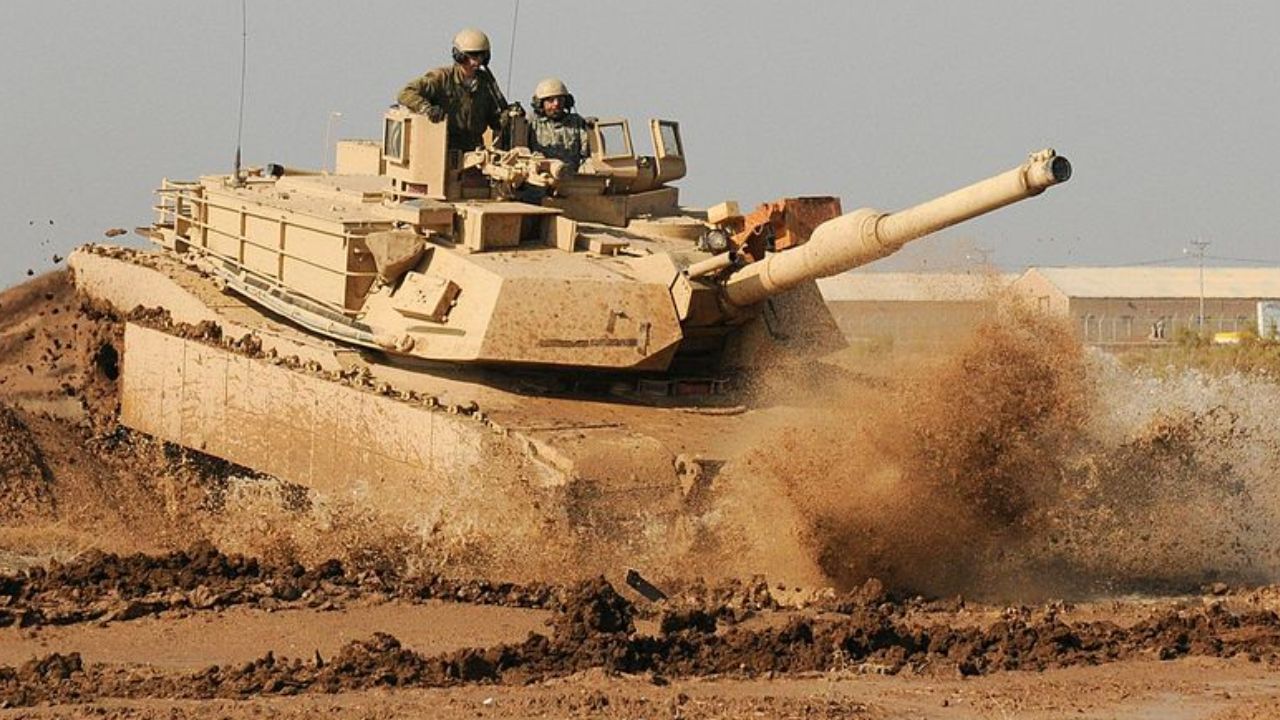
The Leopard 2 and Abrams tanks are two of NATO’s most formidable main battle tanks, each with its own unique capabilities and history. As modern battlefields evolve, the performance and strategic impact of these tanks are under scrutiny. They represent the pinnacle of armored warfare, with distinct design philosophies that cater to specific military needs.
Design and Development
Leopard 2 Evolution
The Leopard 2, developed by Germany, has undergone significant evolution since its introduction in the late 1970s. Its design has continually advanced, incorporating state-of-the-art armor and cutting-edge technology. Notably, the Leopard 2 has been a key asset in various conflicts, including its recent deployment in the Ukrainian conflict, where its robustness and reliability were tested under real combat conditions.
Abrams Advancements
The Abrams tank has similarly seen substantial upgrades over the years. Initially fielded by the United States in the early 1980s, it has continually evolved to incorporate technological enhancements such as advanced targeting systems and improved armor composites. Its combat performance has been proven in diverse environments, from the deserts of the Middle East to urban warfare scenarios.
Comparative Analysis
In comparing the design philosophies of the Leopard 2 and Abrams, several factors come into play. The Leopard 2 is known for its balanced approach to weight, mobility, and firepower, while the Abrams emphasizes heavy armor and superior firepower. These differences reflect their respective national doctrines, with the Leopard 2 favoring mobility and the Abrams prioritizing survivability.
Operational Capabilities
Firepower and Armament
Both tanks boast formidable main armaments, with the Leopard 2 featuring a 120mm smoothbore gun, and the Abrams equipped with a similar 120mm cannon. The ammunition types available to each tank, such as armor-piercing and high-explosive rounds, enhance their lethality. Advanced aiming systems ensure their effectiveness in targeting adversaries at long ranges.
Armor and Protection
The defensive measures of these tanks are equally impressive. The Leopard 2 utilizes composite armor and active protection systems to thwart incoming threats, while the Abrams is renowned for its depleted uranium armor, offering superior protection against anti-tank munitions. These features underline their resilience on the battlefield.
Mobility and Range
Mobility is another crucial aspect where these tanks differ. The Leopard 2 is celebrated for its superior speed and operational range, thanks to its efficient engine design. In contrast, the Abrams, with its gas turbine engine, offers exceptional power but at the cost of higher fuel consumption. These differences impact their strategic deployment and effectiveness in prolonged engagements.

Modernization and Future Prospects
Technological Upgrades
Both tanks are set to receive significant upgrades as part of ongoing European modernization efforts. These upgrades include improved targeting systems, enhanced armor, and integration of digital battlefield networks, ensuring their continued relevance in future conflicts.
Competitive Landscape
In the competitive landscape of main battle tanks, the Leopard 2 and Abrams face challenges from both NATO and non-NATO counterparts. The Turkish Altay and the Italian C1 Ariete are noteworthy rivals, each bringing unique capabilities to the table. These comparisons underscore the need for continuous innovation.
Future Developments
As warfare evolves, so too must the Leopard 2 and Abrams. Speculation about their future involves advancements in automation, AI integration, and enhanced survivability against modern threats. These developments will likely shape the next generation of main battle tanks, ensuring they remain a vital component of NATO’s strategic arsenal.