
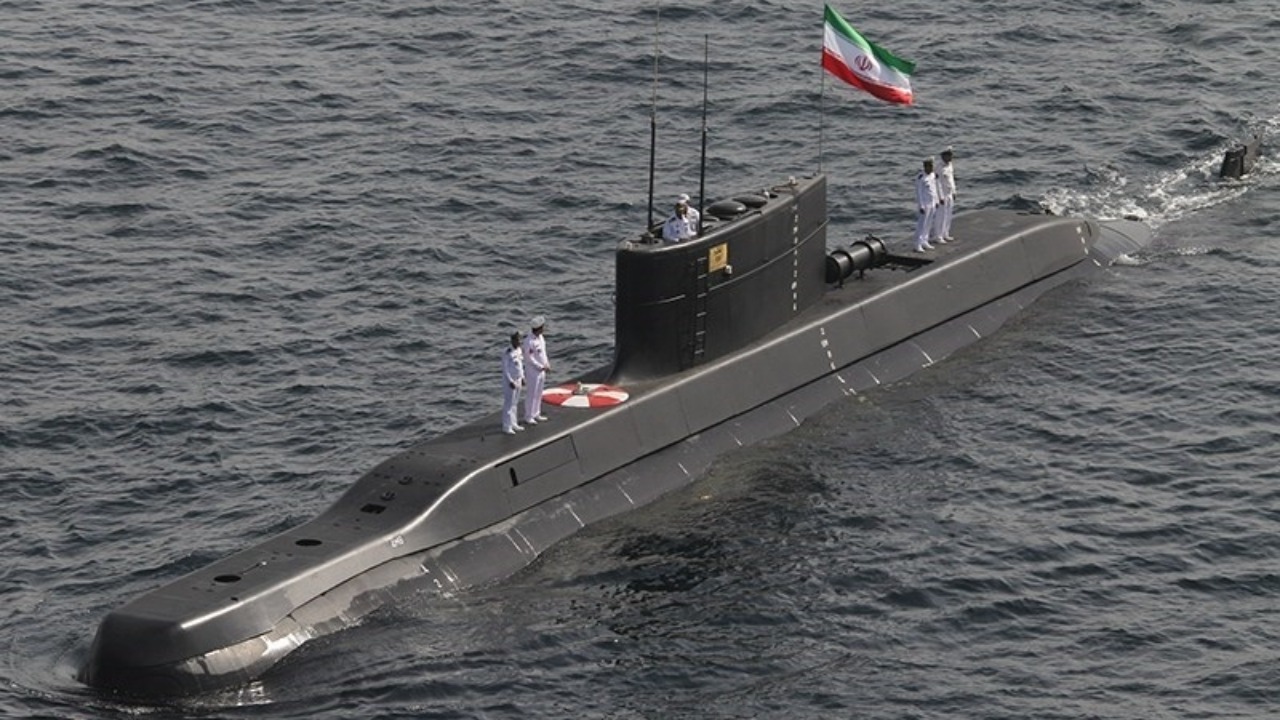
The quiet expansion of Iran’s submarine fleet is transforming the balance of power in the Strait of Hormuz, the narrow chokepoint that carries a significant share of the world’s seaborne oil. By pairing small, stealthy boats with dense coastal infrastructure and layered missile forces, Tehran is turning shallow waters into a complex problem set for any navy that operates there. This creates a strategic environment where even the most advanced surface fleets must operate under the assumption they are being monitored by submarines below.
Rather than matching the United States ship for ship, Iran has invested in platforms and tactics designed to exploit geography and impose risk at relatively low cost. Its submarines, missile boats, and coastal batteries are being integrated into a single concept of operations that treats the Strait of Hormuz as a defensive bastion and a potential trap for larger fleets. That shift is already reshaping how Washington and its partners plan, sail, and signal in the Gulf.
Why the Strait of Hormuz is the perfect submarine arena
The Strait of Hormuz is a narrow maritime corridor that bends sharply between the Persian Gulf and the Gulf of Oman, a geography that naturally favors ambush tactics and complicates open-ocean maneuver. From space, the waterway appears as a tight S-shaped bend, and at its narrowest point the shipping lanes are compressed into a confined channel that concentrates traffic and limits routing options for tankers and warships alike. In such waters, small diesel-electric submarines can exploit shallow depths, complex seabed topography, and heavy commercial traffic to mask their movements.
Iran’s coastline runs along the entire northern side of this chokepoint, giving Tehran home-field advantage in terms of basing, logistics, and surveillance. The country’s broader strategic posture, rooted in its identity as the Islamic Republic of Iran, has long emphasized asymmetric defense of this maritime flank. Control of nearby islands and coastal promontories allows Iranian forces to layer radar, anti-ship missiles, and minefields over the same waters where its submarines operate, turning the strait into a dense, multi-domain battlespace that magnifies the impact of each submerged hull.
From Kilo giants to Ghadir and Fateh: a purpose-built undersea mix
Iran’s undersea inventory is not large by global standards, but it is tailored to the specific demands of the Gulf and the Strait of Hormuz. At the heavy end of the spectrum, Tehran operates three Tareq class boats, Russian-built Kilo class diesel-electric submarines that provide long-range patrol and blue-water reach. These Tareq platforms have been deployed beyond the Gulf into the Gulf of Oman and the Arabian Sea, yet their utility in the shallow Persian Gulf is constrained by draft and maneuverability. To address this limitation, Iran has invested in smaller submarines capable of operating close to the coast in shallow waters, where larger submarines face greater risk.
The core of that littoral force is a growing fleet of Ghadir and other mini-submarines, which are optimized for short-range patrols, mine laying, and torpedo or missile ambushes in confined waters. These boats, some displacing only a few hundred tons, can use the clutter of the strait to remain undetected until they are within striking distance of a target. Iran has also introduced the Fateh class, a medium-displacement design that bridges the gap between midget boats and heavy Kilos, giving Tehran a more flexible option for operations that require greater endurance without sacrificing stealth in shallow seas, as noted in recent examinations of the Fateh class. Collectively, this mix allows Iran to tailor submarine deployments to specific missions, from coastal denial to extended patrols beyond the strait.
Bandar Abbas and the infrastructure of a carrier trap
Hardware alone does not explain the growing leverage Iran enjoys under the surface; the country has also built an infrastructure network that allows rapid, flexible deployment. The centerpiece of this network is the submarine-base complex at Bandar Abbas, a port city near the Strait of Hormuz that anchors Iran’s naval presence at the mouth of the Gulf. Reporting on Bandar Abbas underscores that basing submarines so close to the chokepoint reduces transit time, increases sortie rates, and allows Tehran to surge boats into the strait with little warning. This posture complicates any attempt by outside navies to monitor or preempt deployments before they reach contested waters.
Iran has paired this basing strategy with a broader asymmetric doctrine that treats submarines as one element in a distributed “anti-carrier” web. Rather than investing in a single large capital ship, Tehran has spread offensive capability across submarines, missile boats, coastal launchers, and even unmanned systems, a concept described as a form of distributed “aircraft carrier” capability in Iranian strategic commentary on Iran’s aircraft carriers. Within this framework, Ghadir and Fateh submarines operate alongside shore-based missiles and fast attack craft, generating overlapping threat zones for U.S. or allied carrier groups entering the Gulf and effectively turning the strait into a potential carrier trap.
Exercises, live fire, and the signaling game with Washington
Iran has increasingly used submarine deployments and naval drills in the Strait of Hormuz as tools of strategic signaling, particularly in response to U.S. carrier movements. Earlier this year, Tehran notified mariners by radio that it would conduct “naval shooting” in the strait on a Sunday, a warning that highlighted the risk that live-fire exercises could intersect with commercial shipping and foreign warships in the same narrow lanes, according to notices to mariners describing naval shooting. Such drills are not simply training events; they are calibrated messages that Iran can raise the temperature in the strait at will, forcing Washington and its partners to weigh escalation risks whenever they deploy major assets into the region.
Analysts tracking Iranian force movements note that Tehran has recently combined these exercises with visible submarine activity and broader deployments intended to deter potential U.S. strikes. Analyses indicate that Iranian leadership employs naval maneuvers in the Strait of Hormuz to signal both resolve and military capability, especially in response to nearby U.S. carrier deployments. Live-fire drills that include anti-ship missiles, fast attack craft, and undersea elements, such as those described in recent coverage of live-fire drills, sharpen the risk profile for any surface group transiting the chokepoint. For Washington, this means that routine presence operations now carry a higher baseline of uncertainty, as each exercise could mask or accompany more operationally significant submarine deployments.
Beyond the hulls: asymmetric doctrine and future escalation risks
Iran’s submarine strategy in the Strait of Hormuz is nested within a broader asymmetric doctrine that emphasizes quantity, dispersion, and surprise over traditional blue-water power projection. Tehran has expanded its fleet of mini-submarines and missile boats as part of a deliberate effort to counter U.S. and allied naval forces in the Persian Gulf, prioritizing platforms whose small size and high maneuverability can outweigh limited endurance. This strategy is reinforced by Iran’s broader military posture, integrating naval forces with ballistic and cruise missiles, drones, and cyber capabilities to impose multiple layers of pressure on adversaries near its coastline.