
It started the way a thousand traffic stops start: a slow roll of red-and-blue lights in the rearview mirror, a car easing onto the shoulder, and a driver who looked more confused than guilty. The reason for the stop was simple—one busted taillight and a quick drift over the lane line. Nothing that screams “headline,” just the sort of thing that usually ends with a warning and a reminder to get the bulb replaced.
But the funny thing about “routine” is that it only stays routine until it doesn’t. And on this particular evening, the moment the driver’s door swung open, the air changed. Not dramatic-movie changed—more like that instant your instincts tug your sleeve and say, “Hey, pay attention.”
A stop that looked ordinary from the cruiser
The officer—who agreed to speak on background because the incident is still being reviewed—said the vehicle caught their attention on a well-traveled stretch just outside town. “It was one of those small things you notice because you’re trained to notice it,” they said. One taillight was out, and the car’s speed wavered a little, enough to justify a check-in.
Dispatch ran the plate while the officer positioned the cruiser at a standard angle behind the vehicle. There were no alerts that suggested a high-risk stop. It was early evening, decent lighting, and traffic was light—about as calm a setting as you can ask for when you make a living walking up to strangers’ windows.
The door opened—and the story changed
Before the officer reached the driver’s side, the driver opened the door and started to step out. That’s not automatically illegal, but it’s not what officers expect, either. Most stops involve a driver staying put with hands visible, waiting for instructions—because it keeps everyone predictable, and predictable is safe.
“The movement itself wasn’t the problem,” the officer said. “It was the speed and the uncertainty.” The driver didn’t look like someone gearing up for a confrontation. If anything, they looked wobbly, like a person who’d been holding it together just long enough to pull over.
From traffic enforcement to medical response
When the driver stood up, the officer noticed what they described as “obvious distress”—shallow breathing, a grayish pallor, and a hand pressed to the center of the chest. The driver tried to speak, but the words came out thin and scrambled. In the time it takes to ask for license and registration, the officer realized this wasn’t going to be about a taillight.
The driver lowered themselves back into the seat, as if gravity suddenly got heavier. The officer switched gears immediately, calling for medical assistance over the radio and moving to a position that allowed a clear view of the driver’s hands and face. “You can’t help anyone if you miss the basics,” the officer explained. “But once I saw the symptoms, it was all about getting help fast.”
A passenger’s panic and a crucial detail
There was a passenger in the front seat who, up to that point, hadn’t said much. As the driver’s breathing grew more erratic, the passenger blurted out that the driver had been “feeling off” for an hour and insisted they were fine—right up until they weren’t. It was the kind of phrase that lands with a thud, because everyone’s heard some version of it: “I didn’t want to make a big deal.”
The passenger also mentioned the driver had a history of heart issues and had recently changed medications. That single detail helped frame the moment. It didn’t answer every question, but it told the officer and dispatch this was likely a medical emergency rather than intoxication or panic alone.
Minutes that feel like hours on the shoulder
While awaiting paramedics, the officer focused on keeping the driver responsive and as steady as possible. They encouraged slow breathing, asked simple yes-or-no questions, and watched for changes in consciousness. The passenger was asked to keep their hands visible and remain calm—easier said than done when you’re watching someone you care about struggle to breathe.
Drivers passing by probably saw only a police cruiser behind a car and assumed it was the usual. That’s the strange part: on the shoulder of the road, life can pivot quietly. No sirens at first, no crowd, just one person trying to hold on and another trying to buy them time.
Paramedics arrive and the scene tightens
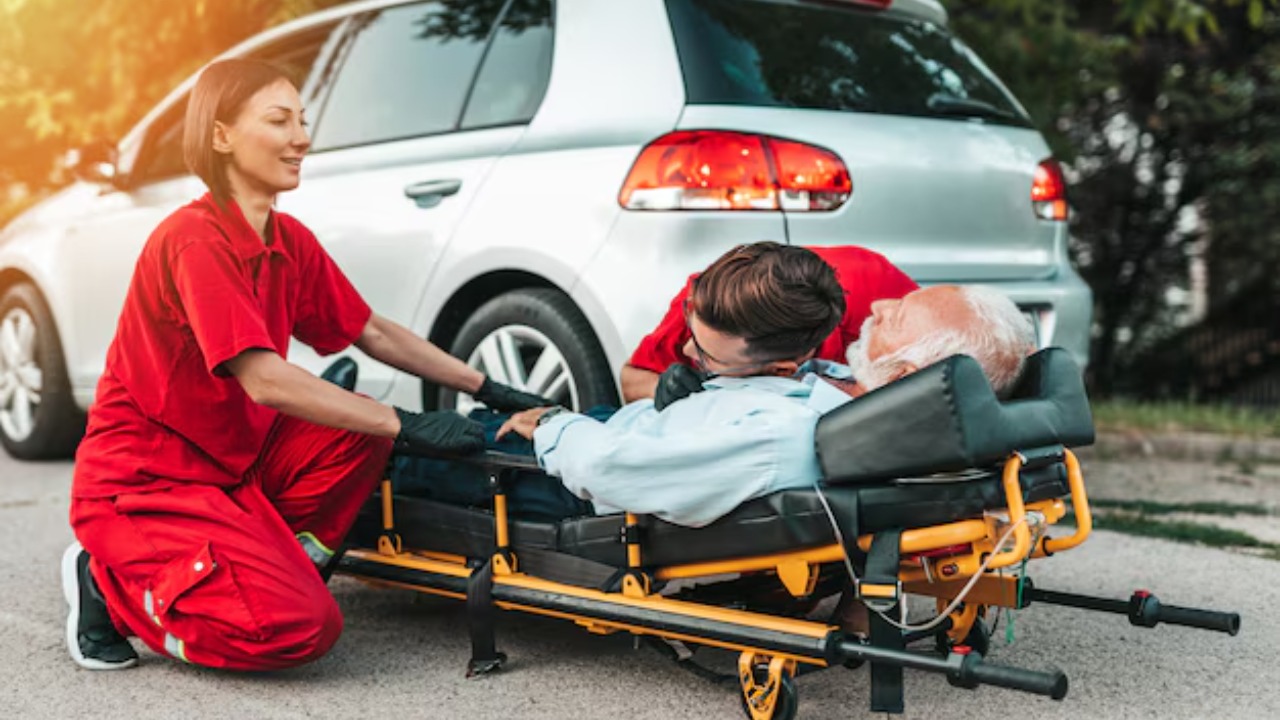
When EMS arrived, the pace picked up in a controlled way. The officer briefed the paramedics, then stepped back to give them room while staying close enough to assist. The driver was moved onto a stretcher, hooked up to monitoring equipment, and treated on scene before transport.
The passenger rode along in the ambulance, still rattled, still asking the same question in slightly different forms: “Are they going to be okay?” Nobody offered false certainty. But the officer noted that getting medical care quickly can make all the difference in outcomes like cardiac events or severe anxiety attacks that mimic them.
So what actually happened?
Officials have not released a definitive medical diagnosis, citing privacy rules. The officer described the incident as “consistent with a serious medical episode” and confirmed the driver was transported for evaluation. No charges were filed related to impairment, and the stop itself effectively became a relay—traffic enforcement handing off to emergency medicine.
It’s a reminder that the same set of symptoms can mean very different things. Chest pain, confusion, sweating, and unsteady movement could point to a heart problem, low blood sugar, a panic episode, or other urgent conditions. That uncertainty is exactly why first responders treat “something’s wrong” as enough reason to act quickly.
Why officers get tense when someone exits the car
Here’s the part that’s worth saying plainly: when a driver steps out unexpectedly, an officer’s threat radar lights up—even if the driver has no bad intentions. It’s not personal; it’s pattern recognition shaped by training and experience. Most departments teach drivers to stay inside unless instructed, because it reduces sudden movement and confusion for everyone.
In this case, that same unexpected movement turned out to be an early sign that something was medically wrong. The officer said it created a split-second decision point: treat it as a safety risk until proven otherwise, but stay open to the possibility that the person is in distress. It’s a balancing act that doesn’t always look graceful from the outside.
What to do if you’re pulled over and you’re not feeling well
If you’re ever in a similar situation, a little communication goes a long way. If you can, keep your hands visible and tell the officer immediately, “I’m having a medical issue,” or “I feel like I’m going to pass out.” If you need to exit the vehicle for air or because you’re nauseated, say that first and wait for instructions.
And if you’re the passenger, don’t downplay what you’re seeing. Give clear facts—known medical conditions, medications, what symptoms started when—without trying to diagnose. It’s not being dramatic; it’s helping responders make faster, safer decisions.
A routine stop, a human moment
The officer who handled the stop said they went home thinking about how quickly the narrative changed. “You think you’re stopping someone for a taillight,” they said, “and then you’re just trying to make sure they’re alive when the ambulance gets there.” It’s not the kind of story that ends with a ticket, but it’s the kind that sticks with you.
On paper, it’s a traffic stop that became a medical call. In real life, it’s a snapshot of how fragile “normal” can be—and how, sometimes, the most important thing a badge or a uniform can do is simply notice when someone needs help.