
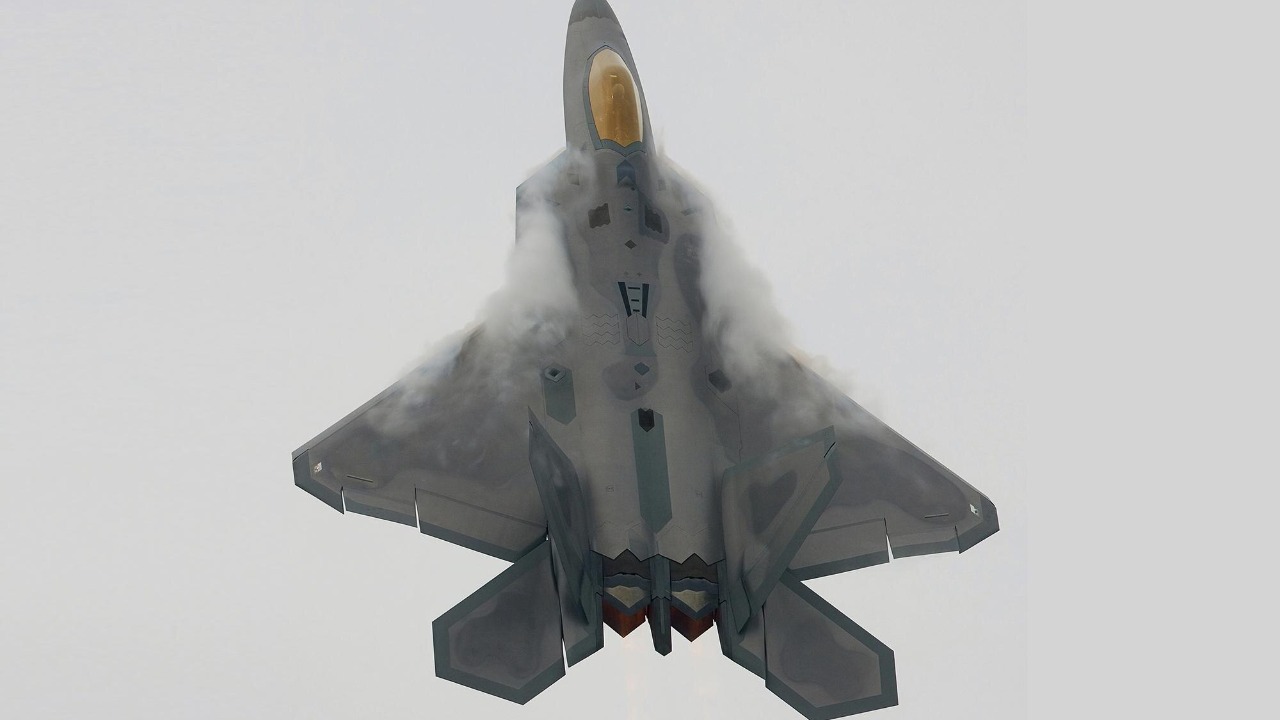
The F-22 Raptor didn’t just replace an older fighter. It helped reshape what the U.S. Air Force means when it says “air superiority”—moving away from a purely platform-centric idea of winning air-to-air fights and toward a stealth-first, sensor-driven approach to controlling airspace in the face of modern integrated air defenses and peer-capable fighters. In simple terms, the Raptor reinforced a model of air combat that prizes seeing first, deciding faster, and coordinating the rest of the force from a position of advantage.
That shift matters because air superiority is rarely the objective by itself; it enables nearly everything else U.S. forces want to do. If friendly aircraft can’t survive or operate with acceptable risk, tankers can’t refuel reliably, airborne battle management becomes harder, and strike and ISR platforms lose freedom of action. The F-22’s central contribution has been to raise the difficulty for any adversary trying to deny those options—particularly in regions where U.S. posture and reassurance missions are a recurring requirement, including Europe and the Indo-Pacific.
From “best fighter” to a different way of thinking about air superiority
The Raptor emerged from a modernization bet that emphasized low observability and integrated avionics from the start, rather than treating stealth and networking as add-ons to older designs. That design philosophy reflected a broader doctrinal shift: information advantage and survivable access were built into the aircraft’s purpose, not layered on later. The intent was straightforward—operate where traditional fighters would be under greater pressure from modern surface-to-air threats and capable adversary aircraft.
Just as importantly, the F-22 pushed air superiority thinking toward a systems problem rather than a single-aircraft contest. It reinforced concepts that prioritize sensing, decision-making, and coordinated engagement across a formation. Some of the jet’s most relevant capabilities and lessons remain classified, which is why its strategic value is often discussed in terms of uncertainty as much as performance: deterrence is stronger when opponents can’t fully measure what they’re up against.
Deterrence and presence: the Raptor as a signal
In day-to-day operations, the F-22 is frequently associated with deterrence and presence. Deploying Raptors forward—whether tied to European reassurance efforts or Indo-Pacific posture—signals that the U.S. is willing to place top-tier air superiority assets in theater. That presence can complicate an adversary’s planning by suggesting the U.S. intends to contest airspace rather than avoid it.
The F-22 also supports homeland defense and rapid-response air policing missions. These roles are not the same as a sustained high-end air campaign, but they underscore a practical reality: airspace control is a continuous requirement. Strategic credibility depends not only on what exists in the inventory, but on what can be generated, launched, and sustained on time.
It doesn’t fight alone: the Raptor in a team construct
One of the most consequential changes the F-22 era reinforced is the expectation that air superiority is a networked effort. The Raptor’s value is amplified when it operates alongside enabling assets such as airborne warning and control, tankers, and other fighters—especially 4th-generation aircraft that can contribute numbers, payload, and specialized roles. The point is not that the F-22 “wins by itself,” but that it can help create the access and leverage that allow the broader force to function.
That team approach matters even more as the U.S. fields other 5th-generation aircraft, including the F-35, and looks toward next-generation air dominance concepts. In many force packages, Raptors can help shape the opening conditions—pressuring an adversary’s ability to sense and target—while other aircraft and joint assets provide mass, persistence, and follow-on effects. The logic is also a recognition of constraints: logistics, basing, tanker availability, and munitions stocks can be as decisive as any individual platform.
Why production ended—and why the debate continues
Any discussion of the F-22’s impact has to grapple with the program’s enduring tension: exceptional capability paired with a limited fleet and no export path. Production ended with fewer Raptors than many planners once envisioned for sustained, multi-theater demands. That choice remains controversial because it forces an uncomfortable tradeoff between high-end quality and the capacity, resilience, and rotation depth needed for prolonged competition.
Supporters argue that the aircraft’s value in contested airspace is precisely why it remains strategically significant despite small numbers. Critics emphasize that a limited fleet can be strained by deployment tempo, training requirements, and the maintenance burden that comes with advanced stealth aircraft. Both points can be true: a jet can be uniquely valuable and still difficult to scale when demand spikes.
Sustainment, readiness, and the cost of keeping an edge
Air superiority is not a permanent attribute; it is a condition maintained through training, maintenance, and modernization. Ongoing sustainment and readiness challenges highlight a reality that often gets lost in headline comparisons: dominance can be eroded by practical constraints, not only by enemy advances. A smaller fleet magnifies those pressures because each aircraft’s availability carries more weight in day-to-day force generation.
Those tradeoffs influence how the Raptor is employed. Leaders must balance forward deployments that support deterrence with preserving enough healthy aircraft for training and surge capacity. If the most capable assets cannot be generated reliably, the deterrent message weakens and operational plans become less flexible.
Adversaries adapted: counter-stealth and layered defenses
The F-22 did not only change U.S. planning; it helped push competitors to respond. As 5th-generation priorities became clearer, adversaries invested in layered defenses and detection approaches intended to complicate stealth operations. Public reporting has long highlighted areas such as counter-stealth radar concepts, passive detection methods, and IRST-like approaches. The broader pattern is an ecosystem designed to reduce the margin of advantage provided by low observability and to raise the cost and complexity of operating near defended airspace.
This is where “wonder weapon” narratives break down. The Raptor is not invincible, and it does not guarantee dominance against every modern threat—especially in environments shaped by electronic warfare, long-range missiles, and increasingly capable uncrewed systems. Its more realistic value is that it can improve the odds of surviving and succeeding during the opening and most dangerous phases of an air campaign, when gaining control of the sky is hardest and most consequential.
What the F-22 changed for the future: F-35, NGAD, and evolving air superiority
The F-22 helped set a template that influenced what followed: low observability, integrated avionics, and high-end networking treated as core design priorities rather than optional upgrades. Even alongside the F-35—an aircraft optimized for broader mission sets—the Raptor remains closely associated with a stealth-first air superiority mindset. Together, they reinforce a modern view of air combat as a contest of detection, tracking, targeting, and engagement chains, not just individual aircraft performance.
Looking ahead, next-generation air dominance efforts reflect both what the F-22 made possible and what it revealed about limits. Future concepts are expected to account for contested logistics, the vulnerability of forward bases, reliance on tankers, and the need to fight amid dense electronic attack and uncrewed threats. In that sense, the Raptor reshaped U.S. air superiority once—and now serves as a benchmark for what the next shift must improve.
Managing scarcity: posture, integration, and modernization
In the near term, the F-22’s influence will be felt through how it is postured and how it is paired with other assets. Expect continued emphasis on integration—Raptors operating within packages that include airborne warning and control, tankers, 4th-generation fighters, and F-35s—because that is how limited numbers can create outsized operational effects. Its deterrent value is strongest when it is visible enough to be credible, but not used so heavily that readiness and training are undermined.
The constraints, however, are enduring. A limited fleet means sustainment and modernization decisions carry strategic weight, and some of the aircraft’s most meaningful improvements will remain opaque by design. The lasting lesson of the F-22 is not that air superiority is automatic—it is that gaining and keeping it requires a continuous cycle of technology, tactics, and sustainment, with the Raptor standing as the aircraft that helped push the U.S. into that modern reality.