
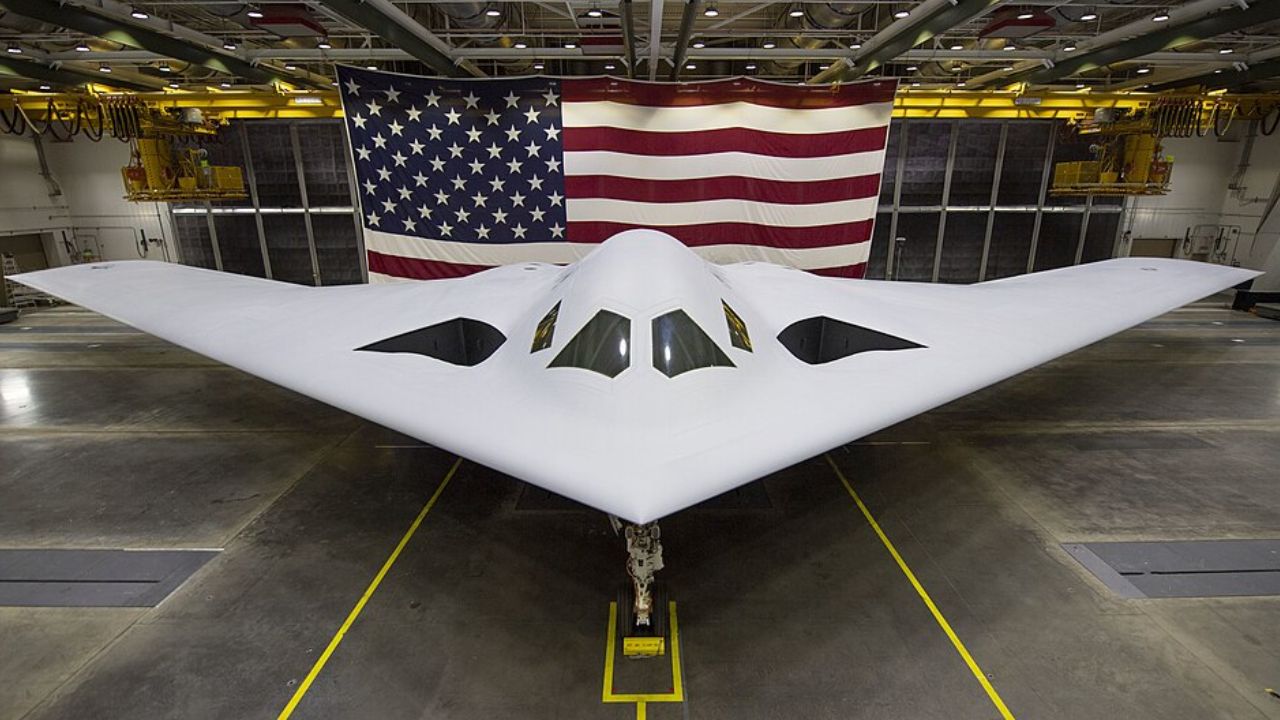
The U.S. Air Force’s B-21 Raider program, built by Northrop Grumman, is the centerpiece of a broader effort to modernize America’s bomber force. The shift is not just about introducing a new stealth aircraft. It is about how the Air Force sustains long-range strike over time while managing aging fleets (B-1B, B-2, and B-52), uneven readiness, and the practical constraints of basing, training, and budgets. The B-21 is expected to take on the most demanding missions in contested airspace, but its influence will ultimately depend on how quickly it becomes operational in meaningful numbers and how well it integrates with the systems that enable long-range strike.
That integration matters because the bomber force remains one of the United States’ most visible and flexible military tools. Deterrence is not only a question of possessing aircraft; it is about convincing potential adversaries those aircraft can deploy, communicate, survive, and deliver the intended effects under pressure. As air defenses and long-range sensing improve, the Air Force is placing renewed emphasis on capabilities that can operate where stand-off options may be constrained, while still maintaining capacity for day-to-day global tasking.
A fleet transition, not a simple replacement
The Raider is often described as a replacement for legacy bombers, but the more accurate story is a rebalancing of the mix. The B-1B, B-2, and B-52 each bring different advantages and drawbacks, and none maps cleanly onto the others. The Air Force has to modernize and retire aircraft in a way that preserves usable capacity in the near term while improving survivability and relevance for the long term.
In that environment, the B-21’s early role is likely to be additive rather than immediately transformative. Over time, as the aircraft matures operationally and fleet numbers grow, it is positioned to assume a larger share of the missions that demand a stealthy “stand-in” platform. How fast that shift happens will be shaped by readiness, training throughput, and decisions about which legacy fleets can be kept viable and at what cost.
Why the B-21 changes the deterrence calculus
The basic strategic logic behind the B-21 is straightforward: if an adversary’s defenses make it risky to operate close to the target, the United States must either strike from farther away or maintain the ability to penetrate those defenses. The Raider is associated with the latter approach. In deterrence terms, a credible penetrating capability forces an opponent to plan for more uncertainty—more possible routes, more target coverage, and more complexity in defensive preparation.
Although public debate often centers on high-end scenarios, the underlying issue is broader. A bomber that can plausibly operate in contested environments supports both warfighting planning and day-to-day deterrence messaging. The harder task for the Air Force is turning that credibility into consistent availability: aircraft that can deploy on short notice, generate sorties, and sustain operations without consuming disproportionate resources.
A bomber is only as effective as the network around it
Coverage of the B-21 can drift into treating it as a stand-alone solution. In reality, long-range strike depends on an enabling architecture: tankers to extend reach, ISR to find and verify targets, battle management to synchronize operations, survivable communications to function under stress, and electronic warfare effects that complicate adversary sensing and targeting. The bomber is a high-value part of that system, but it is not the system by itself.
Munitions are also a limiting factor. A modern bomber fleet can only deliver sustained effects if the United States has sufficient stocks of relevant weapons and the ability to replenish them. The B-21 may expand options for how weapons are delivered in contested conditions, but it does not remove the need for resilient production, logistics, and planning that assumes disruptions rather than best-case access.
Readiness and basing: where the transition becomes real
As the Raider enters service and scales, basing and readiness choices will shape its practical impact. Public reporting routinely points to basing decisions as a key lever, while acknowledging that some details are intentionally kept limited. Even without pinning outcomes to specific sites or dates, the core point is that the B-21’s value grows if it can be postured and operated in ways that support rapid deployment, sustained sortie generation, and wartime survivability.
For crews and maintainers, the change is not simply learning a new aircraft. A stealth platform brings different expectations for training, mission planning, and low-observable sustainment. The everyday drivers of readiness—parts availability, specialized support equipment, maintenance capacity, and time on the ramp versus time in the hangar—will determine whether the B-21 becomes a widely usable force or a smaller fleet that is difficult to keep fully mission-capable. Avoiding the “small fleet/high cost” dynamic associated with past stealth platforms is one of the program’s central, if not fully measurable, imperatives.
Production and sustainment: the real test of scale
The Raider is also a test of whether the Air Force and industry can translate a promising design into a sustainable program. A first aircraft and a small number of operational sorties do not reshape force structure. To do that, the Air Force needs a production ramp that delivers enough aircraft to affect planning and a sustainment approach that keeps them available without driving costs so high that capacity collapses.
Those pressures are amplified by the fact that many details about the B-21 are not public. That secrecy has clear operational value, but it makes outside evaluation harder and can intensify scrutiny when budget tradeoffs tighten. The Air Force must keep the program credible to decision-makers while maintaining the discretion that makes a penetrating capability harder to counter.
Nuclear and conventional roles: flexibility with real demands
The B-21 is expected to support both conventional operations and a nuclear mission as part of the strategic triad, but specifics such as certification timelines and loadouts are understandably sensitive and should not be assumed in detail. In general terms, dual-role bombers offer a mix of signaling and flexibility: they can deploy forward, participate in visible operations, and be adjusted in posture in ways that contribute to deterrence messaging.
That flexibility comes with demands. Conventional tasking can be persistent, while nuclear readiness requires stringent standards and dedicated training. How the Air Force phases the Raider into these responsibilities will affect not only deterrence posture, but also crew tempo and the sustainability of the broader bomber enterprise.
Managing retirements, upgrades, and the risk of a capacity dip
The near-term bomber picture is defined by overlapping timelines: introducing the B-21, managing the aging B-1B and B-2 fleets, and continuing B-52 upgrades expected to keep that aircraft relevant. Retirement decisions for legacy platforms are frequently discussed as part of modernization planning, but the practical risk is sequencing. If older aircraft exit service faster than Raiders arrive in useful numbers, capacity and responsiveness can decline even if long-term survivability improves.
This is where procurement and readiness planning meet. Decisions about the size and composition of the bomber force shape whether the Air Force can handle routine deterrence demands, surge in crisis, and still preserve aircraft and crews for sustained competition. The Raider’s impact will be measured not only by its role in contested operations, but by whether it enables a bomber fleet that remains both survivable and sufficiently sized to meet real-world tasking.
What it signals to allies and adversaries
For allies, the Raider’s arrival signals U.S. intent to maintain credible long-range strike as defenses modernize. That can reduce doubts about access and freedom of maneuver, especially when forward infrastructure may be at risk. For adversaries, a growing B-21 force adds uncertainty about what the United States can reach and how it might support those missions.
Even so, the B-21 should be understood as one component of a wider deterrence posture. Its strategic effect depends on the health of the enabling architecture—tankers, ISR, battle management, communications, electronic warfare, and munitions—as well as the industrial capacity to build and sustain aircraft over time. If the Air Force can scale the Raider while keeping it affordable and available, it will not just add a new bomber; it will shape how America’s bomber fleet generates power, signals resolve, and stays relevant in contested skies.