
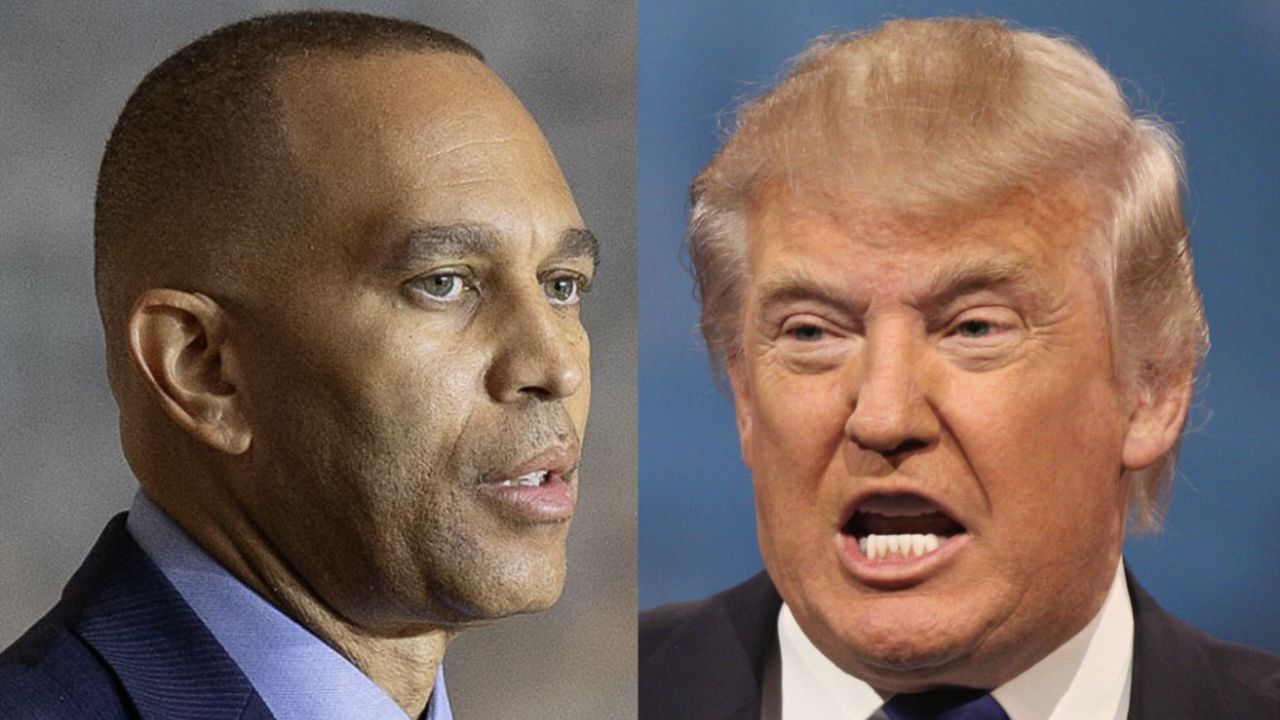
House Minority Leader Hakeem Jeffries publicly challenged President Donald Trump’s newly unveiled pledge to send every adult American a $5,000 “dividend” if Republicans retain control of Congress, accusing Trump and his allies of making a promise they have no intention of keeping. In a post on X Thursday morning, Jeffries questioned why voters should trust a payment that would only arrive after the November midterm elections, arguing the offer fits a pattern of unfulfilled commitments stretching back through Trump’s presidency.
Jeffries’s post, published at 11:50 a.m. on September 10, 2026, read in full:
“Why should anyone believe Donald Trump’s promise to give $5000 to every adult American AFTER the election?
These extremists are lying to the country.
Again.”
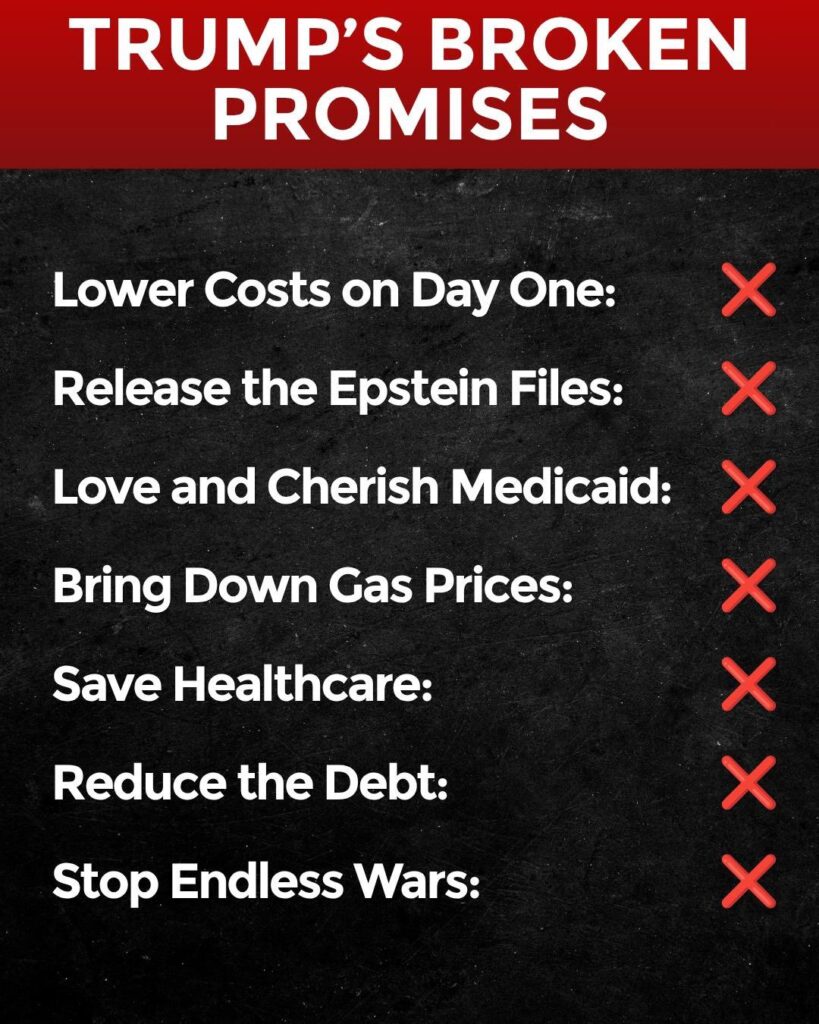
Attached to the post was a graphic titled “TRUMP’S BROKEN PROMISES,” listing seven prior commitments the Minority Leader’s office marked with an “X” to indicate they went unmet: lowering costs on day one, releasing the Epstein files, protecting and preserving Medicaid, bringing down gas prices, saving healthcare, reducing the national debt, and ending “endless wars.”
The Dividend Pledge That Prompted the Rebuke
Jeffries’s post came roughly 36 hours after Trump used the opening night of the Republican Party’s first-ever midterm convention in Dallas to announce the proposed payout. Speaking during a nearly two-hour primetime address, Trump told the crowd, “Because we’ve done so well, and because our country is making so much money, only I can make this promise to you, and here is my promise: if the Republicans win the House of Representatives and the United States Senate… I will issue a dividend to every adult citizen in the United States of America for $5,000.”
Trump compared the proposed payment to a corporation distributing profits to shareholders, framing it as a reward for the country’s economic performance under his administration. He attached one specific condition, saying the money “must be spent in the United States of America,” though he did not detail how that requirement would be enforced or say how the payments would be funded.
The proposal was not accompanied by legislative text, an eligibility framework, or a funding mechanism. With an estimated 270 million adults in the United States, independent estimates have placed the total cost of the plan between roughly $1.2 trillion and $1.35 trillion, and any such payout would likely require congressional approval to become law.
White House Frames the Payout as Proof of Economic Success
The White House defended the proposal in a release published the same day, casting it as evidence that Trump “does what the so-called ‘experts’ say cannot be done.” The administration credited the president with unleashing new private investment, cutting government waste, and rebuilding economic strength, arguing the dividend “returns” that success to the American people rather than functioning as a new government program.
The release went further in criticizing Democrats directly, stating that a Democratic-controlled Congress “will not deliver a dividend” and would instead deliver “higher taxes, open borders, and the same failed communist agenda that makes American families poorer and punishes the people who work the hardest.”
Jeffries’s Broader Midterm Messaging Push
Jeffries’s Thursday post was part of a wider effort by House Democrats to use the Republican convention as a contrast opportunity heading into November. Ahead of the event, Jeffries’s office launched a five-figure digital ad buy timed to NFL season-opening games, aimed at reaching sports audiences rather than those tuned into convention coverage.
In the ad, Jeffries pointed to the cost of living as the core issue for voters, saying, “Grocery prices up. Gas up. Health insurance premiums — up in some cases a thousand dollars or more. You’re working hard. But you can’t thrive. You can barely survive.”
Jeffries also issued a statement criticizing the optics of the Dallas gathering itself, saying, “While extreme MAGA Republicans party in Dallas with their billionaire donors, Democrats are taking our message directly to the American people.” His office confirmed it was sending four House Democrats to attend the convention in person.
A Pattern of Unfulfilled Dividend Proposals
The $5,000 pledge is not Trump’s first dividend-style proposal. In late 2025, he floated a $2,000 “tariff dividend” that would have been funded by revenue collected from his administration’s tariffs on foreign goods, a plan that lost momentum after a Supreme Court ruling in February 2026 found that portions of the tariff authority underlying the proposal were unlawful.
Trump has also pointed to the $1,776 “Warrior Dividend” bonuses paid to roughly 1.45 million service members in December 2025 as a precedent for the new proposal, though that payment was funded through a congressionally approved military housing supplement rather than unilateral executive action.
Vice President JD Vance, addressing the proposal after Trump’s speech, suggested the payments would likely be narrowed so that wealthier Americans would not qualify, and pointed to tariff revenue — which totaled approximately $154.5 billion over the first ten months of fiscal year 2026 — as a possible funding source, though that figure falls well short of the plan’s estimated $1 trillion-plus cost.
Legal and Fiscal Questions Surface Within Trump’s Own Party
The proposal drew skepticism even from within Republican ranks. Representative Chip Roy of Texas told reporters he wanted clarity on financing, saying he would “like to know how they would plan to pay for … back of envelope … well over $1 trillion.”
The timing of the pledge — contingent on the outcome of the November elections — also raised questions about its legality. Federal law makes it a criminal offense to offer or make a payment intended to induce a person to vote, decline to vote, or vote for or against a particular candidate, with penalties that can include fines and imprisonment.
Political Backdrop Ahead of November
The dividend announcement capped the first night of what Republicans have billed as their first-ever midterm convention, a two-day event in Dallas some in the party have nicknamed “Trumpapalooza.” Trump used the appearance to place himself at the center of the midterm campaign, telling the crowd, “I’m asking you to pretend that I’m on the ballot,” despite being constitutionally barred from seeking a third term.
The convention unfolded as Trump’s approval ratings remain at what polling has described as an all-time low, with public surveys showing Democratic voters more motivated to turn out in November. An Economist/YouGov poll shows Democrats holding a seven-point lead on the generic congressional ballot, a measure of which party voters prefer to control Congress.
Some Republicans facing competitive races opted to skip the convention altogether, including Senator Dan Sullivan of Alaska and Senator Susan Collins of Maine, both viewed as wary of aligning themselves too closely with an unpopular president ahead of their own contests.
With control of the House and Senate both in play, Jeffries — who would be positioned to become Speaker if Democrats retake the majority — has continued to center his messaging on affordability, using the dividend pledge as the latest example in his broader argument that Trump’s promises have consistently failed to materialize for ordinary Americans.