
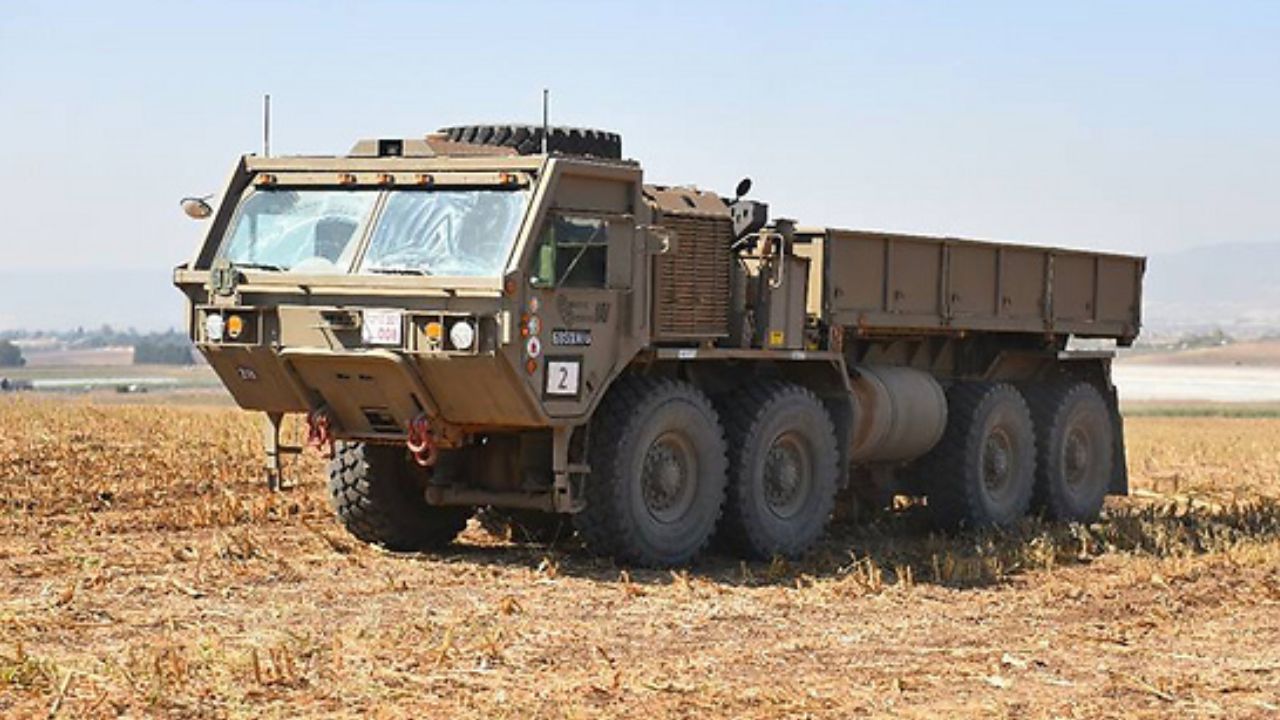
There are military vehicles people recognize instantly: the Humvee, the Abrams, maybe a Black Hawk slicing across the sky. But ask a lot of soldiers, mechanics, and logisticians which machine quietly carried the most weight—sometimes literally—and you’ll often hear the same name: the Oshkosh HEMTT. It’s not glamorous, and it doesn’t need to be.
The Heavy Expanded Mobility Tactical Truck, or HEMTT, is the kind of workhorse that earns respect the old-fashioned way. It shows up in ugly weather, on bad roads, with too much cargo, and it still gets the job done. If modern armies run on fuel, ammo, and parts, the HEMTT is one of the vehicles that makes sure those things actually arrive.
A truck built for the jobs no one applauds
The HEMTT was designed around a simple reality: moving heavy supplies in a combat zone is hard, and regular cargo trucks don’t always survive the trip. It’s an 8×8 platform built to haul big loads across rough terrain and keep rolling where paved roads are a luxury. Think of it as the difference between a pickup truck and a purpose-built off-road hauler—except scaled up to military life.
Oshkosh Defense developed the HEMTT for the U.S. Army, and over time it became a cornerstone of tactical logistics. It’s the vehicle that brings fuel to the fuelers, ammunition to the artillery, and recovery gear to the stuck vehicles. It’s not the star of the show, but without it, the show doesn’t start.
Why the HEMTT became a familiar sight in the field
Part of the HEMTT’s reputation comes from how often it’s seen in real operations. From training ranges to overseas deployments, its chunky stance and big tires are hard to miss. When you see one, you can usually assume something important is about to be moved, refueled, repaired, or rescued.
Another reason is consistency. The HEMTT family has been around for decades, and the platform has evolved instead of disappearing. That matters in the military, where reliability and maintainability can be more valuable than shiny new features that don’t survive harsh conditions.
One name, many variants
Calling it “a HEMTT” is a bit like calling everything with four wheels “a car.” The platform supports multiple configurations, and they’re built for very different missions. There are cargo versions for hauling supplies, tractor variants for pulling heavy trailers, and specialized models that carry mission-critical systems.
Two of the best-known variants are the fuel tanker versions—often referred to as the M978 family—and the load-handling systems that can pick up and drop off flatracks quickly. There are also wreckers designed for recovery work, because in military life, something is always getting stuck, broken, or buried in mud at the worst possible moment. If you’ve ever wondered what “logistics muscle” looks like, this is it.
Mobility that’s more than just speed
“Mobility” in a tactical truck isn’t about going fast; it’s about going where you need to go and not quitting halfway. The HEMTT’s 8×8 drivetrain, ground clearance, and rugged suspension are built for cross-country movement and uneven surfaces. It can travel with armored units and support elements instead of being stuck on the safest, simplest route.
That kind of capability changes planning. A unit that can refuel and resupply away from predictable roads is harder to target and easier to sustain. In plain terms: if your supplies can move smart, your whole force becomes more flexible.
The unglamorous genius of refueling and rearming
If you’ve never watched a refuel operation up close, it’s surprisingly intense. It has to be quick, controlled, and safe—because fuel and combat zones don’t mix politely. HEMTT fuelers are built to deliver large quantities efficiently, and the whole setup is designed around speed and practicality.
Ammo and heavy gear are the same story. The HEMTT’s payload and handling systems help move loads that would otherwise require more vehicles, more time, and more exposure to risk. It’s not exciting in a movie scene, but it’s exactly the kind of “boring” competence that keeps people alive.
Protection and upgrades in a changing battlefield
As threats evolved, so did the expectations for tactical trucks. Over time, many HEMTTs received upgrades for better survivability, including armored cabs and improved systems to handle modern operating environments. The goal wasn’t to turn a logistics truck into a tank, but to give crews a fighting chance against real-world threats.
Later evolutions, including newer generations and recapitalized versions, also focused on improved reliability, maintainability, and performance. When you’re running a fleet, those things aren’t small details—they’re the difference between a truck that’s ready today and one that’s waiting on parts for weeks.
Why mechanics and operators tend to respect it
The HEMTT’s reputation isn’t just about specs; it’s about how it behaves under pressure. Operators talk about stability, capability, and the sense that the truck was built with real abuse in mind. When a vehicle feels predictable and sturdy, crews trust it more, and that trust becomes part of the platform’s legacy.
Mechanics, too, tend to appreciate trucks that are designed to be serviced in the real world. No vehicle is maintenance-free, especially not one that works this hard. But a platform that’s supported well, documented well, and built for long service life becomes something people rely on instead of resent.
A logistics icon hiding in plain sight
It’s easy to overlook the vehicles that do the heavy lifting behind the scenes. But the HEMTT has a way of standing out once you notice what it actually enables: sustained operations, long movements, fast resupply, and recovery when things go sideways. It’s the backbone truck that helps everything else keep moving.
And there’s a quiet kind of charm to that. Not every respected military machine is famous for firepower or speed; some are famous for showing up, carrying a ridiculous load, and refusing to fail. Few military trucks earned respect like the Oshkosh HEMTT, and honestly, it earned it one hard mile at a time.