
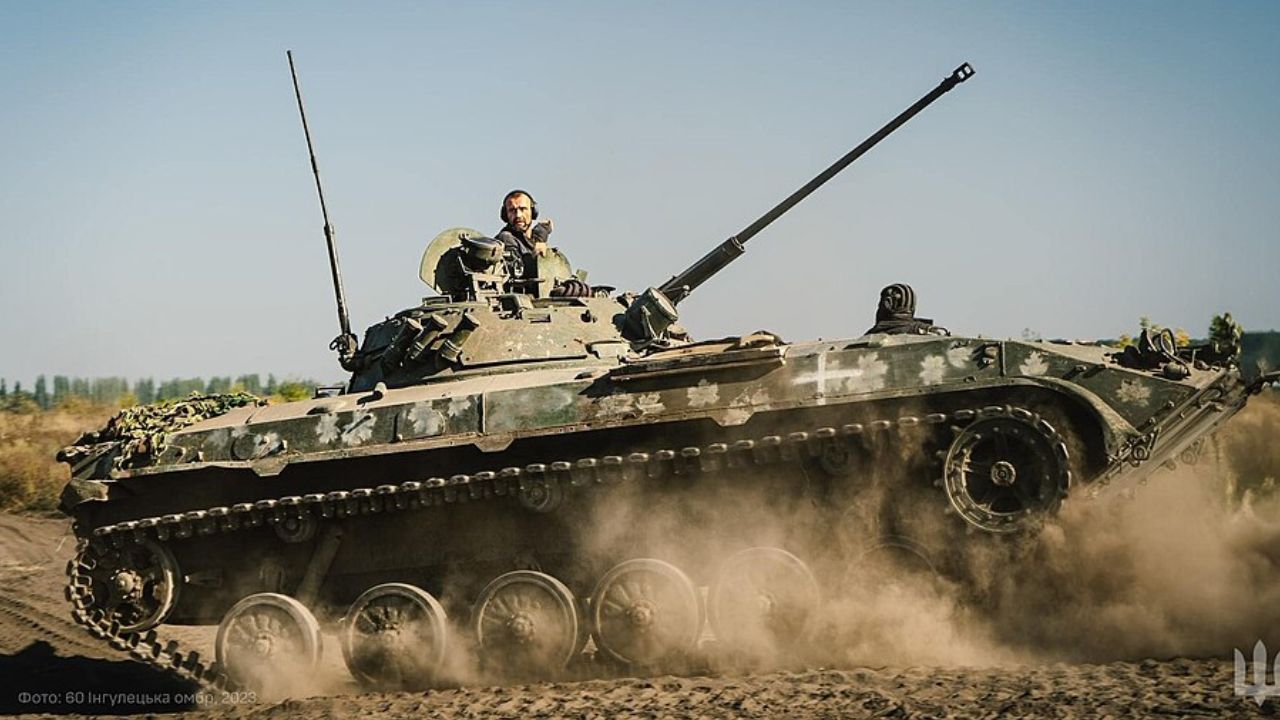
Ask a group of defense watchers to name an infantry fighting vehicle they can spot from a grainy clip at 2 a.m., and you’ll hear it: the BMP-2. The boxy hull, the small turret, that long 30mm cannon—somehow it’s both utilitarian and instantly familiar. Decades after it first rolled out, the vehicle is still showing up in parades, training grounds, and very real battlefields.
That staying power isn’t just nostalgia. It’s a mix of sheer numbers, global export history, and the fact that many armies have found it easier to modernize what they already have than to buy something totally new. In a world where budgets, logistics, and politics matter as much as performance, the BMP-2 keeps finding ways to remain relevant.
A Cold War design that refused to retire
The BMP-2 entered service in the early 1980s as a refinement of the earlier BMP-1, which had already changed how the Soviet Army imagined mechanized infantry. The idea was straightforward: move troops under armor, keep pace with tanks, and give infantry a vehicle that could fight its way through trouble rather than just taxi them to it. The BMP-2’s most visible change was the turret and its 30mm autocannon, a weapon that gave it better punch and flexibility than the BMP-1’s main gun.
It arrived at a moment when many militaries were rethinking the IFV role, balancing protection, firepower, and mobility in different ways. The BMP-2 leaned hard into mobility and firepower, accepting compromises elsewhere. That trade-off has been debated ever since, but it also explains why it’s so widely recognized: the design is distinctive because it’s built around a very particular set of priorities.
Why it’s still everywhere: the numbers game
One big reason the BMP-2 remains so visible is simple math. The Soviet Union produced large quantities, and then the vehicle spread through exports, licensed production, and secondhand transfers. When a platform exists in huge numbers, it tends to stick around—spare parts networks grow, maintenance know-how spreads, and training materials get copied and recopied until they feel like folk wisdom.
Even when countries upgrade to newer vehicles, older BMP-2s often don’t vanish. They get reassigned to reserve units, internal security roles, training fleets, or kept as mobilization stock. And in conflicts, vehicles that are “good enough” and available in bulk often show up more than the perfect but scarce alternative.
The silhouette factor: easy to spot, hard to forget
Recognition isn’t only about fame; it’s also about shape. The BMP-2 has a low profile and a compact turret with a prominent cannon that visually dominates the vehicle’s front-right side. Once you’ve seen it a few times, it becomes one of those military “tells” you can’t unsee.
There’s also the modern media effect. Smartphone videos, drone footage, and open-source imagery circulate fast, and the BMP-2’s outline reads clearly even in low resolution. It’s not glamorous, but it’s consistent—like the pickup truck of tracked armor, except with an autocannon.
Firepower that still matters
The BMP-2’s 30mm cannon is a big part of its enduring reputation. Autocannons in this class can threaten light armored vehicles, suppress infantry positions, and engage a range of targets with different ammunition types. Pair that with a coaxial machine gun, and you get a vehicle that can make itself useful in a lot of tactical situations.
Many BMP-2s also carry an anti-tank guided missile capability depending on configuration and upgrade package, which extends the threat profile beyond what the cannon can handle. Of course, real-world effectiveness depends on training, sensors, maintenance, and the tactical environment. Still, the basic idea—mobile infantry with a meaningful bite—remains relevant.
Upgrades: the “new old” BMP-2
Plenty of BMP-2 fleets today aren’t running in their original configuration. Modernization packages often focus on sights, thermal imaging, fire-control improvements, radios, navigation, and sometimes additional armor or internal changes. These upgrades don’t magically turn an older IFV into a cutting-edge platform, but they can make it significantly more usable, especially at night and in poor weather.
That’s the pragmatic appeal: upgrades are usually cheaper and faster than buying new vehicles, and they let armies keep familiar maintenance routines. You’ll see different countries take different approaches—some prioritize better optics, others focus on survivability add-ons, and some mix a little of everything. The result is a BMP-2 “family” where vehicles look broadly similar but can perform quite differently.
The survivability debate never really goes away
If you talk to soldiers and analysts, survivability is where the BMP-2 attracts the most scrutiny. Like many vehicles of its era and weight class, it was designed with constraints, and modern threats have only multiplied—drones, top-attack munitions, precision artillery, and a general battlefield transparency that makes hiding harder. That reality has pushed operators to improvise with camouflage, electronic countermeasures, add-on armor, and tactical changes.
At the same time, it’s worth remembering what it was built to do: move infantry quickly and fight alongside tanks, not replace a main battle tank or a heavy armored personnel carrier. In today’s environment, the vehicle’s profile—how it’s used, where it’s used, and with what support—can matter as much as the thickness of its armor. The BMP-2’s continued presence has, in a way, kept the broader IFV survivability conversation permanently active.
Why armies keep it: logistics, training, and the reality of budgets
Replacing an IFV fleet is a massive undertaking. You’re not just buying vehicles; you’re buying spare parts pipelines, recovery vehicles, simulators, ammunition stocks, technical manuals, and years of training time. For many countries, extending the life of BMP-2s is the only feasible way to maintain mechanized capacity while juggling other priorities.
There’s also familiarity. Mechanics know what breaks and how to fix it, commanders understand its limitations, and training programs have decades of lessons baked in. New vehicles can be better, but they also come with new complexities—and sometimes, a BMP-2 that’s understood and supported beats a newer platform that’s expensive to keep running.
A global footprint that keeps growing through transfers
Another reason the BMP-2 remains “worldwide recognizable” is that it keeps moving between users. When one country upgrades, older vehicles may be sold, donated, or transferred, extending their service life in new climates and new doctrines. Over time, that spreads the BMP-2’s presence across regions, and it keeps the vehicle in the public eye.
This transfer cycle also creates an odd kind of continuity in global armored forces. You’ll see the same core vehicle concept adapted to different needs—sometimes with serious modernization, sometimes barely touched. Either way, the recognizable outline remains, and so does the name.
So what does the BMP-2’s staying power really say?
The BMP-2’s ongoing visibility says as much about the world as it does about the vehicle. Military hardware doesn’t disappear on a neat timeline; it lingers where it’s affordable, repairable, and available. And when a design is produced at scale, it becomes part of the landscape—practically and culturally.
For better and for worse, the BMP-2 is one of those machines that has become a reference point. When people talk about IFVs—how they should fight, how they should protect troops, and how they should adapt—the BMP-2 is often sitting there in the background, stubbornly familiar. It’s not the newest face on the field, but it’s still one of the easiest to recognize.