
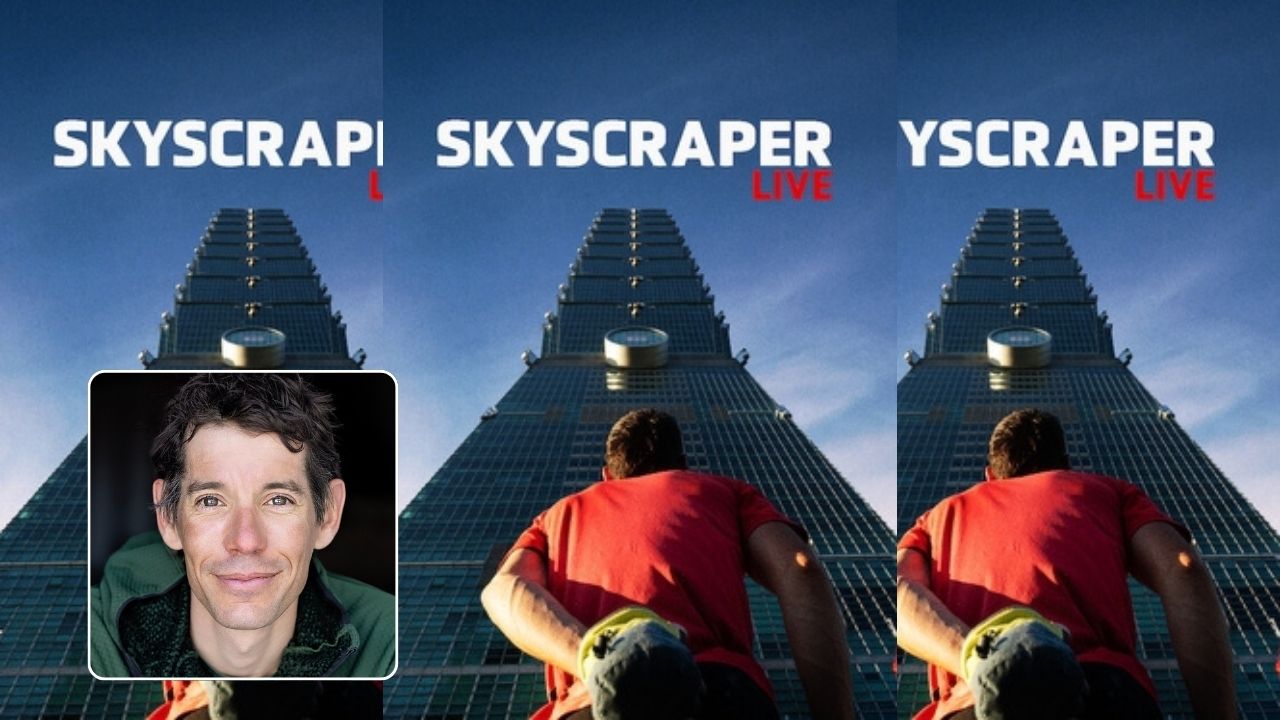
American rock climber Alex Honnold has turned one of the world’s most recognizable skyscrapers into his latest vertical stage, scaling the 101-story Taipei 101 without ropes for a live Netflix spectacle. The climb fused high-risk athleticism with global streaming power, transforming a private test of nerve into a shared event for viewers around the world. It also pushed the idea of what a “live show” can be when the set is a functioning landmark and the margin for error is almost nonexistent.
The ascent of the tower in Taiwan was not only a personal milestone for Honnold but also a statement about how extreme sports now intersect with media, tourism, and urban identity. By turning a free solo climb into appointment viewing, the production reframed a familiar skyline as a fresh arena for human limits, and invited audiences to reconsider where sport ends and storytelling begins.
The climb that turned Taipei 101 into a live arena
At the center of the event was the stark simplicity of the act itself, an American athlete alone on the glass and steel of Taipei 101 with no ropes and no safety net. Alex Honnold has long been known for pushing free solo climbing into the mainstream, but choosing a 101-story office tower in Taiwan as his next canvas shifted the drama from remote cliffs to a dense urban core. The building’s height and exposed surfaces meant that every move carried consequences that were both physical and symbolic, since any misstep would have unfolded in real time before a global audience.
The production framed Honnold as one of the greatest climbers of all time, and the decision to climb Taipei 101 without ropes or gear underscored that reputation. By committing to a route that ran the full 101 floors of the tower, he turned a familiar skyline into a vertical narrative that viewers could follow from street level to the spire. The fact that the ascent was broadcast live meant that the building itself became a kind of arena, with office workers, residents, and onlookers in Taipei sharing the same unfolding tension as those watching from living rooms thousands of miles away.
Netflix’s high-wire experiment in live spectacle
For Netflix, the climb was a deliberate test of how far live programming can stretch when the stakes are not scripted. The company promoted the event as a real-time broadcast, inviting subscribers to tune in as Honnold moved up the façade of Taipei 101 without ropes. Viewers were guided through how to access the stream on different devices, from smart TVs to phones, turning the climb into a shared appointment that cut across time zones and platforms. The service treated the ascent as a flagship moment in its push into live events, positioning it alongside sports and stand-up specials but with a far sharper edge.
The broadcast was packaged under the banner of live Netflix programming, which signaled that the company sees extreme feats as part of its broader strategy to keep audiences engaged in real time rather than on their own schedules. By centering the show on a single climber and a single building, the production created a clean narrative that was easy to market yet complex to execute. The live format also meant that technical crews had to track Honnold’s progress across the 101 stories of Taipei 101 with minimal delay, blending drone shots, fixed cameras, and commentary into a coherent feed that never lost sight of the human risk at its core.
From “Skyscraper Live” to cultural touchstone
The climb was framed within a larger project titled Skyscraper Live, which treated Taipei 101 as both a physical challenge and a cultural symbol. By choosing a tower that has come to represent Taiwan’s economic and architectural ambitions, the production linked Honnold’s personal test to a broader story about modern cities and their icons. The event echoed earlier televised stunts that turned urban landmarks into stages, but the absence of ropes or safety lines gave this version a rawness that set it apart from more controlled spectacles.
Coverage of the climb emphasized that an American athlete was taking on Taiwan’s most famous building, Taipei 101, without ropes or protective gear, and that he successfully reached the top of all 101 floors. That framing helped the event resonate beyond climbing circles, inviting viewers to see the tower not only as a piece of infrastructure but as a vertical story about risk, ambition, and national pride. In doing so, Skyscraper Live turned a single ascent into a cultural touchstone that will likely shape how both locals and visitors look at the building for years to come.
Mythmaking, martial arts cinema, and the future of urban feats
The imagery of a lone figure moving up the side of a skyscraper without ropes carries echoes of martial arts cinema, where gravity often seems negotiable and cityscapes become arenas for personal transformation. The climb of Taipei 101 invited comparisons to films like “Crouching Tiger, Hidden Dragon,” which used wire work and stylized choreography to place characters in impossible positions on rooftops and treetops. In Honnold’s case, the wire work was replaced by real risk, but the visual rhyme remained, turning the tower into a backdrop for a story that felt as mythic as it was literal.
That resonance is not accidental, since discussions of martial arts epics often point to how they blend physical skill with heightened storytelling, a dynamic explored in detail in analyses of martial arts cinema. By placing a real climber on a real tower and broadcasting every move, the Netflix event borrowed some of that mythmaking power while grounding it in verifiable risk. As cities continue to seek new ways to showcase their skylines and streaming platforms look for unscripted moments that can cut through the noise, the image of Alex Honnold on the glass of Taipei 101 may serve as a template for future urban feats that blur the line between sport, performance, and modern legend.