
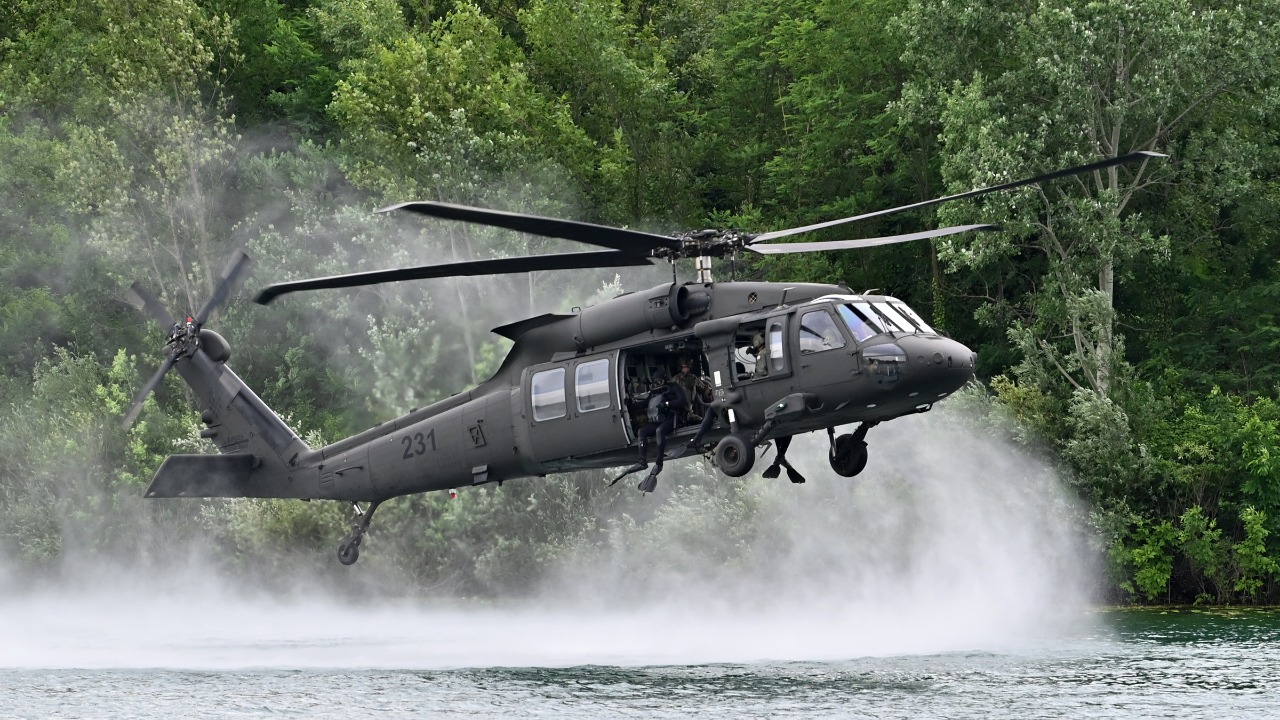
Few military aircraft have earned their reputations as thoroughly in combat as the UH-60 Black Hawk. Designed from the outset to survive hostile fire, haul troops and casualties, and keep flying in punishing conditions, it has become a byword for reliability at the sharp end of operations. Its record in war zones and disaster zones alike shows how a helicopter can be both rugged and adaptable without sacrificing safety.
That battlefield pedigree did not emerge by accident. The Black Hawk family reflects decades of engineering refinement, operational feedback, and targeted upgrades that keep it relevant even as new platforms appear. From its origins as a Cold War workhorse to its current role in complex, missile-threatened airspace, the aircraft’s reliability is the product of deliberate choices in design, maintenance, and modernization.
From Cold War Workhorse to Backbone of Modern Aviation
The Black Hawk story begins in the late Cold War, when the UH-60 was introduced to replace older utility helicopters and give the army a tougher, more survivable lift platform. Since entering service in the late 1970s, the UH-60 Black Hawk has been described as the backbone of army aviation, flying in nearly every type of environment and conflict the United States has faced since. That longevity is not just a matter of age; it reflects a platform that operators judge to be generally safe with a strong track record for reliability in service.
Engineers built the Black Hawk from the ground up to meet the exacting demands of front-line users, with the ability to operate in hot and high conditions, land in tight zones, and endure the wear of real-world mission operations. That design philosophy, focused on durability and mission flexibility rather than a single niche role, laid the foundation for the helicopter’s reputation as a dependable asset in combat and crisis alike.
Battlefield Survivability and Safety by Design
Reliability in combat begins with how an aircraft is built to absorb punishment and still bring people home. Design details for the Black Hawk highlight low detectability, the ability to absorb high-impact forces, and protection for critical systems, including armored protective seating for those on board. These features are not abstract engineering choices; they are intended to let crews survive hard landings, small arms fire, and shrapnel in the kinds of contested zones where the helicopter routinely operates.
Comparisons with dedicated attack platforms underline how the Black Hawk’s utility role still demands serious survivability. Analyses comparing the Apache and Black Hawk describe how both platforms have been proven in combat, tested across numerous conflicts, and designed with different approaches to safety and survivability, including the ability to extract wounded soldiers under heavy fire. That focus on keeping crews and passengers alive, even when the aircraft is not primarily an attack platform, is central to why commanders trust it for high risk insertions and evacuations.
Multi‑Mission Reliability from War Zones to Wildfires
The Black Hawk’s combat reputation is reinforced by how seamlessly it shifts between missions without sacrificing reliability. More than 30 militaries around the world depend on UH-60 and S-70 Black Hawk fleets for reliable performance in tough environments, using them for assault, medevac, and humanitarian relief missions. That breadth of operators and mission sets, from front line combat to disaster response, is itself a measure of trust in the platform’s ability to perform day after day.
Domestically and abroad, the aircraft has also migrated into demanding civilian roles that mirror combat conditions in everything but enemy fire. Operators using former military airframes for firefighting have pushed back against claims that restricted-category aircraft pose unacceptable public safety risks, arguing that such assessments ignore their design and operational track record. When a helicopter originally built for contested airspace is trusted to carry firefighters into smoke choked canyons, it underscores how its combat hardened reliability translates directly into life saving civilian work.
Pilots, Upgrades and the Human Factor in Reliability
Hardware alone does not make an aircraft dependable; the way it is flown and modernized matters just as much. Pilots who fly the UH-60M Black Hawk describe it as a best-in-class, multi-mission performer, reflecting how crews view the latest variants as both capable and predictable in demanding conditions. Their perspective aligns with broader portrayals of the UH60 Blackhawk as the backbone of American air mobility, born in the late Cold War and perfected in later conflicts.
Continuous upgrades also play a central role in keeping the helicopter battle ready. The Army views ongoing Black Hawk upgrades as a way to counter incoming missile threats by expanding the protective systems surrounding the aircraft. Broader modernization plans aimed at 2030, including improvements beyond the current T700 engine, show how planners intend to keep the helicopter viable in missile-saturated airspace across Europe and the Middle East.
Global Adoption and the Next Chapter After the Black Hawk
The Black Hawk’s reliability is perhaps most clearly reflected in how widely it has been adopted and adapted beyond the United States. Australia’s procurement and operational use of the UH-60M Black Hawk marks a critical evolution in the nation’s rotary-wing capability, signaling confidence that the platform can anchor a new generation of missions in the Indo-Pacific. More broadly, More than 30 militaries that field UH-60 and S-70 fleets rely on their high reliability in tough environments, as noted in Black Hawk fleet reporting, underscoring that this is not a niche American solution but a global standard.
At the same time, the platform’s success is shaping what comes next. Since entering service in the late 1970s, the UH-60 Black Hawk has been central enough to Army aviation that new tiltrotor concepts like the MV-75 are framed as eventual successors that must adapt to the evolving battlefield rather than simple replacements. Even as designers explore new configurations, the view that the UH-60 Black Hawk remains the backbone of American air mobility suggests that any successor will be judged against its hard-earned record of being tested and trusted in combat.