
The Book of Enoch has long occupied a strange place on the edges of Scripture, revered by some early Christians yet absent from most modern Bibles. Understanding why it was left out of the biblical canon requires tracing how communities judged its origins, theology, and usefulness alongside other sacred writings. The story that emerges is less about a single act of censorship and more about centuries of discernment over what counted as authoritative Word of God.
Far from being a simple tale of a “banned” book, the fate of Enoch reveals how Jewish and Christian leaders weighed questions of authorship, doctrine, and liturgical practice. Their decisions shaped not only which texts survived between two covers, but also how later generations would imagine angels, judgment, and the very nature of revelation itself.
From revered vision to marginal text
What modern readers call the Book of Enoch, often labeled 1 Enoch, is a composite work that expands the brief biblical notice about Enoch “walking with God” into a sweeping narrative of heavenly journeys and cosmic judgment. Scholars describe it as the most influential of the Enochic writings, weaving together visions of the end times, astronomical speculation, and sharp moral warnings. A central section focuses on the Watchers, fallen angels who transgress divine boundaries and corrupt humanity, a storyline that later readers saw as amplifying the cryptic verses of Genesis 6.
Fragments of 1 Enoch found among the Dead Sea Scrolls confirm that parts of the work circulated widely in Second Temple Judaism and were valued by groups that prized apocalyptic revelation. Early Christian writers also knew it well. The Epistle of Jude contains what many scholars regard as a direct quotation from Enoch, while other New Testament passages echo its angelology and judgment scenes. Yet even as some communities treated it as spiritually significant, others hesitated to grant it the same status as the Law, the Prophets, or the Gospels.
Jewish and Christian criteria for Scripture
One of the most decisive factors in Enoch’s exclusion was its absence from the Hebrew Scriptures. Later Christian lists of authoritative books leaned heavily on the Jewish canon, and 1 Enoch never secured a place there. Analyses of why 1 Enoch is Not in the Canon of Scripture repeatedly stress that “It Was Never” part of the recognized Jewish collection, which made later Christian adoption far less likely. When church leaders weighed disputed writings, they typically asked whether a text had been received by Israel, whether it was tied to apostles or prophets, and whether it harmonized with what they already regarded as inspired.
By those measures, Enoch struggled. Commentators who outline Apostolic Origin and consistency as key tests argue that The Book of Enoch did not meet those standards, since it could not be credibly linked to the historical patriarch Enoch and at points diverged from emerging Christian doctrine. A separate analysis of why is the notes that while some passages resonate with biblical themes, the overall work did not satisfy the criteria that guided which writings would be bound together as the Holy Bible today.
Theological tensions and “doctrinal aberrations”
Beyond questions of origin, Enoch’s theology raised alarms. The book’s vivid depictions of angelic sin, cosmic secrets, and elaborate heavenly tours fascinated ancient readers but also pushed against the more restrained portraits of angels and the afterlife in canonical texts. A detailed discussion on regardless of its literary power points to “doctrinal aberrations,” including an emphasis on hidden heavenly knowledge available only to a select visionary and a portrayal of God that some readers felt left little room for mercy toward repentant sinners. In that reading, salvation appears tied more to cosmic judgment than to a transforming relationship with God.
Christian interpreters also compared Enoch’s angelology with the teaching of Jesus and the apostles. In Matthew 22, Christ describes resurrected people as being “like the angels in heaven” who do not marry, a statement preserved in Matthew 22:30. By contrast, 1 Enoch elaborates on angels who take human wives and produce giants, a story that some later theologians judged incompatible with the way the New Testament frames angelic nature. Modern pastors echo this concern, with one response by Pastor Ted Wilson urging readers to seek final authority in God’s Word, the Bible, rather than in apocalyptic expansions that risk distorting core doctrines.
Canon decisions, surviving pockets, and enduring influence
Despite these reservations, Enoch did not simply vanish. Historical surveys note that the Book of Enoch remained popular in some first century Christian circles, influential enough that a New Testament writer could quote it without explanation. The British scholar Margaret Barker has argued that parts of The Book of Enoch, which she dates at least two centuries before Christ, were treated as authoritative by many in the first Christian communities. Yet as debates over the canon sharpened, especially in the West, the book gradually slipped from official lists. A modern overview of Removal Process and traces how the Book of Enoch was excluded from the Protestant Canon as Reformers narrowed their Old Testament to match the Hebrew collection and scrutinized apocryphal works.
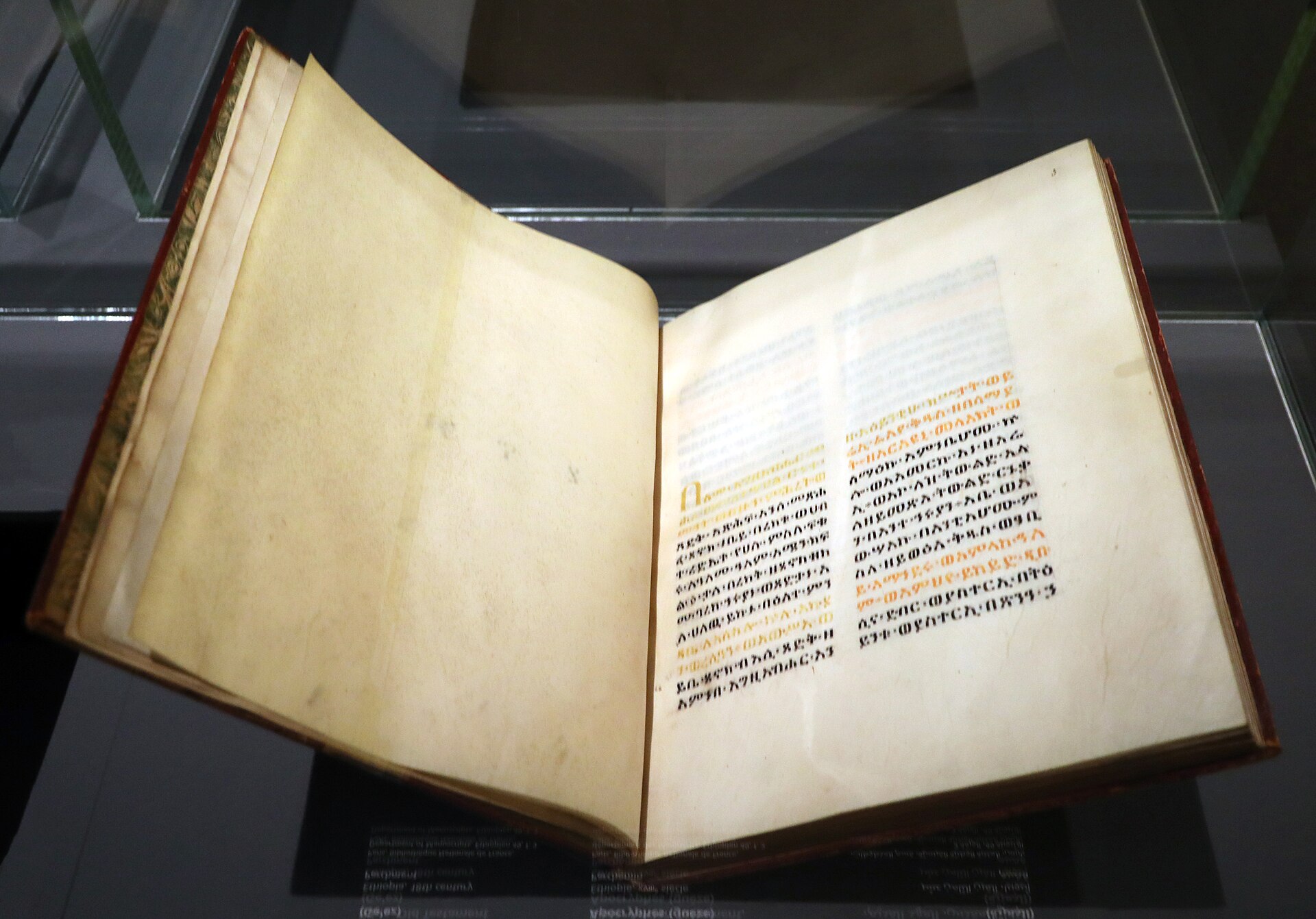
Yet one ancient church made a different choice. The Book of Enoch survives in full primarily in Geʽez, preserved in the canon of the Ethiopian and Eritrean Orthodox Tewahedo Church. A discussion of the Ethiopian Bible notes that the complete Book of Enoch is still included in the Ethiopian Orthodox canon, one of the oldest and most expansive in Christianity. Modern research summaries observe that although the Book of Enoch is not part of Jewish or most Christian Bibles, it is treated as Scripture in that Church. Other writers frame its exclusion as a subject of ongoing scholarly debate rather than a settled verdict.