
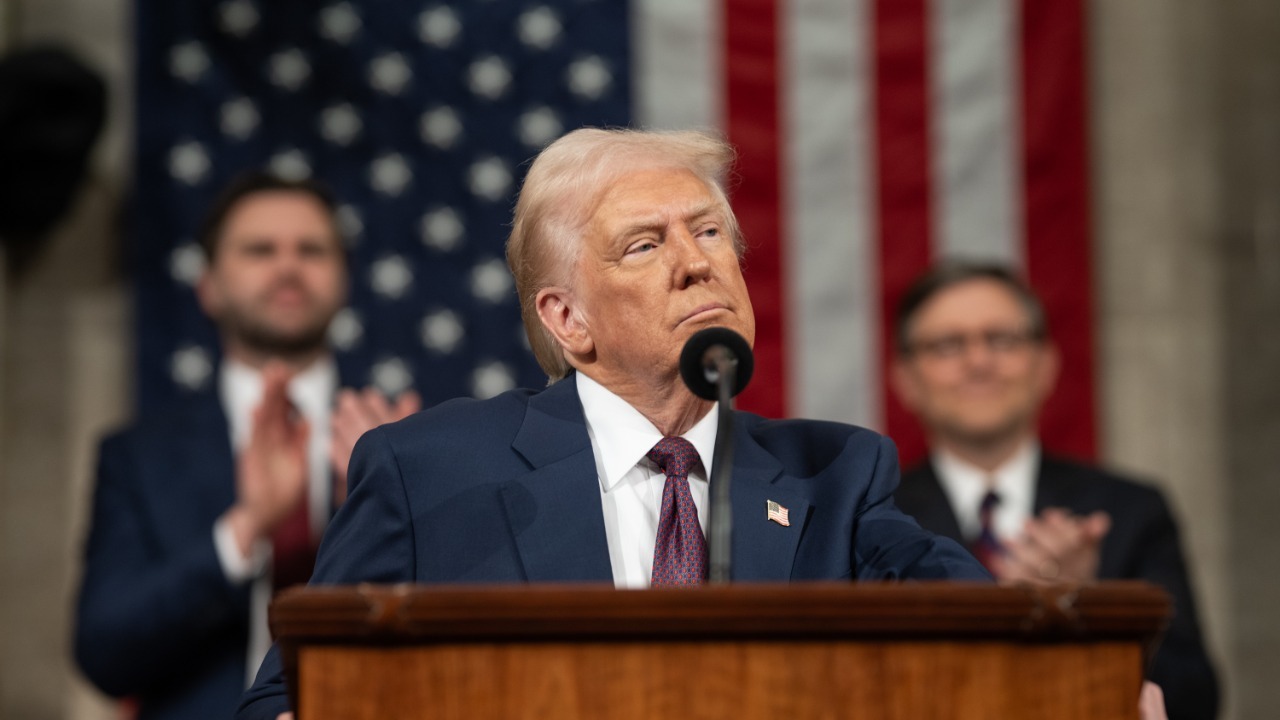
President Donald Trump drew attention to a little-known area of military technology by claiming a secret American ‘sonic weapon’ was used in the capture of Venezuelan leader Nicolás Maduro, even as lurid accounts from the ground describe guards collapsing and vomiting blood. The claim, delivered with characteristic flourish, collides with a sparse public record about what actually happened during the January 3 operation and what such devices can realistically do. The debate over the alleged acoustic weapon now sits between presidential claims, battlefield accounts, and expert skepticism, raising questions about transparency in modern warfare.
At stake is more than the mythology of a single raid. Trump’s suggestion that the United States now wields a one of a kind sound based weapon, and that “nobody else has it,” raises hard questions about how far Washington is willing to go in covert interventions, what risks such tools pose to those caught in their path, and whether the public will ever get a clear accounting of what unfolded when Maduro was taken into custody.
The raid that captured Maduro and the birth of a myth
According to Trump’s own telling, the story begins with a dramatic assault in Caracas that ended with Venezuela President Nicolas Maduro and his wife in American custody after a short, violent clash. In public remarks, he said U.S. forces carried out a ‘very intense’ operation that relied on a sound-based device to disorient defenders before a much smaller American assault team moved in to seize the compound. His language has been sweeping, with the president insisting that this “secret sonic weapon” is uniquely American and that “nobody else has it,” a framing that has helped transform a classified capability, or perhaps a more conventional tool, into a kind of instant legend for his supporters.
Trump’s comments, delivered in a video that quickly circulated online, portrayed the device as an “amazing” instrument that unleashed a focused blast of sound to clear the way for US forces and ensure that Maduro was captured alive rather than killed in a prolonged firefight. In that account, the weapon was decisive in allowing a small American unit to overwhelm a larger Venezuelan security presence and extract the Venezuelan leader with minimal casualties, a narrative that has been echoed in sympathetic clips on platforms and short video segments that celebrate the raid as a showcase of American technological dominance.
Witness accounts of a “mystery weapon” and guards vomiting blood
While Trump has focused on the strategic payoff, some of the most disturbing details have come from those who say they were on the receiving end of the blast. A security guard who survived the raid has described a sudden wave of sound that felt as if his head was exploding, followed by chaos as colleagues clutched their ears and collapsed. In his account, the noise was so overwhelming that defenders could not coordinate a response, and within moments the US forces were shooting with such precision and speed that creating the impression of overwhelming firepower, an image that has fueled social media speculation about a combined onslaught of advanced weaponry.
Other unverified claims, amplified online, allege more severe effects, alleging that some guards began vomiting blood after exposure to the sound and that several lost consciousness before the first American boots crossed the threshold. One widely shared video featuring a survivor’s testimony has been packaged as a dramatic confession about a “powerful wave of sound” that swept through the compound, a narrative that has been repeated in short form content and in reels that frame the episode as proof of a new era of acoustic warfare. US officials have not publicly corroborated the most graphic elements of these stories, and some details, including the reports of guards vomiting blood, remain unverified based on available sources.
What existing sonic weapons can actually do
Behind the sensational accounts lies a more prosaic reality about acoustic technology that has been in military and law enforcement toolkits for years. Experts note that directional acoustic devices are real and already used by military and law enforcement forces, particularly long-range acoustic devices that project a narrow “cone of sound” to deliver warnings or painful noise at distance. These systems can cause intense discomfort, headaches, balance problems, confusion, and even permanent hearing damage, but according to experts there is no publicly known system that reliably induces the kind of catastrophic internal bleeding implied by some of the Venezuelan witness claims. In other words, the technology to incapacitate with sound exists, but its documented effects are more consistent with crowd control than with the horror stories now circulating online.
Technical assessments of the Maduro raid point to these long range acoustic devices as the most plausible explanation for any sound based tool that might have been deployed. Analysts have stressed that, while the Trump administration has not confirmed what weapon, if any, was used, the description of a focused, high intensity audio beam aligns closely with known systems that have been in use for years and that generate a tight, high decibel range of sound. Following the US operation that resulted in the capture of Venezuelan leader Nicol Maduro, technical explainers have emphasized that such devices are designed to overwhelm the senses rather than to kill, a distinction that complicates the most extreme narratives now attached to the raid.
Trump’s rhetoric, secrecy, and the information vacuum
Trump’s own rhetoric has done little to narrow the gap between battlefield reality and public perception. In multiple appearances he has bragged that the US military employed a “secret sonic” device during the Maduro raid and has described it as an “amazing attack,” language that suggests a breakthrough capability while leaving crucial details shrouded in classification. One summary of his remarks states that Trump claimed the U.S. military used a ‘secret sonic weapon’ during its effort to abduct Maduro and framed it as proof that American forces can now neutralize hardened targets with minimal risk.
At the same time, official channels have remained conspicuously quiet about the technical specifics, creating an information vacuum that has been filled by influencers, partisan commentators, and speculative explainers. One widely shared explainer asks bluntly whether a mysterious “sonic weapon” was used during Maduro’s capture and notes that Donald Trump has insisted that “nobody else has it,” even as analysts caution that the most likely tool was a long range acoustic device similar to those already in service. Social media posts claim that U.S. forces captured Venezuelan President Nicolás Maduro using a mysterious sonic device, while more sober analyses, including those that ask “Did the US” use such a device, stress that many of the most dramatic claims cannot be independently authenticated as of now.
Ethical stakes and the unanswered questions
Beyond the technical debate, the alleged use of a secret acoustic weapon in Venezuela raises difficult ethical and strategic questions. Sonic weaponry uses intense sound to incapacitate, and historical examples, including crowd control deployments that contributed to more than 100 deaths according to Trump era reporting, show how quickly “non-lethal” tools can become deadly in practice. Medical specialists such as Leavitt have warned that these devices can cause headaches, balance problems, confusion, and permanent hearing damage, and the long-term consequences of repeated or high intensity exposure remain poorly understood. If such a device was indeed used in a dense urban environment around Maduro’s compound, the risk to bystanders and lower level guards who never chose the fight is impossible to ignore.