
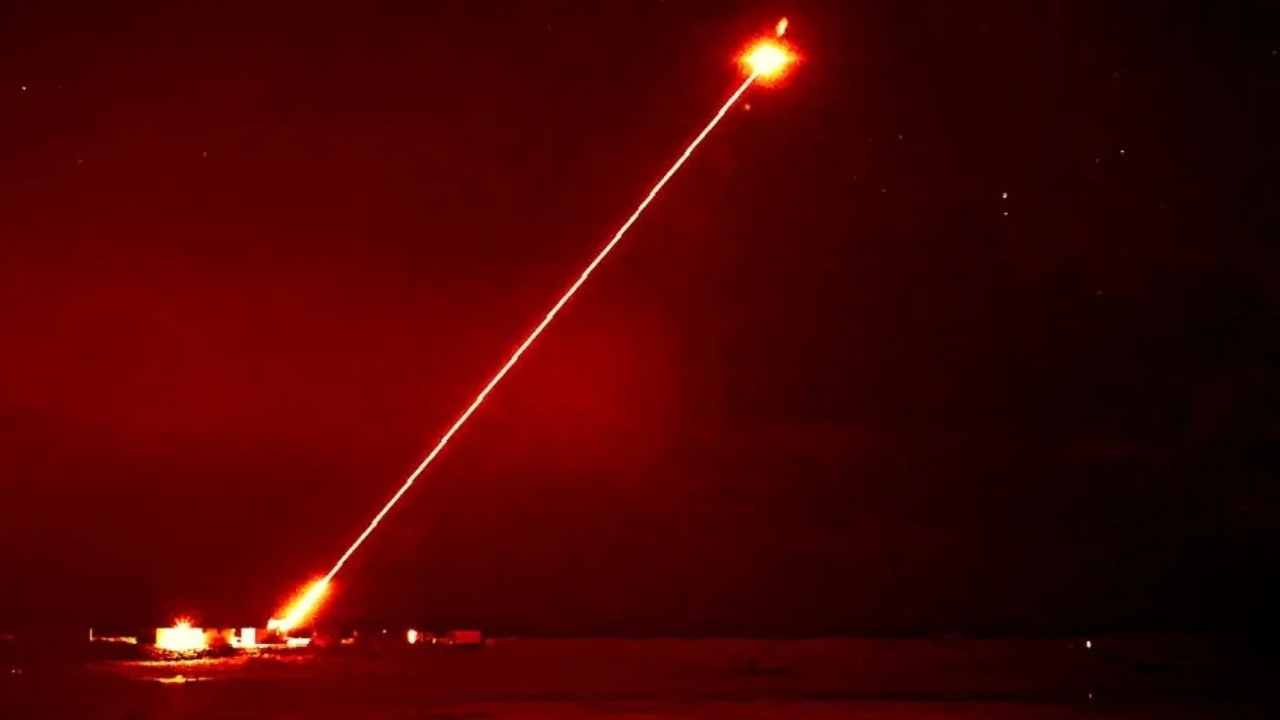
Britain is moving from science fiction to fleet orders as it prepares to bolt a high‑energy laser onto front‑line warships and point it at hostile drones. The DragonFire system promises to burn targets out of the sky at a fraction of the cost of a missile, turning beams of light into a central tool of air defence. The gamble is that this mind‑bending technology can be ruggedised, scaled and deployed fast enough to keep pace with a world where cheap drones are rewriting the rules of war.
The United Kingdom has already committed serious money and political capital to that bet, awarding a £316 million contract and fast‑tracking naval integration by 2027. If DragonFire works as advertised, it will not just vaporize drones, it will also reshape how commanders think about magazine depth, deterrence and the economics of defending ships and bases.
From lab demo to live‑fire drone kills
DragonFire has shifted from a laboratory curiosity to a weapon that has already destroyed high‑speed drones in controlled trials. British officials describe a laser that can hold a spot steady enough to hit a coin from a kilometre away, then dwell on a moving target until its structure fails. In recent tests, the system tracked and intercepted fast unmanned aircraft above the horizon, a demanding scenario that required precise sensing, beam control and fire control working together.
The Ministry of Defence has highlighted that the laser has successfully taken down high‑speed drones, with one public video showing targets travelling at around 400 m per hour being burned out of the sky by the Dragonfire beam. In official material, Britain has framed these firings as a UK first for above‑the‑horizon tracking and interception of high‑speed aerial threats, a milestone that underpins the decision to move from experimentation to procurement. The British Ministry of Defence has also released curated footage of the system in action, underscoring confidence that the technology is ready to leave the test range and head toward operational platforms.
A £316 million wager on cheap shots and deep magazines
The financial scale of the DragonFire push signals that this is no boutique gadget but a core element of future air defence. In Nov, the government confirmed a £316 m contract, explicitly described as £316 million, with MBDA to take the laser from prototype to deployable system. That package sits within a broader Strategic Defence Review effort to modernise the force, with directed‑energy weapons grouped alongside Autonomous submarines, uncrewed fighters and other advanced systems in a multi‑billion‑pound technology drive. Officials present DragonFire as a flagship example of how investment in cutting‑edge kit can offset the growing volume and sophistication of incoming threats.
Cost per shot is the headline attraction. Reporting on the programme notes that each firing of the DragonFire laser could cost as little as £10, a stark contrast with existing anti‑drone and anti‑missile interceptors that can run to hundreds of thousands of pounds per engagement. The United Kingdom has stressed that ship‑fitted systems from 2027 will give the Royal Navy a far cheaper way to counter inexpensive unmanned aircraft and missiles, turning the traditional cost curve of air defence on its head. By pairing a high‑end destroyer with a magazine that is limited mainly by electrical power rather than stored missiles, planners hope to sustain defence against saturation attacks that would otherwise exhaust conventional stocks.
Type 45 destroyers and Europe’s first combat laser warship
The Royal Navy is at the centre of the DragonFire rollout, with Type 45 destroyers chosen as the first operational hosts. The UK Ministry of Defence has confirmed that the initial naval installation will be on a Royal Navy vessel in 2027, with follow‑on fits planned for additional ships as the system matures. A separate government announcement has described how the £316 m contract will see DragonFire integrated into shipboard combat systems, with the aim of providing a new layer of defence against drones, missiles and other airborne threats approaching the fleet.
By moving at this pace, The United Kingdom is on track to field what has been described as the first European shipborne combat laser, giving it a symbolic and practical lead in directed‑energy naval warfare. Analysts note that the programme, framed as a Naval Laser Capability to Help Build Cost effective Ship based Defence, is scheduled to reach an initial milestone around 2027, aligning with Royal Navy plans to counter drones and saturation attacks more efficiently. The UK has already fast‑tracked testing at ranges such as the Hebrides, and officials have signalled that DragonFire will be pointed first at small drones and similar threats before any expansion to more demanding targets.
Strategic stakes in the age of cheap drones
Behind the technical spectacle sits a hard strategic problem, as Drones and other low‑cost aerial systems proliferate across battlefields and grey‑zone flashpoints. Traditional surface‑to‑air missiles are highly capable but expensive, and using them to swat small quadcopters or improvised loitering munitions is a losing economic game. British planners argue that a high‑energy laser with near‑instant engagement, deep magazines and shots priced in tens of pounds offers a way to restore balance, especially when adversaries can launch swarms of cheap platforms at ships, bases or critical infrastructure.
DragonFire is also part of a wider modernisation arc in which Britain is pouring billions into advanced sensors, autonomy and new weapons to keep pace with rapidly evolving threats. The UK has confirmed plans to equip Royal Navy warships with directed‑energy weapons from 2027, and officials say the programme is designed to cut the cost of each intercept from thousands of dollars per engagement to a tiny fraction of that figure. If the system performs as promised at sea, it will not only give Britain a new tool to vaporize drones, it will also set a benchmark for European partners that are still at an earlier stage in their own laser weapon efforts.