
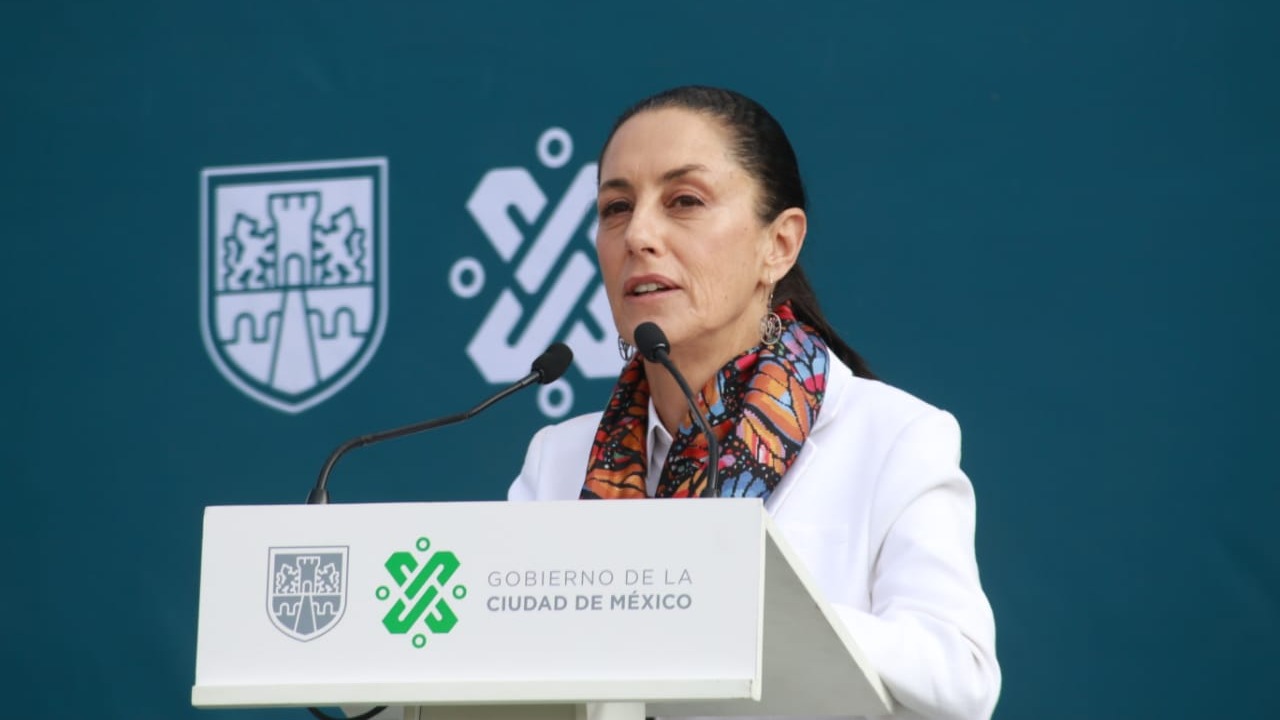
Mexico’s president has drawn a clear red line in her dealings with Washington, rejecting any suggestion that U.S. troops might operate on Mexican soil in the name of fighting drug cartels. By insisting that such an intervention is “not on the table,” she has turned a private phone call with President Donald Trump into a defining moment for regional security and for Mexico’s own sense of sovereignty.
Her stance does more than rebuff a single proposal. It crystallizes a broader debate over how far the United States can or should go in projecting military power into a neighboring country, and how a Mexican leader balances cooperation on drugs and migration with a domestic mandate to defend “The Mexican” national project from outside interference.
Sheinbaum’s firm rejection and the meaning of “not on the table”
I see Mexican President Claudia Sheinbaum’s response as both blunt and carefully calibrated. According to multiple accounts, Mexican President Claudia Sheinbaum told President Donald Trump during their call that deploying U.S. troops in Mexico is simply “not on the table,” a phrase that leaves no room for negotiation while still preserving the broader relationship. She framed U.S. military intervention against cartels as “unnecessary,” stressing that her government is already acting against organized crime and that any foreign deployment would violate Mexico’s constitutional order, a point she underscored when she said that their constitution is “very cl”ear on prohibiting such operations, as reflected in her comments about Venezuela and other interventions.
In her own recounting, Mexican President Claudia Sheinbaum described the exchange as a “very good conversation” with President Donald Trump about security, even as she flatly rejected the idea of U.S. forces crossing the border to confront cartels, a position detailed in reports on Mexican President Claudia and her call with the U.S. leader. Sheinbaum’s choice of words matters: by casting intervention as both unnecessary and constitutionally barred, she signals to Trump, to her own public, and to the region that Mexico will not trade its legal red lines for short term security optics, even under pressure from Washington.
Sovereignty, history, and a domestic audience that expects a hard line
When I listen to Sheinbaum’s language, I hear a leader speaking as much to Mexicans as to the White House. She has emphasized that “The Mexican” people should know their president will never negotiate sovereignty or territorial integrity, insisting that she will not bargain away control of Mexican territory in any security deal, a pledge captured in her remarks that the Mexican people should “know that their president will never negotiate sovereignty or territorial integrity, ever,” as reported in coverage of The Mexican position. That promise taps into a long history of resistance to foreign troops on Mexican soil, from nineteenth century invasions to twentieth century Cold War interventions in Latin America that still shape public opinion.
Her firmness also reflects the political reality that any hint of acquiescence to U.S. boots on the ground would be toxic at home. In Mexican politics, defending sovereignty is not an abstract slogan but a daily test of legitimacy, and Sheinbaum’s categorical refusal signals that she understands that constraint. By drawing a bright line against intervention while still talking up cooperation on intelligence and law enforcement, she is trying to reassure voters that she can work with Washington without repeating the patterns that many Mexicans associate with past U.S. actions in the region, a balance that becomes clearer when she recounts how Trump asked her about operations in other countries and she replied that Mexico’s constitution leaves no space for similar moves, as detailed in the same conversation.
Trump’s pressure campaign and Mexico’s calibrated pushback
From my vantage point, Trump’s side of the story is a familiar mix of public threats and private probing. He has repeatedly warned that Mexico must “get their act together” on drug trafficking and has floated the idea of land attacks against cartels following maritime operations in the Pacific and Ca, a sequence described in reports on his comments about future Trump plans. In the same vein, he has linked trade, migration, and security, telling Mexico that continued pressure over drugs and commerce on the United Stat side of the border will shape his decisions, a posture summarized in coverage of his warnings to Mexico about consequences if cartels are not confronted to his satisfaction.
Mexico’s answer has been to push back on the military dimension while keeping the door open to other forms of cooperation. Accounts of the call describe Mexican President Sheinbaum rejecting U.S. military deployment even as she discussed ways to strengthen joint efforts against drug trafficking, a stance captured in analysis of how Mexican President Sheinbaum responded to Trump’s escalating anti drug push. She has also characterized the conversation as constructive, saying she believed Trump understood her position after she laid out constitutional limits and domestic expectations, a nuance that suggests she is trying to defuse the confrontation rather than escalate it into a full blown diplomatic crisis.
Security cooperation without troops and the road ahead
For all the drama around the phrase “not on the table,” I read Sheinbaum’s message as an attempt to redefine cooperation rather than to end it. She has spoken publicly about having a “very good conversation” with Trump on security issues, even as she told him that U.S. intervention against cartels is unnecessary and that Mexico will handle operations on its own territory, a balance reflected in detailed accounts of her call with President Donald Trump. She has also stressed that her government is already working with U.S. agencies on intelligence sharing, border controls, and tracking fentanyl flows, signaling that the real debate is not whether to cooperate but how far that cooperation can go without crossing Mexico’s constitutional red lines.
The choreography around the call underscores how carefully both sides are managing the optics. Reports describe how Sheinbaum, speaking as Mexico’s president, briefed the public on her conversation with Trump amidst threats of military strikes, explaining that she had declined any offer of U.S. troops while still engaging on shared concerns. Other accounts highlight how Mexico’s president issued a stern message to Trump over sending military troops, reiterating that such a deployment is “not on the table” while still framing the broader relationship as important.