
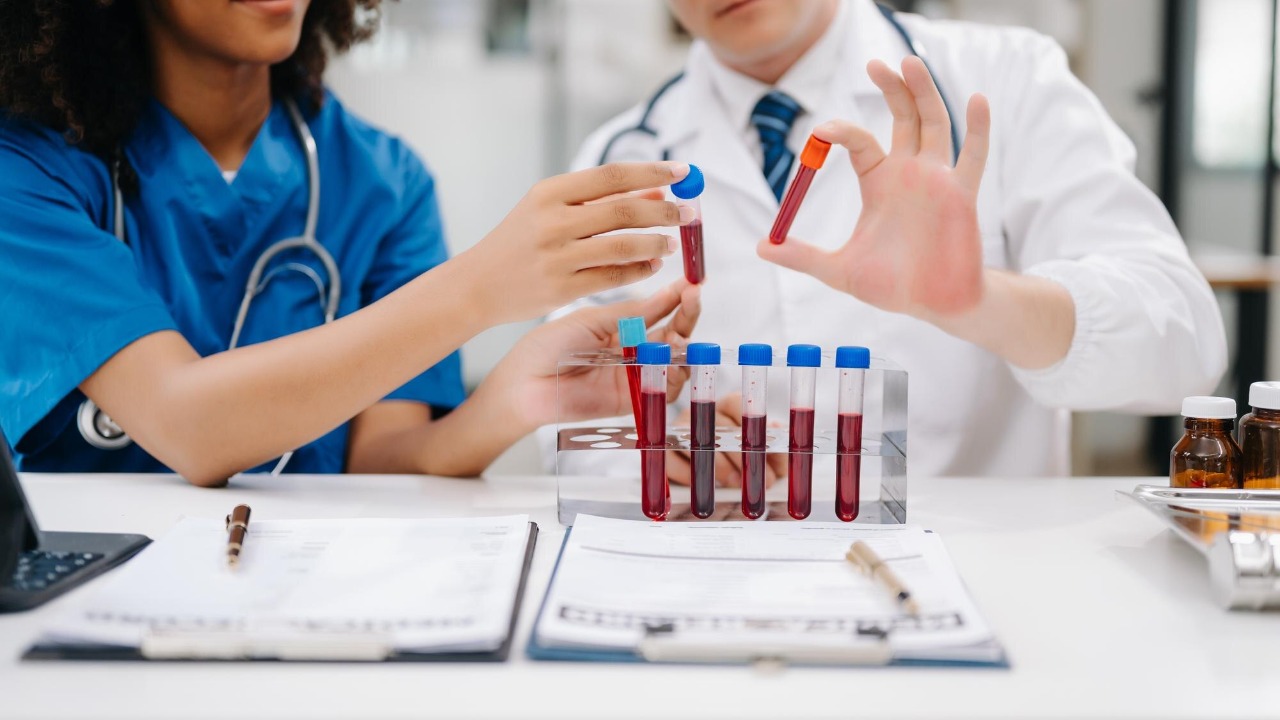
Blood is often reduced to the familiar A, B, AB, and O labels, but human blood is far more intricate than those four letters suggest. A newly identified blood type is so uncommon that only three people on the planet are known to share it, underscoring how much of human biology still hides in plain sight. The discovery is not just a medical curiosity, it is a reminder that life-or-death details can hinge on microscopic differences most people never realize they carry.
Beyond A, B, AB, and O: How rare blood types emerge
Most people learn about blood groups through the basic ABO system, which sorts blood into A, B, AB, or O based on the presence or absence of specific sugars on the surface of red blood cells. That familiar shorthand, often written simply as ABO, is only one layer of a much larger classification system that includes dozens of other blood group families defined by different proteins and carbohydrates. Within those families, subtle genetic changes can alter a single building block on a red cell, creating a new pattern that standard hospital tests may miss until a transfusion goes wrong or a pregnancy becomes complicated.
In the case of the newly spotlighted ultra rare type, researchers were not hunting for novelty, they were trying to explain why a patient’s blood reacted strangely in the lab. When routine screening could not match her sample to any known pattern, specialists dug deeper, mapping the exact structure of the red cell markers and comparing them with existing catalogues. That detective work revealed a combination so unusual that only three individuals, all carefully tested, have been confirmed to share it, a finding that has been described as the world’s rarest blood type.
The Thai discovery that stunned transfusion doctors
The rarity of this blood group became clear when Scientists in Thailand examined hundreds of thousands of blood samples and found only three people whose red cells carried the same unusual signature. The team had been alerted by unexplained reactions during compatibility testing, which suggested that the patients’ immune systems recognized a blood marker that did not appear in standard reference panels. By isolating and characterizing that marker, the researchers were able to define a distinct blood type that had gone unnoticed despite decades of routine screening.
What startled clinicians was not only that this pattern existed, but that it had remained hidden in a country where blood donation and testing are widespread. The fact that only three individuals emerged from such a large pool of donors, described as just three individuals out of hundreds of thousands tested in a separate summary of the same work, highlights how easily a person with this profile could go through life without ever knowing. The Thai findings, which Nov and Yet helped bring into wider discussion, suggest that even in well studied populations there is still significant, undiscovered diversity within human biology, and that transfusion services must be prepared for the occasional patient whose blood does not fit any familiar category.
From a French Woman’s mysterious antibody to a brand new group
The Thai case is not the first time a single patient has forced scientists to redraw the blood group map. Earlier this year, specialists investigating a puzzling lab result in Europe encountered what was initially labeled a Mysterious Antibody in the blood of a middle aged French Woman. Routine cross matching showed that her serum attacked red cells from almost every donor tested, a sign that her immune system recognized a feature that most other people’s blood cells carry. That reaction, first flagged when Doctors Detected the anomaly during standard screening, prompted a detailed investigation of her Body chemistry and genetic background.
As the work progressed, it became clear that the antibody was not reacting to any of the 48 known blood group systems catalogued at the time. Instead, the pattern of reactions showed that the woman lacked a specific marker that nearly everyone else has, meaning her blood represented a previously unrecognized group. When the team confirmed that It Turned Out to be a brand new blood type, they added another entry to the global registry and flagged the patient as someone who would need extremely careful management if she ever required a transfusion. Her case, like the Thai trio, illustrates how a single person’s immune response can reveal a blind spot in medical knowledge.
“Gwada-negative” and the expanding list of 48 k blood groups
Another striking example comes from a woman whose blood was so unusual that she effectively had her own category. In a detailed report on her case, researchers described a Newly discovered blood group they named “Gwada-negative,” after the region linked to her family history. The woman’s red cells lacked a marker that appears in virtually everyone else, which meant that any transfusion from a standard donor would likely trigger a dangerous immune reaction. For her, the search for compatible blood was not just difficult, it was essentially impossible, because no other matching donor has been identified.
The scientists who documented “Gwada-negative,” including By Martin L. Olsson and Jill Storry, emphasized that this case expanded the tally of recognized blood group systems to what they described as 48 k. That figure reflects how many distinct families of red cell markers have been formally defined, each with its own set of variants and rare phenotypes. With every addition, from “Gwada-negative” to the Thai trio’s type, the list grows more complex, and the pool of people who can safely donate to one another becomes more fragmented. For transfusion services, that complexity translates into a need for better screening, more detailed donor registries, and international cooperation when a patient with an ultra rare profile needs help.
Why ultra rare blood types matter far beyond the lab
For the three people who share the newly identified rare type, the discovery is both a scientific milestone and a practical warning. In an emergency, standard O negative blood is often treated as a universal fallback, but for someone whose immune system is primed against a marker that almost everyone else carries, even that option can be risky. The Thai researchers who identified the world’s rarest blood type have already highlighted how crucial it is to flag such patients in medical records, so that any future surgery, childbirth, or accident triggers a search for compatible units rather than a routine transfusion that could prove life threatening.
The broader lesson is that blood services cannot rely solely on the familiar ABO and Rh labels when planning for rare cases. As the world’s rarest blood type found in just 3 people demonstrates, even a vast donor pool may yield only a handful of compatible matches for some patients. That reality is pushing hospitals and blood banks to invest in more advanced typing technologies, to build networks that can locate rare donors across borders, and to educate clinicians about the warning signs that a patient’s blood does not fit standard patterns. For the vast majority of people, the familiar A, B, AB, and O labels will continue to work just fine, but for a small number, including those three individuals with the rarest known type, survival may depend on a level of precision that only cutting edge science can deliver.