
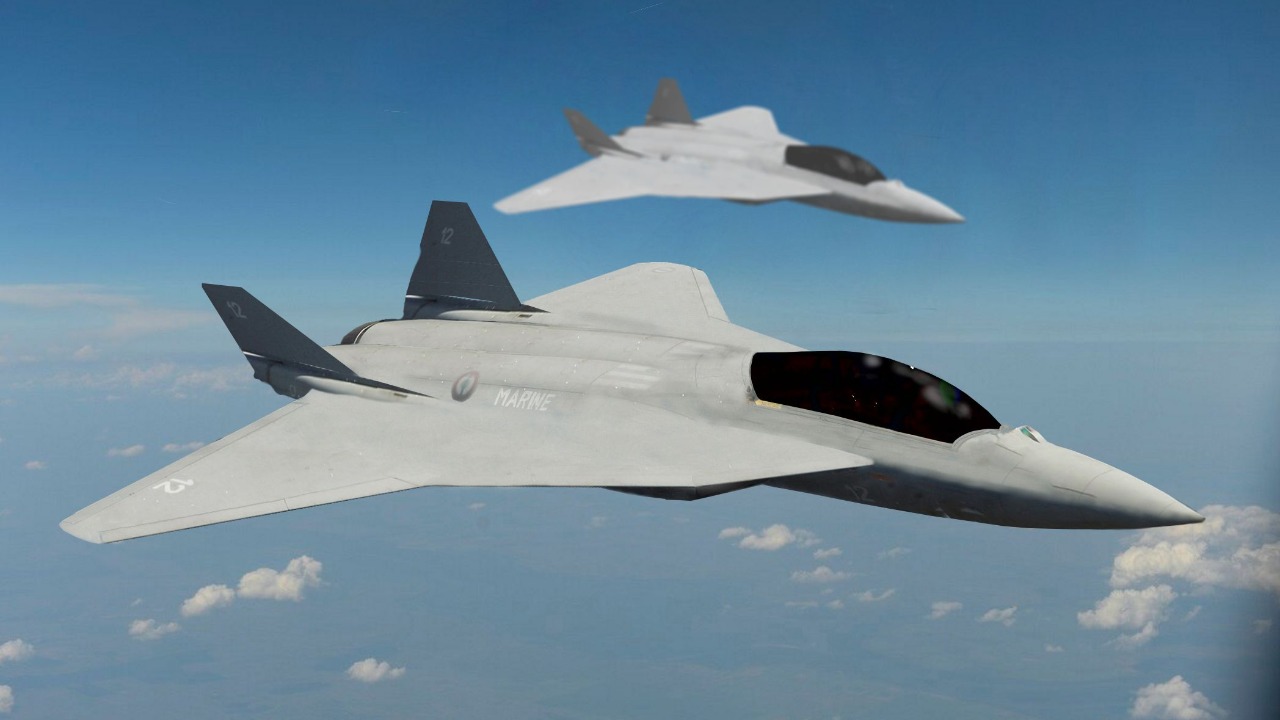
European governments are pouring billions into the Future Combat Air System in a bid to field a new generation of stealthy, networked air power that can compete with the most advanced American aircraft. The gamble is that a sprawling, politically fragile industrial project can deliver not just a fighter, but a whole combat “system of systems” before the technological gap with the United States becomes permanent.
At stake is more than prestige: leaders see control over high‑end air combat technology as a test of whether Europe can defend itself in a world of renewed great‑power rivalry without depending entirely on U.S. platforms and doctrine.
FCAS as Europe’s flagship bid for next‑generation air power
European planners have cast the Future Combat Air System, or FCAS, as the centerpiece of a long‑term effort to regain the initiative in high‑end air warfare. Rather than a single aircraft, FCAS is conceived as a web of crewed and uncrewed platforms, sensors and data links that would give European pilots a stealthy, information‑rich edge similar to, and eventually rivaling, the most advanced American systems. In the evolving landscape of European defense, the program is explicitly framed as a way to strengthen the continent’s own capabilities instead of defaulting to U.S. designs.
The core of FCAS is being developed through collaborative efforts between France, Germany and Spain, which have committed to building a shared “system of systems” that integrates a sixth‑generation fighter with remote carriers and advanced networking across national forces, a vision that has been highlighted as a way to boost European defense. Supporters argue that only a project on this scale can keep European industry at the cutting edge of stealth, sensors and data fusion, and that without it, the continent would be locked into buying U.S. aircraft for decades to come.
Industrial ambition, political friction and rival projects
The industrial logic behind FCAS is to pool research budgets and spread risk across multiple national champions, but that same complexity has made the program vulnerable to political friction. Disputes between major contractors over workshare and intellectual property have repeatedly raised questions about whether the project can stay on schedule and on budget. Critics warn that if the partners cannot stabilize governance and funding, the program could slip so far that it fails to deliver a credible answer to U.S. stealth aircraft already in service.
Those doubts have been sharpened by the emergence of a parallel effort by the United Kingdom, Italy and Japan to develop their own six‑generation combat aircraft, a rival track that underscores how fragmented Europe’s high‑end aviation landscape remains. Reporting on the Franco‑German‑Spanish effort notes that, in parallel to the FCAS (Future Combat Air System), the UK, Italy and Japan are pushing ahead with a separate program that could even be operational as early as 2035, a timeline that has fueled debate over whether the original FCAS concept is still politically and militarily viable.
Strategic autonomy and the race to match U.S. stealth
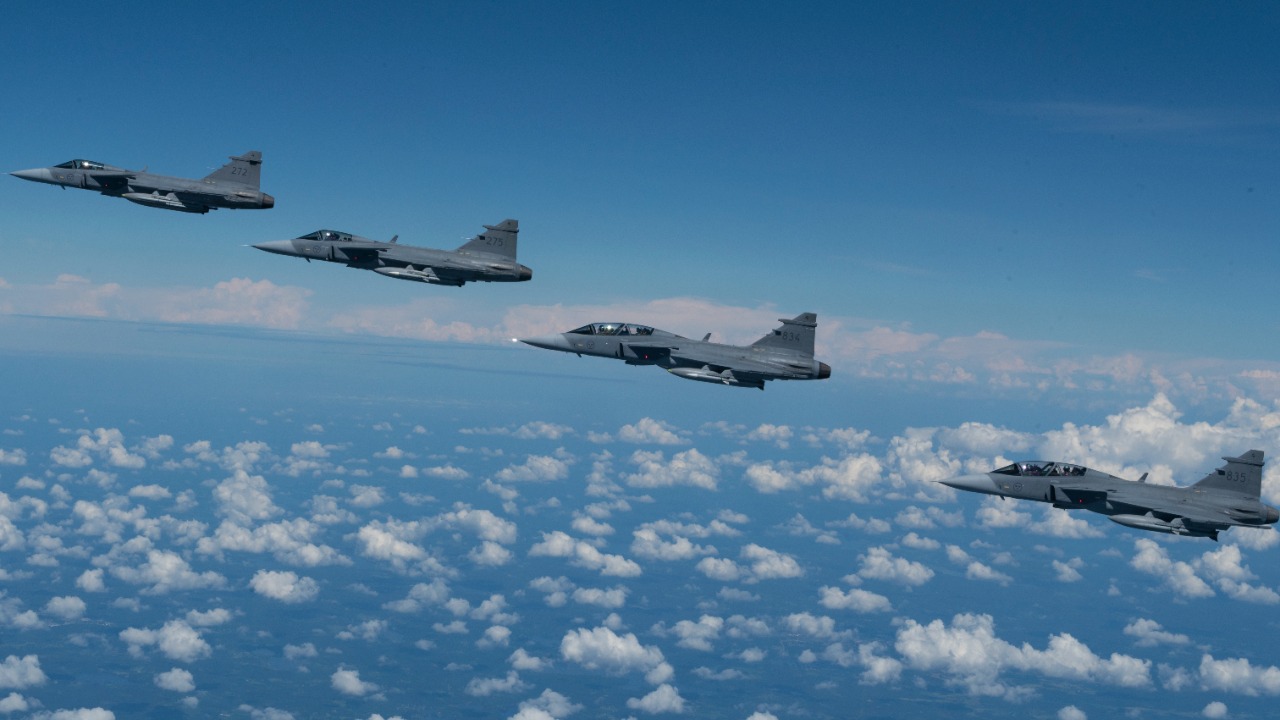
For European leaders, the FCAS program is not just about hardware, it is about strategic autonomy in a security environment shaped by U.S. and Chinese advances. A detailed information report to the French Senate describes The Future Combat Air System, or FCAS, as essential to preserving Europe’s strategic autonomy and its defense technological and industrial base, arguing that only a homegrown system can guarantee freedom of action in future crises. That report stresses that the program is designed to address all threats in the coming decades, from contested airspace to sophisticated air defenses that demand stealth and electronic warfare capabilities on par with the most advanced foreign fleets.
The political case for FCAS has been reinforced by broader calls inside the European Union to field indigenous high‑end systems across the spectrum of warfare. Lithuanian politician Andrius Kubilius has framed one top goal for Europe as building its own high‑end military systems to kill the connectivity that currently ties many capabilities to U.S. platforms, including advanced communication, in‑air refuelling and surveillance aircraft, a vision he has set out in a 2030 war plan for Europe. In that context, FCAS is seen as the air combat pillar of a wider push to ensure that European forces can operate independently even as they remain closely integrated with U.S. and NATO structures.
Money, innovation strategy and the wider defense ecosystem
Delivering FCAS will require sustained funding at a scale that matches its technological ambition, and European institutions are beginning to adjust. A new SAFE instrument has been described as the largest investment fund dedicated to the defense sector, explicitly aimed at strengthening European sovereignty and reinforcing Europe’s military capabilities and overall security architecture. That pool of roughly 40 billion in potential support is intended to back projects that, like FCAS, promise to anchor critical technologies on the continent rather than outsourcing them to foreign suppliers.
Beyond raw funding, FCAS has become a test case for a broader innovation strategy that seeks to foster collaboration between nations and companies and provide long‑term technological superiority. Analysts describe the program as a driver of closer cooperation between European countries in the defense industry, with shared research and development meant to prevent duplication and keep industrial know‑how inside the bloc. The FCAS label has become shorthand for this approach, with one overview noting that this innovation strategy is designed to strengthen ties between European countries in the defense industry while pushing cutting‑edge technologies such as advanced sensors, secure data links and artificial intelligence.
From next‑generation fighter to “system of systems”
At the technical level, FCAS is built around a Next Generation Fighter, or NGF, that is meant to operate at the center of a dense cloud of drones, sensors and command systems. German planners have emphasized that FCAS consists of an NGF and a range of supporting elements, and that Germany wants national solutions for key parts of the air defense system even as it participates in the joint program. The German defense research organization CFSN has been tasked with further developing the German share of FCAS, a reminder that national priorities still shape how each partner approaches the shared FCAS architecture.
The uncrewed side of the project is equally central to Europe’s attempt to narrow the U.S. lead in networked air combat. British debates over the future of combat air power in the second drone age have highlighted how FCAS, sometimes referred to as Future Combat Air Systems, is expected to integrate swarms of remote carriers and advanced military drones that can scout, jam and strike alongside crewed aircraft. Analysts tracking the Tag FCAS (Future Combat Air Systems) note that British military drones are already reshaping doctrine as industry and officials gather at Farnborough to market their wares, underscoring how the British debate over drones intersects with the broader European push for a connected, multi‑platform combat system.
Can FCAS deliver on Europe’s strategic promises?
Supporters of FCAS argue that, if it succeeds, the program will give Europe a credible answer to U.S. stealth fleets and a foundation for independent action in crises from the Baltic to the Sahel. The French Senate report on The Future Combat Air System stresses that FCAS is designed to address all threats in the coming decades, from peer adversaries with sophisticated air defenses to hybrid conflicts that demand persistent surveillance and rapid precision strikes, and that it is central to preserving Europe’s defense technological and industrial base. That framing reflects a belief in Paris, Berlin and Madrid that without such a program, Europe will be forced to buy foreign aircraft and accept the strategic constraints that come with them, a prospect many see as incompatible with long‑term autonomy for Europe.
Yet the risks are equally clear. The existence of competing projects, such as the UK‑Italy‑Japan fighter, and the persistent tensions over industrial leadership have already raised the question of whether Europe is spreading its resources too thin to catch up with the United States. Some analysts warn that if FCAS slips behind schedule or fails to integrate its many components into a coherent whole, it could become a symbol of European overreach rather than renewal. Others counter that the very act of attempting such a complex, multinational system is forcing European governments and industries to confront long‑standing fragmentation, and that even partial success would leave the continent with a stronger, more integrated defense ecosystem than it has today.
FCAS and the broader push for European sovereignty
The FCAS debate is unfolding alongside a wider rethinking of how Europe finances and organizes its defense sector. The SAFE fund’s roughly 40 billion in potential support for defense projects is one sign that Brussels and national capitals are prepared to back industrial initiatives that promise to strengthen European sovereignty and reinforce Europe’s military capabilities and overall security architecture, even when they carry significant financial and technological risk. Advocates see FCAS as a natural candidate for such backing, arguing that only sustained, large‑scale investment can keep Europe in the race for next‑generation air power against the United States and other major powers, a point underscored in reporting on the SAFE instrument’s role in supporting European defense.
At the same time, FCAS has become a touchstone in discussions about how Europe balances cooperation with the United States against the desire for greater autonomy. The program’s champions insist that narrowing the U.S. stealth advantage is not about decoupling from Washington, but about ensuring that European forces bring their own high‑end capabilities to the table in any future coalition. Whether FCAS ultimately delivers that outcome will depend on political will as much as engineering, but the scale of the investment already committed makes clear that Europe has decided it cannot afford to sit out the next revolution in air combat.