

The United States has quietly embraced a new class of Shahed-style LUCAS drones, turning Iran’s own playbook into a countermeasure. The move signals a shift toward cheap, expendable strike systems that can saturate air defenses and complicate Tehran’s regional calculus.
By fielding reverse engineered one way attack drones that mirror the Iranian Shahed family, Washington now pairs high end stealth aircraft with low cost attritable weapons. The combination gives commanders fresh options in the Middle East and beyond, while raising hard questions about escalation and future drone warfare.
From captured Shahed to “American Shahed”
U.S. engineers treated a captured Iranian Shahed as a template and built a new weapon around its core ideas. Reports describe how developers reverse-engineered the Shahed after U.S. forces recovered an intact example from Iran linked operations. The resulting design, branded as LUCAS, keeps the basic one way attack profile but layers in American guidance, communications, and manufacturing standards.
Officials and analysts now routinely call the system an “American Shahed” because it mirrors the role of Iran’s Shahed family in Ukraine, the Gulf, and the Red Sea. Reporting notes that The United States has already moved LUCAS combat drones into the Middle East theater, signaling that the project has left the lab and entered operational service. The new platform aims to give U.S. commanders the same kind of low cost, long range harassment tool that Iranian planners have used for years.
LUCAS design, production, and the 136 lineage
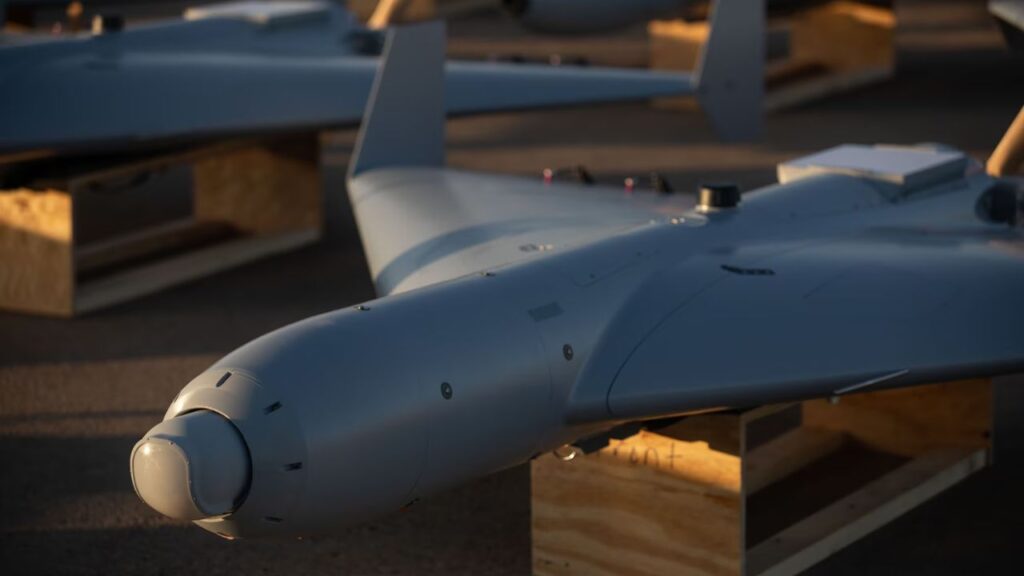
The LUCAS program draws directly on the Shahed 136 lineage while trying to outgrow its limitations. U.S. officials describe a system that borrows the basic airframe and propulsion logic of the Shahed 136, then adds modular payloads and improved navigation. One detailed account frames the effort as U.S. Unveils LUCAS Drone: Reverse Engineered Shahed 136 Weapon Designed Flip the Script on Iran, highlighting the intent to turn a once asymmetric threat into a mirrored capability.
Industrial planning also sits at the heart of the project. Defense sources stress that the Pentagon wants a drone that factories can build in large batches, store easily, and launch from simple platforms. Analysts describe LUCAS as a system optimized for production potential and operational scalability, not just boutique performance. That focus on volume echoes the way Iran and Russia have used Shahed 136 swarms to exhaust air defenses and force expensive intercepts.
Task Force Scorpion Strike and the new drone squadron
The U.S. military has already built a command structure around its new one way attack drones. Central Command created Task Force Scorpion Strike to manage the first operational deployment of these weapons in the region. The task force coordinates launch sites, target sets, and integration with other air and missile assets, turning LUCAS from a test article into a standing tool of deterrence.
Separate reporting notes that Washington also Sets Up One Way Attack Drone Squadron Middle East After Reverse Engineering Iranian Drone. That squadron gives Central Command a dedicated unit for planning and executing LUCAS missions, rather than borrowing aircraft and crews from other wings. Together, Task Force Scorpion Strike and the new squadron show that the Pentagon treats these drones as a core part of its regional posture, not a niche experiment.
Starlink connectivity and the FLM 136 link
Technology upgrades push LUCAS beyond the original Shahed concept. The US LUCAS guided strike drones in the Middle East carry satellite communications gear that ties them into broader networks. One report states that LUCAS Guided Drones Equipped Starlink Terminals can operate autonomously over long ranges while still receiving updated tasking. That connectivity allows operators to retarget in flight, adjust routes around threats, and coordinate with other assets in real time.
The design also traces back to a commercial style target drone. Engineers built LUCAS around SpektreWorks’ FLM 136, a target platform that already offered long endurance and a claimed speed of up to 105 knots. The same report links LUCAS to SpektreWorks’ FLM 136 target drone, which developers adapted from a training role into a combat ready one way attack system. That heritage helps explain how the Pentagon moved from concept to deployment so quickly.
Signaling Iran with Shahed 136 clones

Washington clearly intends LUCAS to send a message to Tehran. Analysts describe how the U.S. Deploys Shahed Clones To Middle East As Warning To Iran, framing the move as a direct response to Iranian drone proliferation. By fielding its own Shahed 136 style weapons, the U.S. shows that it can match Iran’s preferred tools and potentially hold similar targets at risk.
Regional reporting underscores that point by highlighting the branding and origin story. One outlet notes that The LUCAS Shahed Iran connection stems from a captured drone that U.S. teams studied in detail. Another describes the LUCAS fleet as “American Shahed” drones now operating from bases across the Middle East. Together, those accounts show that the Pentagon wants Iran to recognize its own design DNA in the new U.S. weapons.
Cheap one way attack drones and U.S. doctrine
The LUCAS rollout fits a broader doctrinal shift toward inexpensive, expendable strike systems. U.S. planners now treat one way attack drones as a distinct class of weapon that can complement cruise missiles and crewed aircraft. One analysis notes that The US is getting serious about cheap one way attack drones with a new force in the Middle East, highlighting how commanders see value in volume and persistence.
That shift also reflects hard lessons from recent conflicts. Iranian Shahed 136 attacks in Ukraine and the Gulf showed how low cost drones can drain air defense magazines and create constant pressure on infrastructure. By adopting its own Shahed style LUCAS drones, Washington aims to apply similar pressure when needed while preserving high end munitions for more demanding targets. The presence of LUCAS units in the Middle East suggests that commanders now view these systems as a standard tool for deterrence and crisis response.
Limits against China and the wider drone race
Not every theater suits Shahed like drones, and U.S. analysts acknowledge those limits. One assessment argues that Shahed like LUCAS drones will not cut it in a high end naval war with China. The reasoning centers on dense shipboard defenses, long Pacific distances, and the need for survivable platforms that can penetrate layered air and missile shields.
Even so, the same analysis notes that U.S. officials still see value in these drones for regional crises and gray zone contests. The report highlights ongoing development with Arizona based SpektreWorks, which continues to refine the LUCAS family and related systems. In that sense, the LUCAS program marks one front in a wider drone race, where states experiment with cheap attritable designs while also investing in stealthier, more capable unmanned aircraft.
Ukraine, sensors, and the global spread of Shahed tactics
The LUCAS story also intersects with Ukraine’s own drone industrial push. One report notes that Ukraine Localize Production of Lenses for Drone Thermal Imaging Cameras in 2026, a move that will support both reconnaissance and strike platforms. That effort shows how the Shahed model of cheap, long range drones has spurred parallel investments in optics, sensors, and guidance across multiple countries.
As more states copy or adapt the Shahed 136 template, the line between Iranian originals and foreign derivatives blurs. U.S. LUCAS drones, Ukrainian long range strike systems, and other regional projects all draw from similar design choices: simple airframes, piston engines, and modest warheads guided by satellite navigation. The spread of those tactics raises the risk of wider drone saturation in contested regions, even as it gives Washington and its partners new tools to counter Iran and other actors that once held a monopoly on this style of weapon.
Escalation risks and the future of LUCAS
The adoption of Shahed style LUCAS drones carries clear escalation risks. Iran may respond by accelerating its own drone exports or by targeting U.S. bases that host the new systems. Regional militias could also seek similar capabilities, either from Tehran or from other suppliers that copy the Shahed 136 pattern. Each new deployment of LUCAS in the Middle East therefore adds another layer to an already crowded drone battlespace.
At the same time, U.S. officials appear convinced that matching Iran’s tools will strengthen deterrence rather than weaken it. The combination of Task Force Scorpion Strike, the dedicated one way attack drone squadron, and the networked LUCAS fleet signals a long term commitment to this class of weapon. As production ramps up and variants evolve, the Shahed inspired LUCAS drones will likely shape how Washington manages crises with Iran, balances costs in prolonged campaigns, and experiments with swarming tactics that once belonged only to its adversaries.