
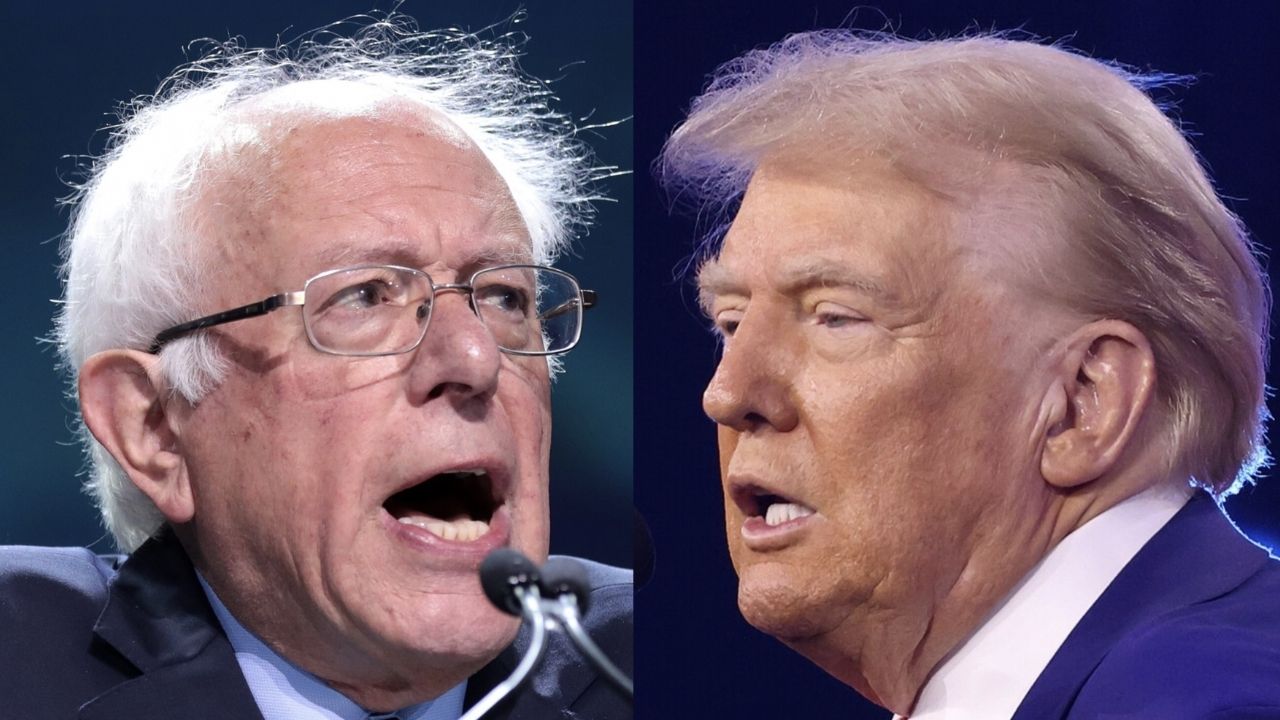
Sen. Bernie Sanders (I-Vt.) on Saturday renewed his condemnation of President Donald Trump’s war against Iran, tying the ongoing conflict directly to a historic spike in gasoline prices over the Labor Day holiday weekend and calling once more for the war to be brought to an immediate end.
In a post on X published at 9:01 a.m. on September 5, 2026, Sanders wrote the following in full:
“Not only has Trump’s illegal and disastrous war in Iran resulted in thousands of casualties, it is wreaking havoc on the economy.
The national average gas price has never been above $4 a gallon on Labor Day Weekend. Today, it’s $4.15.
We must end this war NOW.”
Record Prices at the Pump
Sanders’ post lands as the national average price of gasoline climbs to levels never before recorded this late in the calendar year. According to GasBuddy analyst Patrick De Haan, the national average was projected to reach $4.03 a gallon by Labor Day itself, eclipsing the previous holiday-weekend record of $3.83 per gallon set in 2012. By Thursday, the national average had already climbed to roughly $4.13 a gallon, up nearly a dollar from the same point last year.
Analysts have pointed to the war as the central driver of the increase. Crude oil prices jumped back above $90 a barrel this week after renewed U.S.-Iran military action revived fears of disruptions to global oil supply, while distillate prices, including diesel and heating oil, have also climbed. Concerns over the security of the Strait of Hormuz, through which roughly one-fifth of the world’s oil typically passes, have kept both crude prices and refining margins elevated.
Consumers across the country have described the price increases as unsustainable. Randi O’Brien, a 57-year-old Colorado driver, told Reuters she could now only afford to put $15 of gas in her truck at a time, while Houston resident Madison Moore said she was scaling back Labor Day travel plans altogether because of the cost. Colorado, Utah, Idaho, Montana, Wyoming and North Dakota have recorded some of the steepest price increases since the war began, while California, Hawaii and Washington currently hold the nation’s highest average prices.
A War Sanders Has Opposed From the Outset
Saturday’s post is the latest in a monthslong campaign by Sanders against the war, which began in the early morning hours of February 28, 2026, when Trump announced that the United States and Israel had launched a joint military attack on Iran. Sanders responded that day with a statement declaring that “President Trump, along with his right-wing extremist Israeli ally Benjamin Netanyahu, has begun an illegal, premeditated and unconstitutional war,” adding that “Tragically, Trump is gambling with American lives and treasure to fulfill Netanyahu’s decades-long ambition of dragging the United States into armed conflict with Iran.”
In that same statement, Sanders argued that the Constitution vests the power to declare war solely in Congress, not the presidency, and called for the Senate to immediately reconvene and vote on a pending War Powers Resolution. “The American people were lied to about Vietnam. The American people were lied to about Iraq. The American people are being lied to again today,” Sanders said at the time.
As the conflict widened in the following months, Sanders continued to press the case that the war was both unauthorized and destructive. In a statement addressing U.S. strikes on Iran, he invoked past American military interventions, saying that in the 1960s “the United States government lied to the American people and took us into a terrible war in Vietnam,” a conflict that killed tens of thousands of American troops and millions of Vietnamese civilians. He argued that the same pattern of deception that preceded the Iraq War was repeating itself with Iran.
Legislative Efforts to Cut Off War Funding
Sanders has also worked to translate his opposition into legislative action. He and Senator Peter Welch (D-Vt.) introduced the No War Against Iran Act, which would prohibit the use of federal funds for military operations against Iran absent explicit congressional authorization, with an exception for self-defense under the War Powers Act. The bill was cosponsored by Sens. Elizabeth Warren (D-Mass.), Jeff Merkley (D-Ore.), Chris Van Hollen (D-Md.), Ed Markey (D-Mass.), Tammy Baldwin (D-Wis.) and Tina Smith (D-Minn.).
“Our Founding Fathers entrusted the power of war and peace exclusively to the people’s elected representatives in Congress, and it is imperative that we make clear that the President has no authority to embark on another costly war without explicit authorization by Congress,” Sanders said in introducing the bill. He added that “Another war in the Middle East could cost countless lives, waste trillions more dollars and lead to even more deaths, more conflict, and more displacement.”
Despite that effort, war powers resolutions directing the withdrawal of U.S. forces from the conflict have twice failed in the Senate, both by a 47-53 vote, according to nonpartisan legislative tracking of the measures.
The Mounting Human Toll
Sanders’ reference on Saturday to “thousands of casualties” reflects a toll that has climbed steadily since the war’s opening strikes. Independent tracking of the conflict roughly five weeks after it began found that thirteen U.S. service members had been killed in combat with more than 200 wounded, while Iranian authorities reported at least 2,076 people killed and more than 26,500 wounded inside Iran. Israel reported approximately 25 fatalities and more than 6,400 civilian injuries from Iranian missile and drone strikes during that same period, with additional deaths recorded in Bahrain, Iraq, Kuwait, Oman, Saudi Arabia and the United Arab Emirates.
That same accounting tied the closure of the Strait of Hormuz to a surge in Brent crude prices above $100 a barrel earlier in the conflict and a national average gasoline price that had already pushed past $4 a gallon, with diesel above $5.60 in some markets.
Trump’s Response to Rising Fuel Costs
The president has publicly acknowledged the strain of high fuel prices on American households even as he has defended the war effort. Trump has pledged to bring energy costs down and has in recent weeks criticized oil refiners and fuel retailers, accusing them of profiting from elevated prices at the pump. On August 14, however, Trump told Americans they should be willing to pay a “tiny little bit more” for gasoline to ensure Iran could not obtain a nuclear weapon.
Federal regulators have taken several steps aimed at easing supply pressure, including an extension of the Jones Act waiver to allow easier fuel shipments between U.S. ports and an early end to summer-blend gasoline requirements. Even so, U.S. refinery utilization currently stands at 98%, the highest level since 2018, and U.S. gasoline inventories fell to 205.7 million barrels last week, below the five-year average of 217.6 million barrels for the month of August, according to the U.S. Energy Information Administration.
A Consistent Message Since 2019
Saturday’s post is consistent with a position Sanders has held for years regarding U.S. military engagement with Iran, dating back to his 2020 introduction of an earlier version of the No War Against Iran Act alongside then-Sen. Kamala Harris and Sen. Chuck Schumer. In a co-written op-ed with Rep. Ro Khanna (D-Calif.) published before the current war began, Sanders warned that “a new war against Iran would be far, far worse” than the Iraq War, which he called “the worst foreign policy disaster in modern American history.”
Sanders has framed his opposition not only in constitutional terms but also as a matter of domestic priorities, arguing repeatedly that money spent on the war effort would be better directed toward healthcare, housing and education at home. As gasoline prices climb to their highest recorded levels for the Labor Day holiday and the human toll of the conflict continues to grow, Sanders’ Saturday post signaled that he intends to keep pressing that argument as the war in Iran continues into its seventh month.