
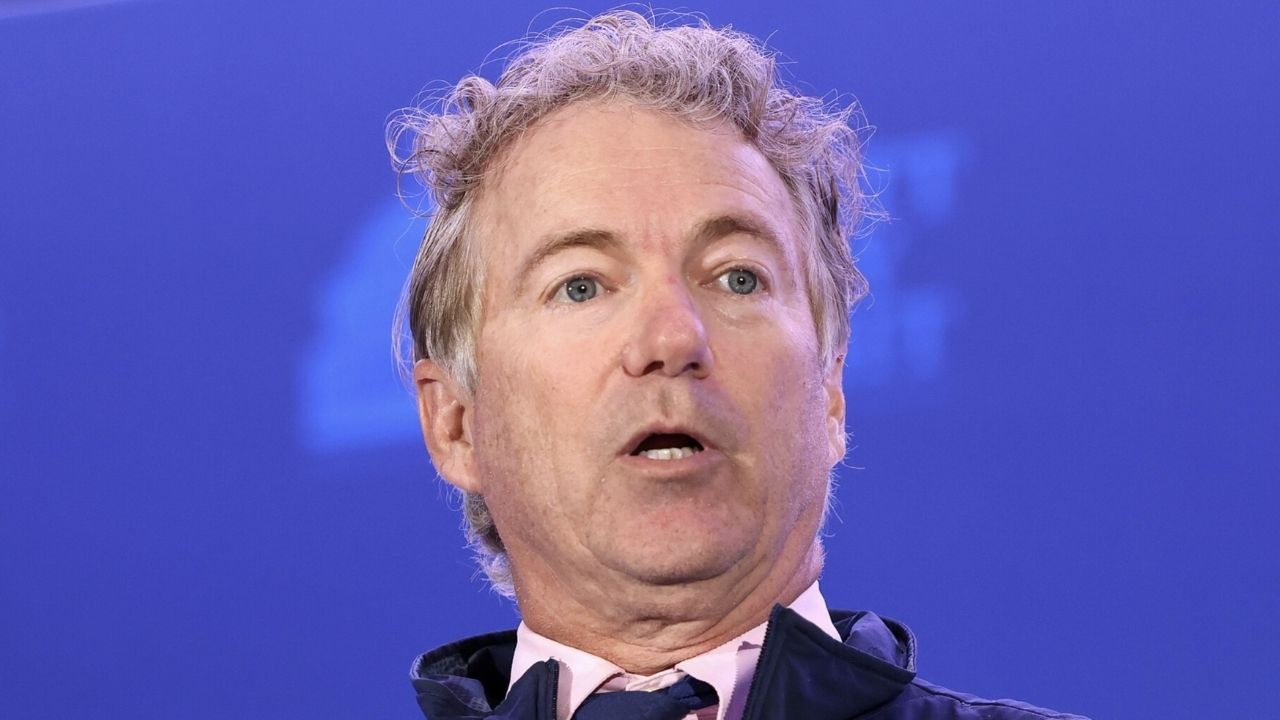
Sen. Rand Paul, R-Ky., renewed his argument that government surveillance undermines rather than protects national security, in a post on X paired with an image reading “Unconstitutional mass surveillance is not ‘safety.'”
Paul: “Despite What Some May Tell You”
“Despite what some may tell you, we are not safe if our right to privacy is not safe,” Paul wrote.
Post Follows Weeks of Criticism of License Plate Camera Network
Paul’s statement continued criticism he raised earlier in August of Flock Safety’s automated license plate reader network, which he said involves roughly 120,000 cameras and more than 5,000 police agencies tracking vehicles nationwide without warrants. Paul has argued that canceling contracts with a single vendor would not solve the underlying problem, since competitors would fill the gap, and has said the real fix is a warrant requirement rather than a “national compromise,” arguing the Fourth Amendment “contains no such language.”
Paul Has Introduced Recurring Legislation to Restrict Warrantless Searches
Paul has repeatedly introduced the Fourth Amendment Restoration and Protection Act, most recently reintroduced in July as S.4998, which would bar the government from using Foreign Intelligence Surveillance Act authorities or Executive Order 12333 to search for or use Americans’ communications without a traditional court warrant based on probable cause. According to his Senate office’s announcement of an earlier version of the bill, the legislation preserves the government’s authority to target foreign nationals and terrorism suspects abroad while requiring ordinary judicial warrants before Americans’ incidentally collected communications can be searched.
Bill Targets Practice Known as “Backdoor Searches”
The legislation addresses Section 702 of FISA, which allows the government to target non-U.S. persons overseas for foreign intelligence without individual warrants. Americans’ communications are sometimes incidentally collected during that process and can later be searched by agencies including the FBI, a practice privacy advocates call “backdoor searches” because it allows warrantless access to Americans’ communications gathered under a law meant to target foreigners. Between 2020 and early 2022, FBI personnel conducted more than 278,000 searches of Section 702 databases that did not meet legal standards, according to Justice Department findings that helped drive the reforms Congress ultimately adopted. A federal court in New York separately ruled that FBI searches of Section 702 data constitute a distinct search under the Fourth Amendment, a decision that prompted the Justice Department’s inspector general to open the review of FBI querying practices published in October 2025.
Official Government Reports Show Search Numbers Fluctuating
The Office of the Director of National Intelligence’s most recent Annual Statistical Transparency Report, covering calendar year 2025, found FBI queries involving U.S. persons increased slightly from the prior year but remained below historical levels, which ODNI attributed to strengthened technical and policy controls following surveillance reforms.
DOJ Watchdog Found FBI Made Progress, but Flagged Continued Gaps
A Justice Department Office of Inspector General report released Oct. 2, 2025 found the FBI had implemented all of the querying reforms required under RISAA and had made progress reducing the number of U.S. person queries found to be noncompliant with court-approved procedures, but said continued internal and external oversight remained critical. A separate analysis by the Brennan Center for Justice, examining FBI reporting metrics tied to the same reform period, noted the bureau’s published query totals — 5,518 in 2024 and 7,413 in 2025, both far below historical levels — should be read cautiously, since a change in the FBI’s counting methodology made those figures not directly comparable to prior years’ numbers.
Congress Passed Reform Bill Short of the Warrant Requirement Paul Sought
Rather than the warrant requirement Paul and other reformers pushed for, Congress in 2024 passed the Reforming Intelligence and Securing America Act, which codified procedural safeguards such as requiring supervisory approval for certain FBI queries, without requiring a traditional court warrant before searching for Americans’ communications.
Paul Has Also Criticized Use of Secret FISA Court Procedures
Paul has separately written that intelligence agencies used FISA-related authorities to examine lawmakers’ own communications as part of an investigation known as “Arctic Frost,” arguing in a Senate website op-ed that the episode illustrated the need to constrain surveillance authorities ahead of Section 702’s next reauthorization deadline.
Paul’s Privacy Advocacy Dates to Post-Snowden Era
Paul’s record on surveillance issues extends back more than a decade, including a 2014 lawsuit against the National Security Agency over bulk telephone metadata collection revealed by Edward Snowden and opposition to reauthorizations of certain Patriot Act surveillance provisions.
Paul Chairs Senate Committee With Jurisdiction Over Domestic Surveillance Policy
Paul currently chairs the Senate Homeland Security and Governmental Affairs Committee, a position that has given him a formal platform to investigate federal surveillance programs, including releasing internal FBI records earlier this year detailing what he described as prolonged, unwarranted surveillance of a private citizen based on an uncorroborated tip.
FISA Section 702 Faces Future Reauthorization Deadline
Section 702, last reauthorized through the Reforming Intelligence and Securing America Act, remains a recurring flashpoint in Congress, with Paul among a bipartisan group of lawmakers who have pushed for stronger warrant protections in future reauthorization debates.