
Military history rarely turns on a single “decisive” moment. The most dramatic comebacks are usually extended reversals: a force absorbs an early shock, adapts faster than the enemy expects, rebuilds combat power, and steadily converts resilience into operational momentum—sometimes all the way to strategic success. The drivers are typically unglamorous: mobilization, logistics, intelligence, command reform, and coalition cohesion.
The examples below are widely discussed comeback campaigns across eras. They are not morally equivalent stories, and they don’t all end in total victory. What links them is the same problem set: how an institution recovers after surprise, defeat, or a major strategic disadvantage—and what makes that recovery possible.
The Pacific turnaround after early Japanese advances (World War II)
In the opening phase of the Pacific War, Japan seized the initiative with rapid advances and a series of shocks that left the United States and its partners scrambling. The comeback that followed is best understood as a shift in the character of the campaign rather than a single-battle redemption: a sustained naval-air fight across long distances, supported by increasingly reliable logistics and an industrial base that could replace losses and keep pressure on.
In plain terms, the turnaround depended on sustaining combat power at scale. Carrier aviation mattered, but so did the less visible systems that kept it operating: repair capacity, replacement pipelines, and the ability to move fuel, munitions, and spare parts across the Pacific. The modern lesson isn’t that history repeats neatly; it’s that endurance is built as much in depots and shipyards as it is at the point of contact.
The Soviet recovery after 1941 (World War II)
Few reversals are as stark as the Soviet Union’s survival and recovery after the 1941 onslaught. Early losses and operational dislocation threatened the state itself, yet over time the Red Army regained the initiative and pushed west. This was not a quick “snap back.” It was a grinding process of rebuilding formations, absorbing lessons, and sustaining large-scale mobilization under extreme strain.
The strategic consequence was a shift toward a contest of regeneration and operational learning: adapting command arrangements, improving the integration of arms, and finding ways to keep fielding forces despite catastrophic disruption. The caution for present-day readers matters too. Today’s environment—dense sensors, precision strike, and nuclear deterrence—changes what strategic depth, mobilization, and recovery can look like, and it can compress the time available to rebuild.
Allied rebound after early setbacks in North Africa (World War II)
North Africa is a classic example of a coalition learning curve. Allied forces took painful early setbacks, then improved—incrementally but decisively—their ability to coordinate armor, artillery, infantry, and airpower while tightening sustainment across harsh lines of communication. Over time, the campaign became less about isolated engagements and more about controlling tempo, ensuring supply, and making combined command work in practice.
This is where comebacks often succeed or fail: coordination. Reversals are easier to attempt than to execute if partners can’t align plans, share information, and reduce friction in command relationships. The changes that enable recovery are often institutional—training, doctrine, staff work, and leadership adjustments that don’t look dramatic in the moment but show up months later as more consistent operational performance.
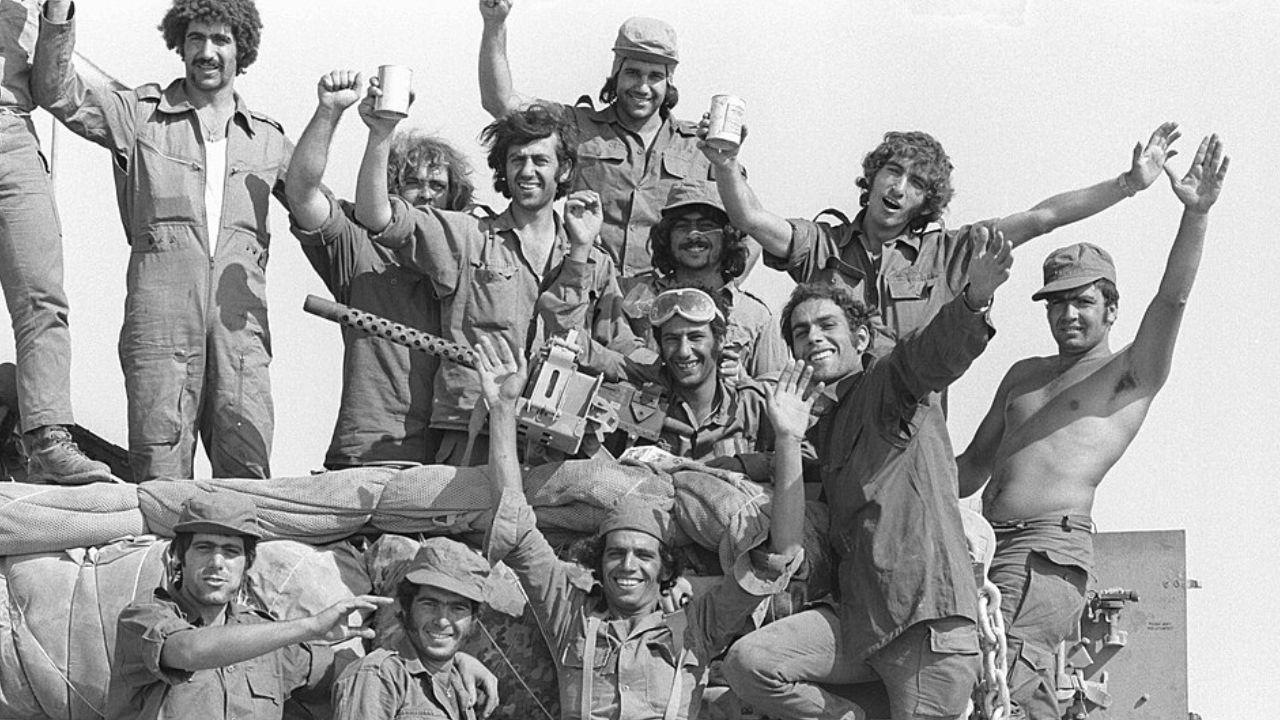
Israel’s recovery in the 1973 Yom Kippur War
The Yom Kippur War is frequently cited because the initial surprise and early setbacks were severe and politically consequential. Israel’s recovery hinged on rapid mobilization, battlefield adaptation, and the ability to reconstitute combat power under intense pressure. It also highlights an important definition issue: a “comeback” can mean political survival and restored deterrence, not just a clean battlefield narrative.
The takeaway is less about any single maneuver than about readiness in the broad sense—how quickly a force can generate mass, replace losses, and restore command coherence after a shock. It also underscores a practical reality: high-tempo combined-arms combat consumes munitions, spares, and trained crews faster than peacetime assumptions often anticipate. In modern planning, that translates into hard questions about stockpiles, maintenance capacity, and how quickly mobilization systems can actually deliver usable combat power.
Ukraine’s 2022 defense of Kyiv (modern example, with caveats)
Modern conflicts invite “comeback” framing, but they require extra caution. Ukraine’s 2022 defense of Kyiv is often discussed as a dramatic reversal of expectations after a major attack and early strategic disadvantage. Whether it qualifies as a comeback depends on the definition—battlefield momentum, the broader war’s trajectory, or political survival.
What can be said carefully is that adaptation and cohesion can matter as much as prewar force comparisons. Public reporting has emphasized distributed defense, rapid learning cycles, and external support, alongside a battlefield shaped by drones, pervasive observation, and precision strike. A defensible lesson is that resilience now includes operating under constant surveillance and strike threat while managing air defense coverage, stockpiles, and repair capacity in real time.
A recurring pattern: intelligence, deception, and the “hidden” comeback engine
Many comeback narratives feature intelligence and deception—best treated as accelerants rather than magic keys. Cryptanalysis, reconnaissance, and operational deception can help conserve scarce combat power, avoid enemy strengths, and set conditions for favorable engagements, but they rarely guarantee outcomes by themselves. Because parts of intelligence history can be disputed or remain sensitive, it’s more accurate to view intelligence as an enabling layer within a broader recovery.
The more consistent “hidden engine” is logistics and industrial capacity. A comeback requires replacements, ammunition, fuel, repair parts, trained personnel, and the transportation networks to move them. In readiness terms, the prewar investments—surge production options, depots, maintenance throughput, and skilled labor—often determine whether a setback becomes a collapse or a costly phase the force can survive and reverse.
What these comebacks have in common—and what they don’t
Across eras, the shared DNA is adaptation under pressure. Forces that recover tend to shorten learning cycles, fix command arrangements that aren’t working, and align operational ambition with what their sustainment system can actually support. They also tend to benefit from alliances or external support, because regeneration is hard to do quickly in isolation.
What they don’t share is a universal formula. Some reversals are operational (regaining initiative in a theater), others are strategic (changing the likely outcome of a war), and some are primarily political (preventing state failure). That distinction matters: a modern “comeback” may look like sustaining sovereignty and a functioning state under missile and drone attack—not an armored breakout that resembles mid-20th-century campaigns.
Why it matters now: preparedness, stockpiles, and realistic expectations
Comeback stories are attractive in today’s deterrence and defense debates because they suggest early losses can be overcome. The risk is forcing direct analogies from industrial-era wars onto a battlefield shaped by precision strike, drone-enabled targeting, and highly visible supply chains. Modern forces may have less time to regenerate if key logistics nodes and bases are easier to find and hit.
That shifts attention to the unglamorous metrics: munitions depth, air and missile defense capacity, spare parts, trained maintainers, and realistic paths to surge production. It also elevates civil-military cohesion and governance, because comebacks depend on political legitimacy and societal endurance as much as tactical skill. History’s sober promise is not that reversals are easy—it’s that they are possible, but usually purchased with preparation made long before the shooting starts.