
“Elite” is one of the most overused words in defense—and one of the hardest to define. The world’s top special operations forces (SOF) are shaped less by mystique than by mission access: the ability to respond quickly, operate with a low signature, and produce strategic effects with small teams. What separates the best-known units isn’t just individual toughness; it’s how their governments select them, train them, resource them, and authorize them for high-risk tasks.
That distinction matters now because SOF sit at the center of competition below the threshold of major war. After two decades dominated by post‑9/11 counterterrorism, many countries are recalibrating toward great‑power competition—while still being pulled back to hostage crises, maritime interdictions, and counterterrorism missions. The Ukraine/Russia war has also reinforced a hard reality: with drones, ISR, electronic warfare (EW), and air defenses reshaping the battlefield, “elite” increasingly means “able to operate effectively when detection is likely.”
What makes a unit “elite” (and why ranking them is a trap)
There is no objective scoreboard for “best SOF.” Much of what matters—readiness, intelligence integration, mission rehearsal, sustainment, and political authorization—rarely appears in public. Secrecy and national messaging further distort comparisons, and countries build SOF for different needs: expeditionary raids, homeland counterterrorism, maritime operations, special reconnaissance, or partner training.
In practice, “elite” status often reflects mission set, resourcing, and authorities as much as individual skill. Some formations are optimized for direct action and hostage rescue; others specialize in reconnaissance, combat diving, or foreign internal defense (training and supporting partners). Even within the same country, units can be “top tier” for different reasons—one may be resourced for the most sensitive missions, while another may lead in a niche domain such as maritime operations.
The core mission sets: why governments rely on SOF
Modern SOF are built for high leverage with small footprints. Common mission sets include counterterrorism, hostage rescue, special reconnaissance, direct action raids, and building partner capacity. Governments also use SOF for crisis response and deterrence signaling—quietly positioning capability without the visibility of major conventional deployments.
That low-signature value makes SOF prominent in grey-zone competition. When leaders want options short of major war—tight timelines, political sensitivity, or limited exposure—SOF are often the tool of choice. The strategic consequence is straightforward: small teams can create effects (or prevent disasters) that would otherwise demand larger, more conspicuous forces.
How top units are organized: why headquarters and enablers matter
Organization shapes what a unit can realistically do. In the United States, SOF sit under U.S. Special Operations Command (SOCOM), and the most sensitive missions are often associated in public reporting with Joint Special Operations Command (JSOC) elements such as Delta Force and DEVGRU. The key point is not the acronym—it’s the system around the operators: aviation, intelligence, logistics, and authorities that enable rapid tasking and global response.
Other countries mirror this logic. The United Kingdom’s special operations community is commonly framed under UKSF, with the SAS and SBS as the most recognized names. France organizes SOF under Commandement des opérations spéciales (COS), with units often cited in public discussion including 1er RPIMa and CPA 10. Germany’s KSK and Poland’s GROM are frequently referenced in European SOF conversations, while Australia’s SASR is a common benchmark in the Indo‑Pacific context.
Israel’s special operations ecosystem is widely discussed through “Sayeret” units. Russia’s “Spetsnaz” is also often mentioned, but comparisons are complicated by opacity and the difficulty of separating reputation from verified performance. Labels alone don’t establish elite status; what matters is how the state trains, equips, and authorizes forces for the hardest missions—and whether those forces can sustain readiness over time.
Selection and training: attrition as a screening tool
Across leading SOF, selection is designed to identify judgment under stress as much as physical capability. Pipelines typically combine fitness standards, psychological screening, peer evaluation, and extended field problems that punish poor decisions and unreliable teamwork. High attrition is expected: these units need people who can operate independently, communicate clearly, and still mesh tightly within small teams.
Culture is part of the advantage. The most capable units tend to enforce blunt feedback, high standards, and constant rehearsal, because hostage rescue and precision raids leave little room for error. Interoperability matters as well. The ability to plug into joint task forces and work smoothly with intelligence, aviation, and partner units often separates a strong national capability from one that can scale effects in coalition operations.
Gear isn’t the magic—systems integration is
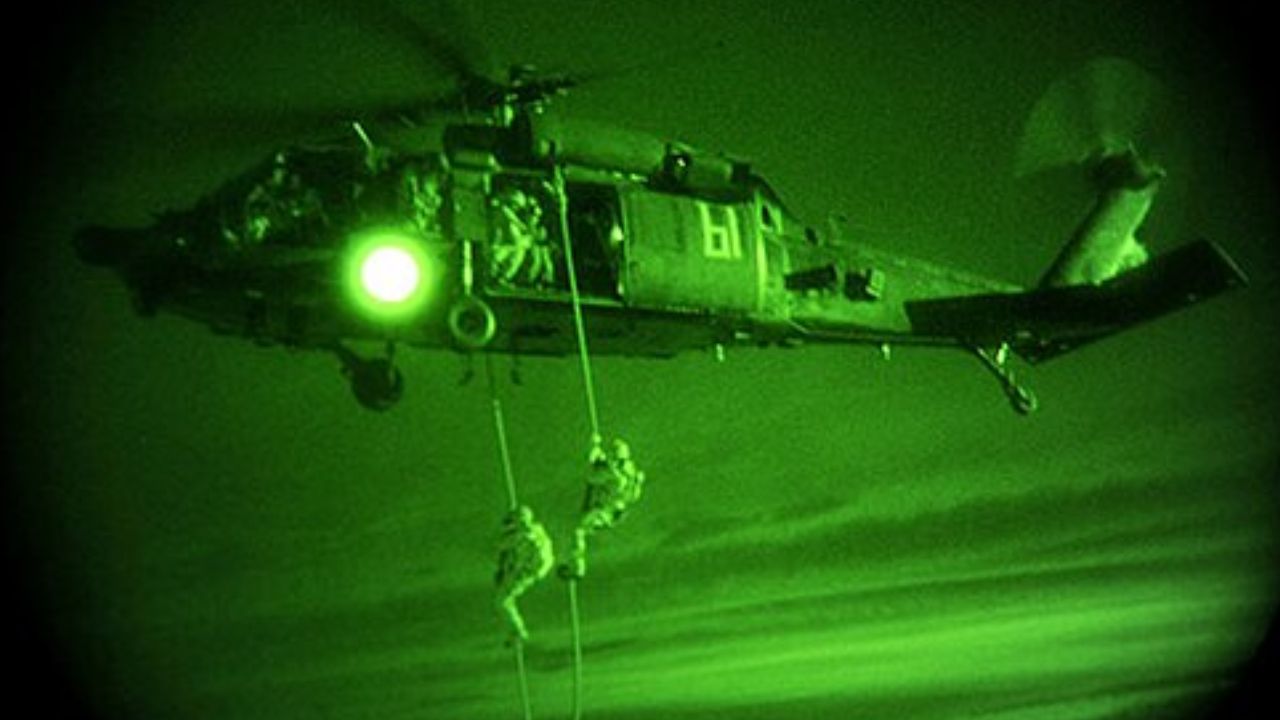
Popular culture fixates on weapons, but elite capability is more about integration than any single rifle. Broad, publicly understood categories include suppressed carbines and precision rifles, night vision and thermal optics, secure communications, breaching tools, and specialized mobility for air, ground, and maritime insertion. Depending on mission and geography, rotary-wing insertion, fast-rope techniques, and combat diving are common elements of top-end training.
What has changed is the surrounding technology environment. Small UAVs, loitering munitions, cyber and EW support, and precision ISR are reshaping how SOF find targets, manage risk, and coordinate effects—while adversaries are doing the same. “Quiet professionalism” now extends beyond physical stealth to emissions discipline and digital footprints, because being electronically conspicuous can be as dangerous as being visually exposed.
Post‑9/11 legacy vs. today’s demands
Many of the world’s most capable SOF matured operationally in the post‑9/11 counterterrorism era. That period rewarded persistent targeting, rapid raids, and close fusion between operators and intelligence. It also built institutional habits around rapid deployment, sustaining small teams forward, and maintaining high-tempo readiness cycles.
Today’s environment broadens the portfolio. Great‑power competition pushes SOF toward reconnaissance in more contested spaces, partner enablement, and helping conventional forces adapt to drones, EW, and long‑range precision threats. Counterterrorism and hostage rescue have not disappeared—especially in parts of the Middle East—but they now compete with missions where simply reaching the objective safely can be the defining challenge.
Ukraine’s lessons: performing under ISR saturation
The Ukraine/Russia war has underscored how transparent and electronically contested modern battlefields can be. Drones, pervasive ISR, and EW make traditional assumptions—about surprise, communications, and helicopter access—harder to rely on. For SOF, that doesn’t remove direct action from the menu; it raises the standard for planning, deception, and coordination with wider joint effects.
It also highlights the less glamorous side of readiness. Units that train heavily with small drones, specialized communications, and precision ISR burn through equipment and need robust sustainment to stay ready. As capabilities proliferate, “elite” becomes partly an adaptation question: who can adopt tools quickly, train them into tactics, and sustain them without breaking the force.
Maritime chokepoints, ship-boarding, and crisis response
SOF remain attractive for maritime security and ship-boarding operations in chokepoints, where speed, control, and escalation management matter. Maritime-focused units—often associated in public discussion with forces like the UK’s SBS or comparable national capabilities—train for complex boarding, close-quarters control, and operations in difficult conditions. These missions demand specialized mobility, diving competencies, and reliable command-and-control.
Hostage scenarios and urban counterterrorism missions continue to drive the highest-end assault and breaching skills. Even as states pivot toward broader strategic competition, a single hostage crisis can dominate headlines and decision-making overnight. That persistent demand keeps assault elements on short readiness cycles, with heavy emphasis on rehearsal and rapid deployment.
Myths, oversight, and the uncomfortable parts of “elite”
Two myths deserve retirement. First: “Tier 1” is not a universal, formal category across countries; it’s a loose public shorthand that often obscures how different systems are organized. Second: elite units are not solely “kinetic.” Their effectiveness frequently depends on intelligence support, aviation, diplomacy, partner networks, and the ability to operate within political constraints.
There is also unavoidable nuance around oversight and rules of engagement, which vary by country. Some SOF communities have faced allegations of misconduct in different theaters, and these controversies matter because legitimacy is an operational enabler: partner trust, basing access, and political authorization can erode quickly. “Elite” branding can support recruitment and domestic messaging, but professional credibility is sustained by standards, accountability, and restraint as much as battlefield performance.
What changes next: a tougher definition of readiness
Going forward, the most capable SOF will be those that can deliver rapid crisis response while operating in contested sensing environments. That means more emphasis on counter‑ISR tradecraft, EW awareness, communications discipline, and integrating small drones and precision ISR without becoming predictable or electronically loud. It also means deeper interoperability, because in real missions SOF rarely succeed alone.
The net effect is that “elite” will look less like a highlight reel and more like a system: selection that finds mature decision-makers, training that builds adaptable teams, equipment that is integrated rather than exotic, and organizations that keep forces ready without burning them out. In a world where adversaries can watch, jam, and strike quickly, the truly elite will be the units that can still get in, get out, and achieve strategic effects—reliably and under pressure.