
Commercial aviation’s safety record is usually told as a story of civil regulation, airline operating discipline, and hard lessons from accident investigations. That’s accurate—but it leaves out a quieter contributor: military flight testing and the certification culture that grows around it. Military programs often push aircraft into harsher corners of the envelope, instrument them heavily, test components to failure, and document how and why systems break. Over time, that mindset and infrastructure can shape the broader aerospace ecosystem that also designs and certifies commercial airliners.
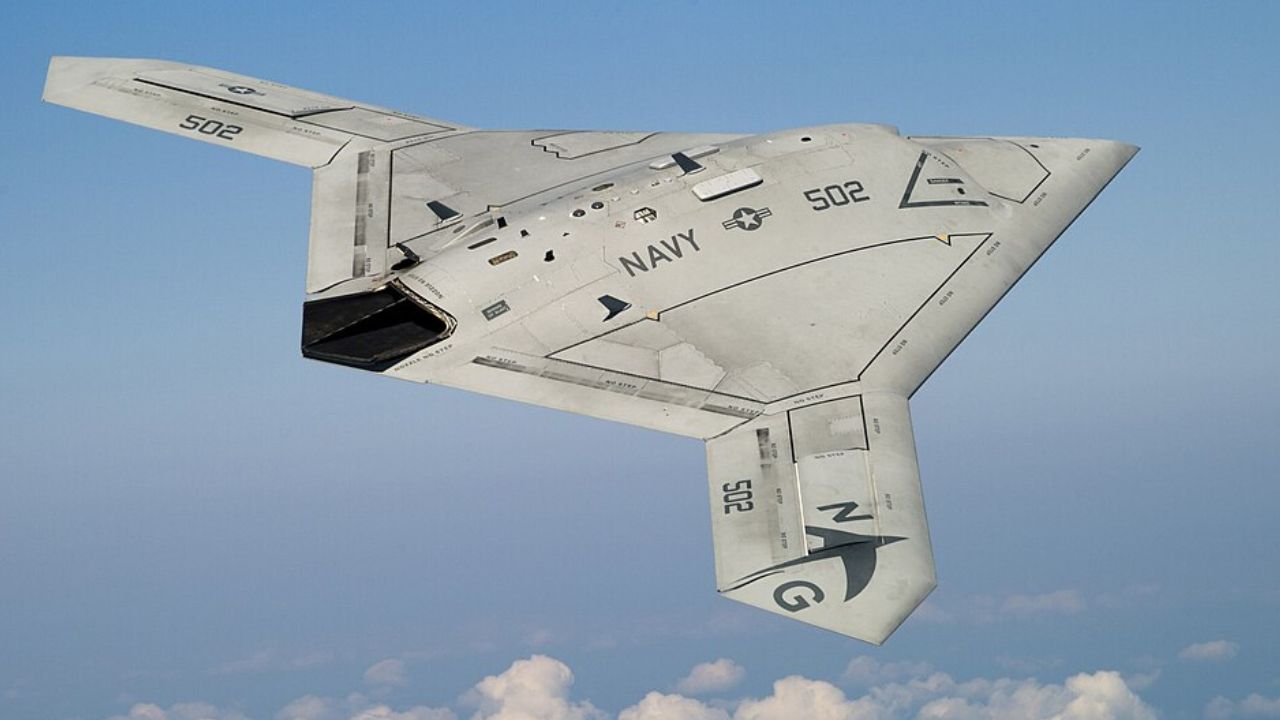
This defense-to-commercial transfer isn’t a single breakthrough that “made airliners safe.” It’s a gradual migration of methods, test tooling, and engineering habits—fatigue and damage-tolerance thinking, redundancy and fault containment, ingestion resistance, icing and weather test techniques, inspection regimes, and human-factors approaches that influence cockpit alerting and crew procedures. The practical outcome is that some practices developed to keep military aircraft survivable and available also helped make airliners more tolerant of real-world hazards: wear, weather, maintenance variability, and rare-but-severe failures. Pictured above: X-47B-BuNo-168064 call sign ‘Salty-Dog-502’ conducts a test flight from NAS Patuxent River (U.S. Navy)
The core mechanism: demanding missions force earlier answers
Military aircraft are routinely asked to operate in ways that stress structures and systems: higher maneuver loads, rough-field operations, repeated high-power cycles, and mission profiles where failures may occur far from immediate support. That operational pressure rewards a “prove it” approach—verify assumptions, instrument heavily, expand the envelope carefully, find the weak points, redesign, and retest. The techniques and data that come from that work can inform how manufacturers and regulators think about margins, failure modes, and how to demonstrate safety.
Just as important is where that work happens. Military investment supports test ranges, telemetry, specialized labs, and a workforce practiced at validating complex systems under stress. In the United States, that ecosystem includes the U.S. Air Force and U.S. Navy, NASA aeronautics research, and the FAA, alongside major manufacturers. Europe has parallel networks through NATO countries and civil regulators such as EASA, with many of the same large OEMs and engine makers operating across both defense and commercial programs.
Fatigue and damage tolerance: designing for cracks, not perfection
One of the clearest crossovers is structural integrity work centered on fatigue and damage tolerance. Military testing and operational experience treat cracks, corrosion, and manufacturing variability as realities, not edge cases—especially when aircraft are flown hard and kept in service for long periods. That drives design approaches that assume damage can exist and still require safe operation for a defined time until detection and repair.
In commercial service, the same philosophy supports safety by tying design to inspection planning. If a structure is intended to be fail-safe or damage-tolerant, it can better handle the unexpected—an undetected crack, a missed inspection interval, or an off-nominal load event—without immediately becoming catastrophic. This doesn’t replace civil regulation or airline maintenance discipline; it strengthens them by making inspection targets clearer and adding margin when reality deviates from the ideal.
Redundancy and fail-safe thinking: keeping control when things break
Combat and operational demands make resilience a design priority. Multiple hydraulic paths, segregated electrical power, and “keep flying after failures” logic are common themes in military requirements, where harsh conditions and damage are part of the planning assumptions. Over time, the engineering discipline behind that resilience can influence how commercial aircraft architects think about separation, fault containment, and preventing one failure from cascading into many.
The transfer isn’t a simple one-to-one story. Civil standards and economics shape what’s practical, and redundancy can add weight, cost, and maintenance burden. But the habit of proving behavior under failure—through a mix of test, analysis, and tight configuration control—raises the baseline for how the industry evaluates worst cases and verifies that protections work as intended.
Bird and foreign-object ingestion: designing for ugly surprises
Bird strikes and foreign-object damage are universal problems, but military operations can magnify them through higher speeds at low altitude, dispersed bases, and more variable field conditions. That creates strong incentives to test and qualify for ingestion events and for the secondary effects that follow: vibration, degraded thrust, and damage that can challenge containment and control. Engine makers that serve both markets—GE, Pratt & Whitney, Rolls-Royce, and Safran—operate in a world where test methods and materials knowledge developed for one set of customers can inform work for the other.
For airliners, the benefit is less about a single “military-derived” part and more about the maturation of test practices and design margins: how blades and cases respond to impacts, how engines handle debris, and how aircraft systems detect and manage abnormal engine states. It also includes the instrumentation and analysis toolchain—high-rate data collection and disciplined post-test teardown—that helps engineers find weak links before they appear in airline operations.
Icing and weather: expanding the tested reality
Weather is a systems problem: aerodynamics, propulsion, sensors, and human performance are stressed at the same time. Military flight testing has long had reasons to operate in difficult conditions, and that pressure supports research and testing on icing behavior and operations in degraded visibility and turbulence. NASA’s aeronautics research role fits into this broader ecosystem, working alongside military and civil communities that translate findings into models, guidance, and test techniques.
Commercial certification has its own stringent requirements and dedicated test campaigns. Still, methods refined under defense-driven urgency—how to characterize icing shapes, how to evaluate system performance, and how to collect repeatable data—can shorten the learning curve. The safety payoff is not that aircraft “beat the weather,” but that designers, regulators, and operators better understand the edge cases: sensor anomalies, performance losses, and handling changes that can surprise crews if they are not anticipated in design and training.
Materials and inspection: turning maintenance into a safety system
Military fleets live and die by readiness: the ability to generate sorties today, not just hit long-term availability targets. That emphasis pushes advances in structural inspection methods, non-destructive evaluation, and maintenance planning—because you can’t fix what you can’t find, and you can’t sustain what you can’t measure. Over time, those practices can inform airline maintenance programs and manufacturer guidance, reinforcing the idea that inspection is an engineered system, not merely a checklist.
For civil operators, the payoff can be clearer inspection intervals, better understanding of crack growth, and more effective ways to detect hidden damage. It can also support more disciplined decisions about when to repair or replace parts based on condition and data. Those benefits, however, depend on execution: tooling, training, and consistent adherence to the program are what turn good inspection design into real-world safety.
Human factors and warning philosophy: making the cockpit manageable
High-performance military aircraft place intense cognitive demands on crews, especially in abnormal situations where time is compressed and workload spikes. That pressure has historically driven attention to human factors: how warnings are prioritized, how procedures are written, and how the cockpit communicates what matters now versus what can wait. Those ideas can migrate into civil thinking about alerting philosophy, training emphasis, and how to manage workload when systems misbehave.
This is also where simple narratives can mislead. Automation and advanced flight controls—including fly-by-wire in some contexts—can reduce workload and improve handling, but safety outcomes depend on implementation, training, and certification discipline. The durable contribution of military test culture is its willingness to hunt for “gotchas”: confusing alerts, ambiguous indications, and mode behaviors that only appear in unusual combinations.
Why it matters strategically: test infrastructure as national safety capital
This crossover has consequences beyond technical curiosity. Defense R&D spending and test infrastructure function as national aerospace capital: ranges, labs, instrumentation expertise, and a workforce trained to validate complex systems under stress. When manufacturers such as Boeing, Airbus, Lockheed Martin, Northrop Grumman, and BAE Systems operate across defense and civil portfolios, practices and people can move as well, carrying lessons between domains without implying a direct lineage for any single commercial feature.
There is also an export and credibility angle. A country’s ability to design, test, and certify aircraft—military or civil—signals industrial competence and shapes partnerships and supply chains. In plain terms: the better a nation is at proving aircraft are safe and reliable under demanding conditions, the stronger its aerospace sector can be, and the more resilient its air transport system tends to become.
What changes next: transfer is less about gadgets, more about rigor
The next phase of safety gains is likely to come less from a dramatic “dual-use” widget and more from expanding verification practices: higher-fidelity simulation tied to flight-test instrumentation, improved anomaly detection, and stronger qualification culture for increasingly software-defined aircraft. Military test communities are accustomed to dense telemetry, aggressive but structured envelope expansion, and disciplined configuration control—habits that can help civil programs manage complexity when applied thoughtfully.
It’s still important to keep the balance sheet honest. Commercial aviation became safe through layered defenses: regulation, standard operating procedures, manufacturing quality, airline safety management, and the investigative work that turns accidents into requirements. Military flight testing helped—by pushing limits early, funding infrastructure, and normalizing a relentless focus on failure modes—but it remains one contributor within a broader system that has to work together to keep passengers safe.