
Exploring the cosmos has been one of humanity’s most ambitious endeavors, with numerous spacecraft launched to study the vast universe beyond our home planet. These missions have provided invaluable insights into our solar system and beyond, revealing secrets of distant planets, moons, and galaxies. Here are seven remarkable spacecraft that have ventured beyond Earth’s battlefield, contributing to our understanding of the cosmos.
Voyager 1

Launched in 1977, Voyager 1 has become one of the most iconic spacecraft in history. It was designed to take advantage of a rare planetary alignment, allowing it to explore Jupiter and Saturn in detail. After its successful flybys, Voyager 1 continued its journey, eventually becoming the first human-made object to enter interstellar space in 2012. Its instruments continue to send valuable data back to Earth, offering insights into the heliosphere and the space beyond our solar system.
Voyager 1 is equipped with a variety of scientific instruments, including cameras, magnetometers, and cosmic ray detectors. Its mission has been extended multiple times, and it continues to operate, providing critical data that helps scientists understand the environment of interstellar space. This spacecraft has truly pushed the boundaries of human exploration, traveling further from Earth than any other human-made object.
Voyager 2
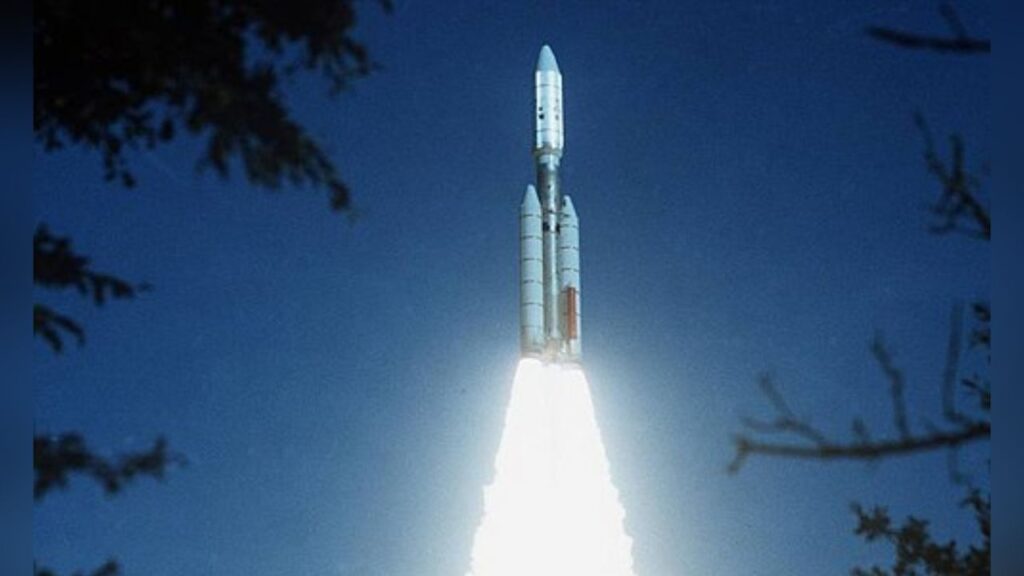
Voyager 2, a twin to Voyager 1, was also launched in 1977 and has contributed immensely to our understanding of the outer planets. Unlike its sibling, Voyager 2 had the unique opportunity to conduct flybys of Uranus and Neptune, providing humanity with the first close-up images and data of these distant worlds. This mission expanded our knowledge of the solar system’s outer planets and their moons.
Voyager 2 is now traveling through the heliosheath, the outermost layer of the heliosphere, like Voyager 1. Despite being launched over four decades ago, it continues to send back data, outperforming its expected lifespan. The data collected by Voyager 2 has helped scientists study the magnetic fields and atmospheres of the outer planets, enriching our understanding of the solar system.
Hubble Space Telescope

The Hubble Space Telescope, launched in 1990, has transformed our view of the universe. Unlike other spacecraft that visit specific celestial bodies, Hubble orbits Earth, providing a continuous stream of high-resolution images of galaxies, nebulae, and distant stars. Its observations have led to groundbreaking discoveries, such as the accelerated expansion of the universe and the presence of exoplanets.
Hubble’s instruments have been upgraded several times through servicing missions conducted by Space Shuttle astronauts. It has captured stunning images that have not only advanced scientific understanding but also inspired the public’s imagination. Hubble’s contributions to astronomy are unparalleled, making it one of the most important scientific instruments ever created.
Cassini-Huygens

The Cassini-Huygens mission, a collaboration between NASA, the European Space Agency, and the Italian Space Agency, was launched in 1997 to study Saturn and its complex system of rings and moons. Cassini orbited Saturn for over 13 years, providing detailed data and breathtaking images of the planet and its moons, such as Titan and Enceladus.
The Huygens probe, which was part of the mission, successfully landed on Titan, making it the first spacecraft to touch down on a moon in the outer solar system. Cassini’s discoveries, including the presence of subsurface oceans on Enceladus and methane lakes on Titan, have raised intriguing questions about the potential for life beyond Earth. The mission concluded in 2017 with a dramatic plunge into Saturn’s atmosphere.
New Horizons

New Horizons made history in 2015 with its flyby of Pluto, revealing the dwarf planet’s surface features and atmosphere in unprecedented detail. Launched in 2006, the spacecraft’s primary mission was to explore Pluto and its moons, but it has since continued its journey into the Kuiper Belt, a region of icy bodies beyond Neptune.
After its successful Pluto encounter, New Horizons conducted a flyby of the Kuiper Belt object Arrokoth in 2019, providing insights into the early solar system. The mission continues to send back data from the outer reaches of our solar system, expanding our knowledge of these distant, icy worlds and the processes that shaped them.
Juno

NASA’s Juno spacecraft, launched in 2011, is currently orbiting Jupiter, studying the gas giant’s atmosphere, magnetic field, and auroras. Juno’s mission is to understand the planet’s origin and evolution, offering clues about the formation of the solar system. The spacecraft’s unique polar orbit allows it to capture stunning images of Jupiter’s poles and swirling cloud formations.
Juno’s data have revealed insights into Jupiter’s complex weather systems, deep atmospheric phenomena, and its massive magnetic field. By examining the planet’s composition and gravitational field, Juno helps scientists understand the internal structure of Jupiter, providing a window into the processes that govern gas giant planets.
James Webb Space Telescope

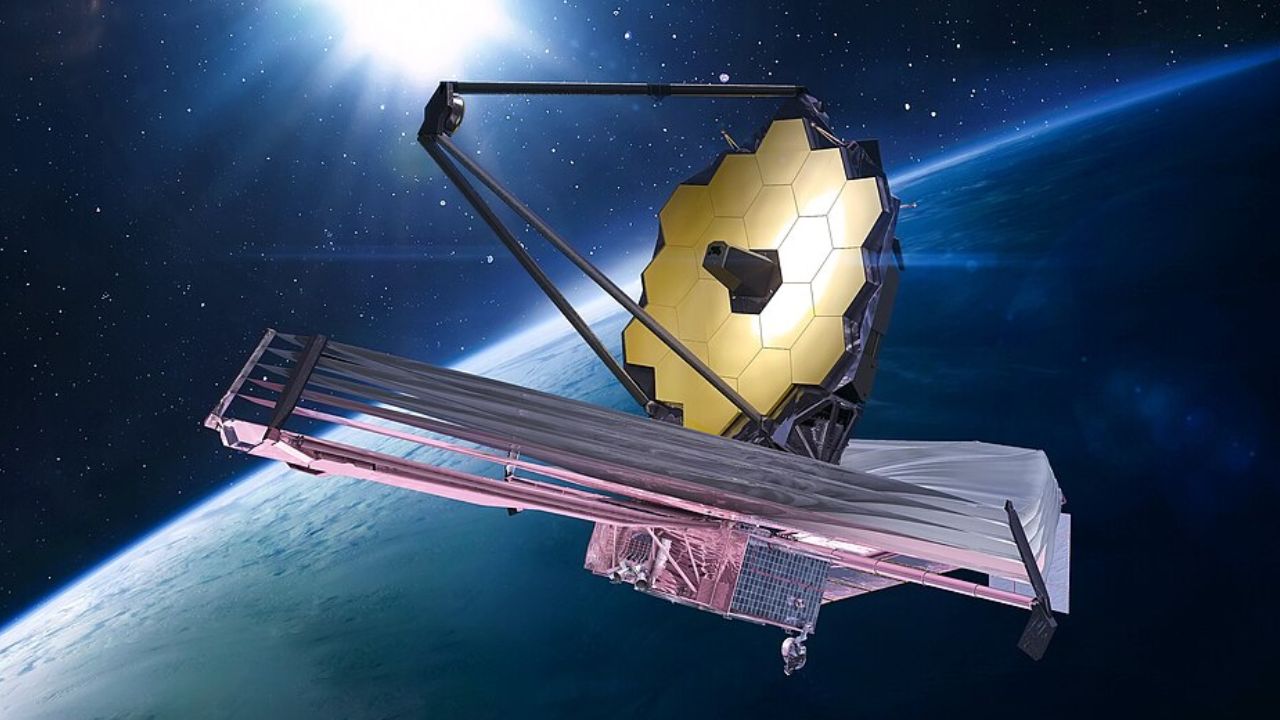
The James Webb Space Telescope (JWST), launched in 2021, is poised to become the premier observatory of the next decade, succeeding the Hubble Space Telescope. Positioned at the second Lagrange point (L2), JWST is designed to observe the universe in infrared light, allowing it to see through dust clouds and study the formation of stars and galaxies.
JWST’s advanced instruments are expected to uncover the origins of the universe, study the atmospheres of exoplanets, and search for signs of life beyond Earth. With its ability to peer deeper into space and time than any previous telescope, JWST promises to revolutionize our understanding of the cosmos, building on the legacy of its predecessors.