
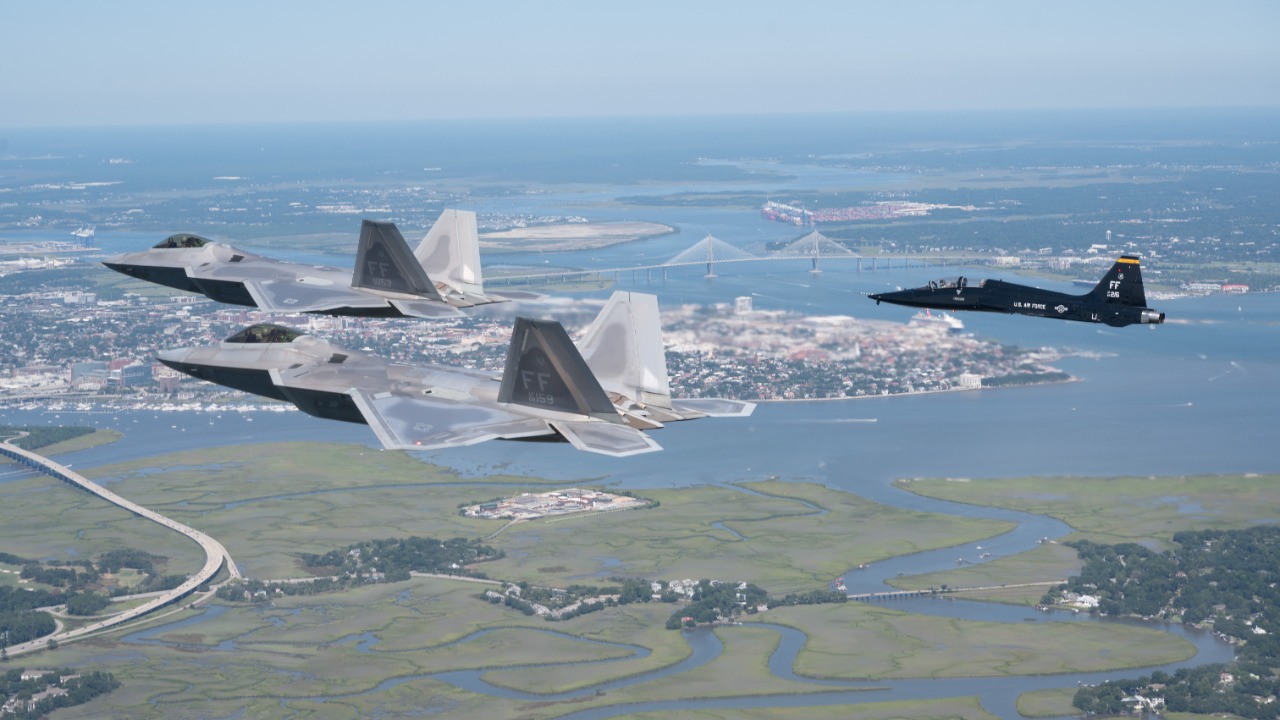
Every war generates a highlight reel—and with it, a new crop of “lessons” that travel faster than any after-action report. Clips from Ukraine, Gaza, Nagorno-Karabakh, and the long U.S. campaigns in Iraq and Afghanistan have fueled confident claims about what is “obsolete,” what is “invincible,” and what the next war will supposedly prove. Some of those claims point to real trends. Many harden into myths because they are simple, emotionally satisfying, and politically useful.
The recurring problem is not that people draw lessons from war; it’s that selective anecdotes get treated as universal rules. In U.S. and NATO-centered debates, those “rules” can shape force structure, procurement, and readiness across land, air, maritime, space, and cyber. The risk isn’t merely a bad take online. It’s baking a flawed assumption into doctrine, training, and acquisition timelines that are hard to reverse when reality intrudes.
Myth #1: Drones make tanks obsolete
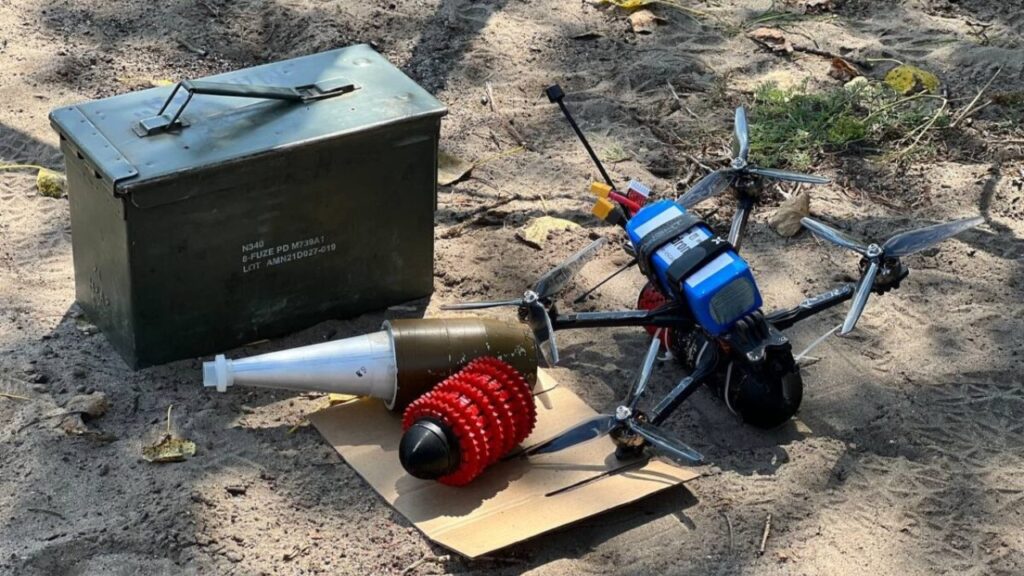
Recent wars have shown how lethal cheap loitering munitions and FPV drones can be against armored vehicles—especially when armor is exposed, isolated, or operating without robust electronic warfare (EW) and short-range air defense. The myth is the jump from “drones can kill tanks” to “tanks are finished.” That leap ignores what combat repeatedly demonstrates: survivability depends on tactics, concealment, dispersion, and combined arms—plus the ongoing contest between sensors, jammers, and shooters.
Armored forces still offer a set of capabilities that are hard to replace: protected mobility, mobile direct fire, and the ability to support infantry in taking and holding ground. The more durable lesson is that armor without a layered defensive ecosystem is increasingly fragile. Active protection systems (APS), counter-drone measures, smoke and obscurants, disciplined movement, and integration with infantry, engineers, fires, and air defense matter at least as much as the vehicle itself. The uncomfortable procurement implication is that “better armor” often means paying for enabling systems—ammunition, maintenance, air defense, EW, and training time—not just a new hull.
Myth #2: Air power alone wins wars
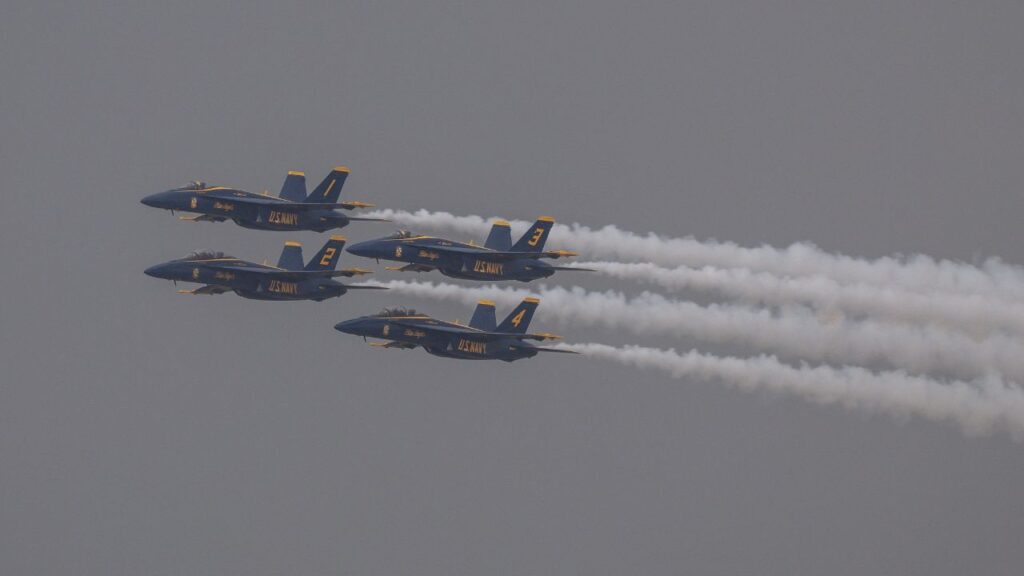
Air power can be decisive at the operational level—disrupting logistics, degrading command and control, and pressuring key nodes. But “air power alone” is a slogan that collides with a basic reality: wars are political contests, and political outcomes usually require control of people and terrain. Even when air campaigns are punishing, adversaries adjust by dispersing, hiding, hardening, and exploiting urban and civilian complexity.
The nuance that often gets lost is that air power’s payoff is campaign-dependent and usually amplified by ground maneuver, intelligence, and sustainment. Integrated air defenses, weather, distance, rules of engagement, basing constraints, and magazine depth can all limit what air power can achieve by itself. For planners, the practical question isn’t “Does air win wars?” but “Do we have the ISR, targeting, munitions stockpiles, basing resilience, and joint integration to sustain air effects long enough for political outcomes to follow?”
Myth #3: Stealth is dead
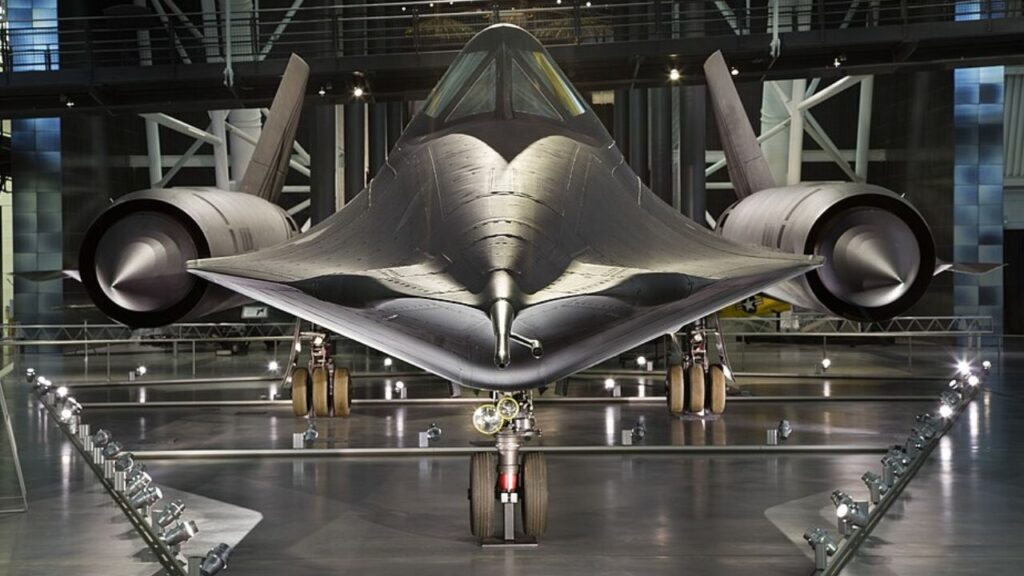
“Stealth is dead” headlines tend to follow reports of modern integrated air defenses, new sensors, or contested electromagnetic environments. The reality is less absolute: stealth is not invisibility, and it never was. It is one element of survivability that can reduce detection and engagement ranges, especially when paired with EW, tactics, stand-off weapons, decoys, and disciplined mission planning across the broader kill chain.
As sensors and networking improve, stealth becomes more—not less—dependent on combined effects and operational design. The procurement risk is a pendulum swing: overcorrecting toward the belief that non-stealth stand-off fires alone can substitute for the ability to penetrate, find targets, and hold them at risk under pressure. For U.S./NATO air forces, the readiness issue is equally plain: high-end training, mission planning, and munitions depth are as central to real combat performance as any single airframe feature.
Myth #4: Missiles make navies irrelevant (or carriers useless)
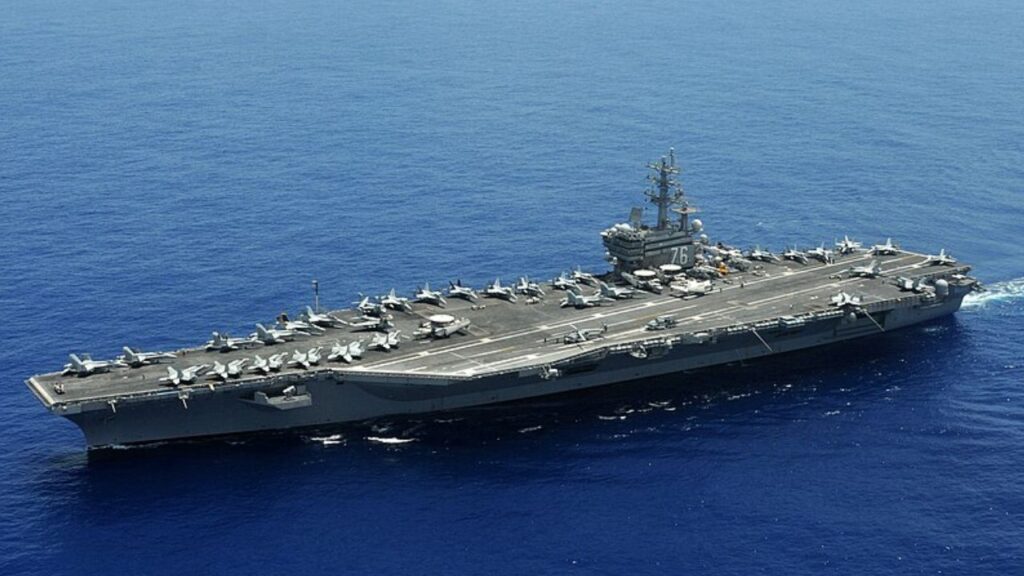
Modern anti-ship missiles are a real threat, and surface ships can be vulnerable in dense sensor-and-shooter environments. The myth is that missiles automatically erase sea power—often framed as “the carrier is obsolete.” What this skips is that navies do not simply sail into range and accept the outcome; survivability is a system problem that includes ISR denial, deception, electronic attack, layered air and missile defense, undersea warfare, and operational geometry.
Naval warfare is also a competition of magazines and production. Long-range precision weapons are expensive, and stockpiles are finite; ships also have finite interceptors. If debates treat missile danger as proof that fleets are irrelevant, the policy response can become self-defeating: underinvesting in the very capabilities that reduce missile effectiveness, including EW, decoys, distributed operations, logistics, and undersea forces. A more grounded lesson is that maritime power is changing shape—more distributed, more networked, more contested—not disappearing.
Myth #5: Nuclear weapons guarantee victory
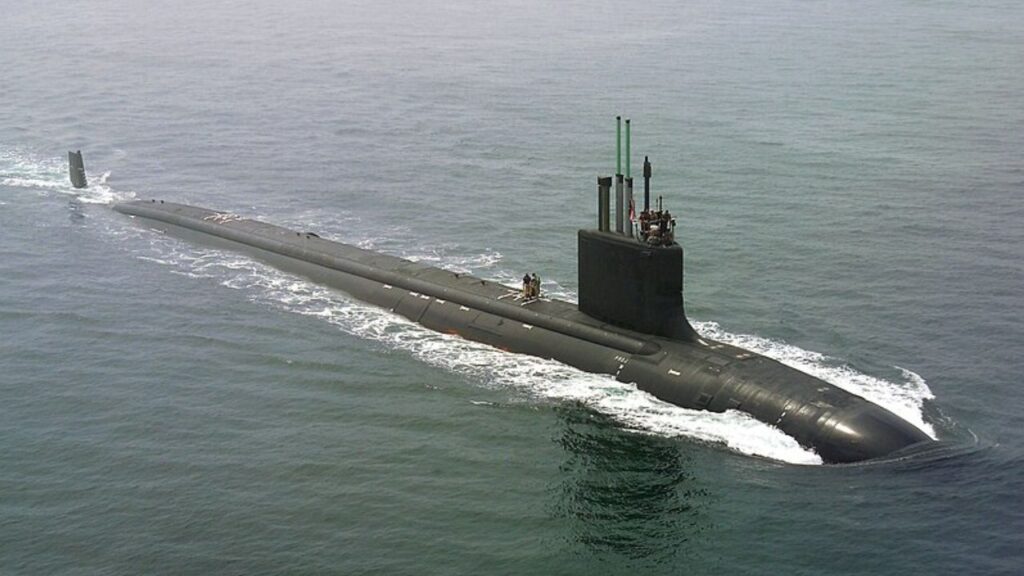
Nuclear weapons can deter, but they do not automatically deliver political success in conventional wars. This myth persists because deterrence is often discussed as a protective shield rather than a fragile relationship shaped by perceptions, credibility, and risk tolerance. States may hesitate to escalate, but they also look for ways to operate beneath nuclear thresholds—through limited aims, ambiguity, proxies, and conventional campaigns designed to avoid triggering existential fears.
For defense planning, the danger runs in two directions: believing nuclear weapons make conventional readiness optional, or assuming conventional strength can never matter against a nuclear-armed adversary. In reality, conventional forces, resilience, and industrial capacity shape the options available short of catastrophe. The practical implication is not a new “guarantee,” but a renewed focus on credible conventional deterrence—training, readiness, sustainment, and alliances—so crises do not default into nuclear bargaining contests.
Myth #6: Special forces can substitute for conventional forces
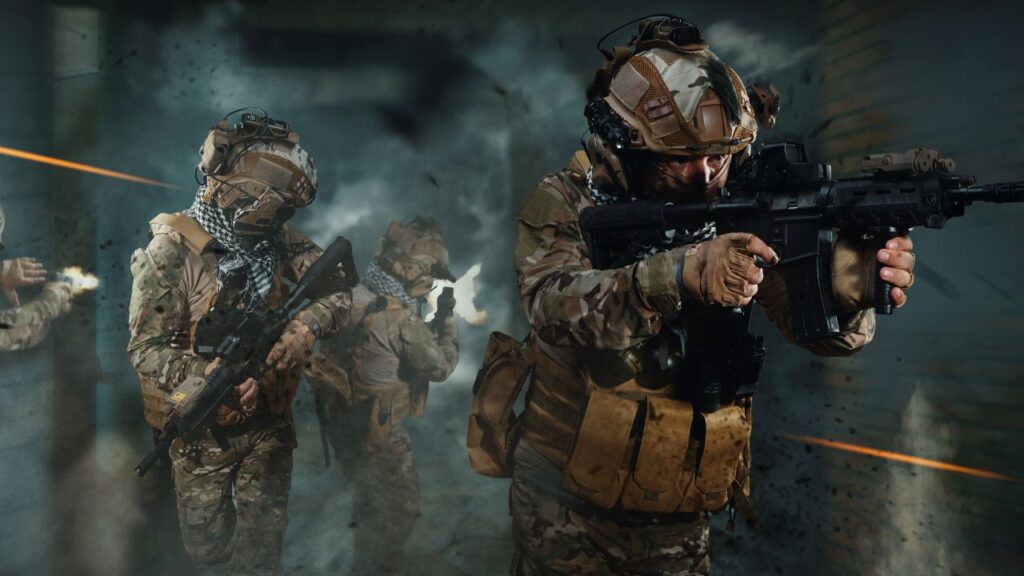
Special operations forces (SOF) are uniquely valuable for specific missions—raids, partner training, reconnaissance, and precision actions. The myth is turning those strengths into a theory of war: that elite units can replace conventional mass, hold terrain, or sustain prolonged high-intensity combat across large fronts. Iraq and Afghanistan helped feed this narrative, because counterterrorism campaigns can create the impression that small footprints and precision strikes are the main event.
Recent conventional fighting has reinforced a blunter reality: holding ground, rotating units, absorbing attrition, and sustaining fires are organizational and industrial problems as much as tactical ones. If policymakers buy the substitution myth, the result can be a force that excels at precision tasks but struggles to defend allies, fight at scale, or endure. The readiness requirements are not glamorous: collective training, maintenance, logistics units, and the depth of force structure needed to survive the first hard months.
Myth #7: Technology beats training and logistics

This is the oldest myth with the newest packaging. Whether the buzzword is drones, cyber, space dominance, or “AI-enabled” targeting, the temptation is to treat war like a software update. But technology does not fight on its own. People do—under stress, with equipment that breaks, networks that jam, and ammunition that runs out.
Public takeaways from recent conflicts have repeatedly highlighted rapid adaptation—both sides iterating tactics, countermeasures, and deception—while logistics and stockpiles quietly determine what can be sustained. The strategic consequence is straightforward: a military optimized for demo-day performance can fail in the grind of prolonged operations. Procurement choices that undervalue spare parts, maintenance capacity, training pipelines, and munitions production can turn advanced platforms into low-availability fleets and empty launchers.
Why these myths persist
First, combat footage is not a representative sample; it is a curated feed shaped by what gets recorded, released, and amplified. A drone strike clip rarely shows the failed sorties, jammed links, suppressed launch teams, or the sustainment that made the strike possible. Selection bias turns “what was dramatic” into “what was typical.”
Second, institutions and politics reward simple narratives. A “silver bullet” is easier to brief than a combined-arms modernization plan that includes air defense, EW, training time, and industrial expansion. Contractors market compelling stories, lawmakers prefer crisp talking points, and the public gravitates toward decisive gadgets over unglamorous investments like ammunition production, maintenance backlogs, and resilient basing.
Third, adaptation moves faster at the front than it does in large organizations. Battlefield workarounds can appear quickly, while doctrine, procurement, and training cycles move at the pace of budgets and bureaucracy. By the time a myth is corrected in professional circles, it may already be entrenched online—and sometimes reflected in policy proposals.
What matters for U.S./NATO decision-makers
The practical task is not to “pick the future,” but to avoid single-point failures and keep options open. That means treating drones, cyber, space, and precision weapons as additive—powerful tools that change tactics and costs—rather than universal replacements for combined arms, sea control, or air superiority. It also means investing in the defenses that make offensives sustainable: EW, air and missile defense, deception, hardening, and resilient command and control.
The most immediate shifts are likely to show up in budgets and readiness metrics rather than in a single iconic platform. Expect more emphasis on munitions and stockpiles, training under electronic attack, and industrial capacity that can replenish under wartime demand. If the past few years offer a lesson worth keeping, it is this: the side that learns fastest and sustains longest usually outperforms the side that merely produces the best clip.