
Throughout history, certain naval warships have dramatically altered the landscape of maritime warfare. These ships have not only showcased technological advancements but also demonstrated strategic innovations that have influenced naval tactics globally. Here, I take a closer look at ten iconic warships that have left an indelible mark on sea power.
HMS Dreadnought
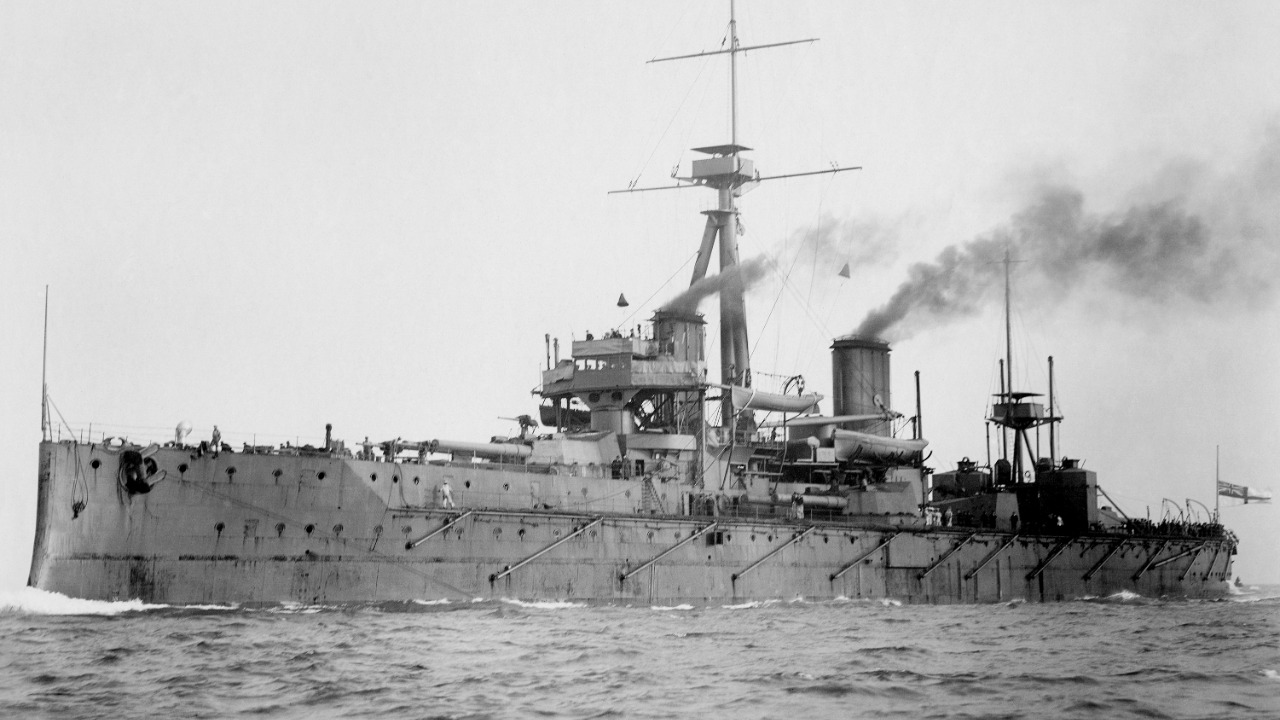
The HMS Dreadnought, launched in 1906, heralded a new era in naval warfare with its revolutionary design. As the first all-big-gun battleship, it rendered earlier warships obsolete and sparked a naval arms race during the early 20th century. Its speed, firepower, and armor were unmatched at the time, making it a formidable force on the seas.
The Dreadnought’s impact was so profound that battleships built after it were classified as “dreadnoughts,” while older ones became known as “pre-dreadnoughts.” It demonstrated the importance of technological superiority in naval strategy, influencing the design of battleships worldwide.
USS Constitution

Commissioned in 1797, the USS Constitution is one of the oldest warships still afloat. Known as “Old Ironsides,” it gained fame during the War of 1812 for its impressive resilience against British cannon fire, which seemed to bounce off its sturdy hull.
The Constitution’s success was due to its innovative design, combining speed and heavy armament, which allowed it to outmaneuver and outgun opponents. Its legacy endures as a symbol of American naval strength and ingenuity, serving as a reminder of the early days of the U.S. Navy.
Bismarck

The German battleship Bismarck was one of the most feared warships of World War II. Launched in 1939, its powerful artillery and advanced engineering made it a significant threat to Allied naval forces. The Bismarck’s most famous engagement was the sinking of the HMS Hood, a battlecruiser of the Royal Navy, in May 1941.
Despite its short service life, the Bismarck’s design and operational history highlighted the importance of battleship supremacy during wartime. Its eventual sinking by the Royal Navy underscored the tactical challenges and vulnerabilities even the most powerful ships faced.
HMS Victory

The HMS Victory, launched in 1765, is perhaps best known as Admiral Lord Nelson’s flagship at the Battle of Trafalgar in 1805. This ship played a crucial role in securing British naval dominance during the Napoleonic Wars.
As a first-rate ship of the line, the Victory was equipped with over 100 guns and a robust crew, making it a formidable opponent. Today, it serves as a museum ship in Portsmouth, England, preserving its storied history and legacy as a symbol of naval excellence.
USS Enterprise (CV-6)

The USS Enterprise (CV-6), often referred to as the “Big E,” was one of the most decorated American aircraft carriers in World War II. Launched in 1936, it played a pivotal role in numerous Pacific Theater battles, including the Battle of Midway and the Guadalcanal Campaign.
Its versatility and resilience made it an invaluable asset to the U.S. Navy, capable of launching and recovering aircraft effectively while withstanding enemy attacks. The Enterprise’s contributions were vital to the Allied victory in the Pacific, cementing its place in naval history.
IJN Yamato

The IJN Yamato, launched in 1940, was the lead ship of the Imperial Japanese Navy’s Yamato class of battleships. It was the heaviest and most powerfully armed battleship ever constructed, boasting nine 46 cm main guns.
Despite its impressive specifications, the Yamato saw limited action during World War II. Its design reflected the Japanese focus on battleship superiority, but the shift to aircraft carrier-led naval tactics rendered it less effective. The Yamato’s eventual sinking highlighted the changing nature of naval warfare in the 20th century.
HMS Warrior

Launched in 1860, HMS Warrior was the world’s first iron-hulled, armored warship, marking a significant leap forward in naval technology. Its construction combined iron and steam power, making it the largest and fastest ship of its time.
The Warrior’s introduction signaled the end of the wooden warship era, as it demonstrated the advantages of ironclad design in terms of durability and firepower. Although it never saw combat, its presence influenced naval architecture globally and set the stage for future innovations.
USS Missouri (BB-63)

The USS Missouri (BB-63), also known as “Mighty Mo,” was the last battleship commissioned by the United States and played a significant role in World War II and beyond. It is perhaps best known for hosting the formal surrender of Japan on September 2, 1945, in Tokyo Bay.
The Missouri continued to serve in subsequent conflicts, including the Korean War and Operation Desert Storm. Its longevity and adaptability demonstrated the enduring value of battleships in supporting naval operations, even as new technologies emerged.
Admiral Kuznetsov

The Admiral Kuznetsov is the flagship of the Russian Navy and serves as an aircraft cruiser, combining the capabilities of a traditional aircraft carrier with those of a cruiser. Launched in 1985, it represents Russia’s strategy of multifunctional naval platforms.
Its design allows it to carry a complement of fixed-wing aircraft and helicopters while maintaining substantial anti-ship and anti-aircraft armaments. Despite facing challenges in terms of maintenance and modernization, the Kuznetsov remains a critical component of Russia’s naval capabilities.
INS Vikrant

The INS Vikrant has the distinction of being India’s first aircraft carrier, playing a crucial role in the Indo-Pakistani War of 1971. Launched in 1961, it was instrumental in establishing India’s naval presence in the Indian Ocean.
As a symbol of national pride, the Vikrant’s legacy continues with its name being passed on to India’s first indigenously built aircraft carrier, commissioned in 2022. This progression highlights India’s evolving maritime strategy and commitment to maintaining regional naval supremacy.